Showing posts with label Sales vs Marketing. Show all posts

Monday, October 19, 2015

Community Marketing Malpractice

My degrees were in history and political science.  I also studied law.  But my career was in marketing; or more specifically, the marketing of communities.

Fortunately, my collegiate exposure to marketing was a theoretical survey course using the provocative teachings of Harvard’s Dr. Theodore Levitt.

So I always had a much different, and many would say provocative approach to community destination marketing than my DMO peers, who over-relied on the components of traditional sales and advertising.

Results would suggest far more successful too, than those who over-relied on the components of traditional sales and advertising.

Far too many still do today, which is puzzling.  This post may help young community marketers avoid what had been termed “marketing malpractice” by the time I retired nearly six years ago.

A lot about marketing has changed during that span.  Maybe it intrigues me as to why many DMO execs aren’t keeping up because my intellectual curiosity hasn’t yet retired.

Marketing includes the elements of sales and advertising but it fundamentally differs in its overall purpose.

Myopically, to use one of Dr. Levitt favorite words, “selling” customarily has focused on the needs of the seller.

Many use the term relational “selling” today but then still pretty much focus on what “they” have to sell rather than what the customer needs.

Advertising is and has always been focused on “getting” attention.  Trying to “demand” attention is far more like it, which is why so many marketers call it a form of “yelling.”

This is confirmed in this age of waning attention spans when so many lazy practitioners desperately seem to only know how to “yell” louder and louder.

Marketing weaves these and five or so other components into a blend designed instead on creating and satisfying customers, according to Levitt, which means “un-creating” customers for your community if that means directing their attention to destinations more suited.

A longitudinal study at USC determined in 2010 that traditional advertising now has an overall negative return of investment but that its decline began three decades ago, a decade before the Internet was made available for public use.

Still, many of those who bothered to read the study theorized that the demise of advertising was due to the Internet or the fragmentation of media or even clutter, meaning a proliferation of too many ads.

But marketing historians were aware that complaints about ad “cutter” date, at least, to January 20, 1759 when a copywriter and essayist noted, “Advertisements are now so numerous that they are very negligently perused.”

Dr. Thales Teixeira (Tech-Sarah,) a contemporary Harvard marketing researcher, is an expert in what he calls the “economics of attention.” 

From various studies he has graphed that attention to even  television ads had plummeted from 97% of viewers in 1990 to fewer than 2 in 10 today, even though ads are more than 75% shorter in length.

Attention to ads was plummeting long before the Internet was an alternative and had fallen by nearly half when TiVo, the first DVR device that enabled ad-skipping was introduced in 1999.

This was also long before mobile devices divided the attention of the 44% of viewers who multitask into even thinner slices.

Illustrating the desperation of advertisers, including most that are oblivious to the drop in attentiveness, is that during that span the cost per 1,000 primetime viewers has skyrocketed from $18 to nearly $200 per view, while the quality of attention has severely degraded.

Dr. Teixeira calculates that “Attention is one of our three most valuable, scarce and fungible resources.”

Now even Levitt recognized in his 1993 treatise entitled Advertising: “The Poetry of Becoming,” that ads at the very least provides “variety and changes the pace.”

It’s not unlike the rationale one my friends argues on behalf of billboards, a long-obsolete medium.  But this calculus fails to take into account the turn-of to turn-on ratio of ads.

Yup, and a few people only buy print magazines that are purposely laden with ads.  But attention today, and for several decades now, is something you earn rather than demand.

It is about “them,” not “you” and “yelling” about your product, your community, your brand is a turn-off even when you try to be cute and entertaining.

In the words of Seth Godin, “the goal of marketing interaction isn’t to close the sales, any more than the goal of a first date is to get married.  No, the opportunity is to move foreword, earn attention and trust and curiosity and conversation.”

Trust is the key to earning attention and “you must build trust before you need it,” or want it.

Godin also explains why advertisers seem clueless and only respond by increasing clutter.  “And as with pollution, because no one owns the problem, no one is working very hard to solve it.”

“Advertising” he argues, while explaining why consumers are now “using a sledgehammer to block them all” is in “a relentless race to the bottom.”

A former classmate of mine at BYU who is now renowned Harvard business professor by the name of Dr. Clay Christensen, argued several years before I retired that the paradigms of marketing itself are broken and must be reconfigured beginning with the way we segment customer prospects.

He shows how any communication under the umbrella of marketing, including advertising, must, in the end, show consumers what “job” they need to hire your product or community to do, exposing the flaw in communities that try to be appealing at everything, only to find they have sold their soul.

Christensen, who is famous for coining the concept of disruptive innovation, would not only agree with me that many of my peers, though much younger are marketing dinosaurs but that they are committing “Marketing Malpractice.”

I will continue this primer in the next post by reviewing why techniques such as advertising, not just roadside billboards, are now so obsolete.

Unfortunately, most marketing dinosaurs probably didn’t get this far (sigh.)

Wednesday, June 03, 2015

Jurassic Marketing

I couldn’t help but smile recently by a headline in my email reading “Digital Pushes PR and Marketing Closer.”

Actually, tactical activities such as PR as well as other forms of promotion such as sales and advertising were tucked under the heading of marketing nearly 60 years ago.

But someone a lot younger than I am obviously still hasn’t received the memo.

Social historians, such as Dr. James Stoddard, a marketing professor at Appalachian State University where I will guest lecture on strategy next week for one of his colleagues, gives us insight into how marketing evolved over the last 150 years.

The period from the end of the Civil War until the 1920s, is known as the “production era.”   Then the Great Depression ushered in the “sales era” where promotion became a tool to unload products.

That all changed after WWII, but many marketers, including far too many in my former profession of community destination marketing, are still stuck in the 1930s.

These DMO’s are made obvious by their obsession and that of the communities they represent with mega-facilities, mega events and then paying subsides in order to get visitors to come.

This creates a never-ending cycle guaranteed to hollow out any sense of place in these communities, robbing them of their innate appeal.

Marketing had turned the corner from these techniques by 1960 when Dr. Theodore Levitt published Marketing Myopia in the Harvard Business Review, which was expanded into a book during the first decade of my now concluded career.

That means my former peers have had more than three decades to shift gears.

So why are so many marketers, though much younger, still stuck so far back in the past including those hoping to be enabled by a handful of legislators in North Carolina eager to facilitate long since obsolete forms of “desecration marketing” along roadsides?

Shortly after I landed my final marketing gig for Durham, North Carolina, Dr. Levitt famously wrote in another article entitled Advertising: The Poetry of Becoming:

“People don't take vacations to get away from it all but to escape from modern commercialism.  And the chief culprit is advertising.”

We know now from longitudinal studies that this was five years after the effectiveness of traditional advertising tipped into its long slow decline to where it now has a negative return on investment.

Urban Institute researcher and friend of mine, Ed McMahon put it another way in an article published last month in Virginia Town & City entitled Responsible Tourism:

“To understand mass market tourism, think about mega hotels, theme parks, chain stores and the new generation of enormous (4,000 to 5,000 passenger) cruise ships.

Mass market tourism is about quantity.  Mass market tourism is also about environments that are artificial, homogenized, generic and formulaic.

To understand responsible tourism, think about unspoiled scenery, locally-owned businesses, historic small towns and walkable urban neighborhoods.”

Gallup not only conducts research into workforce engagement but also “customer engagement,” which is a primary objective of marketing.

Across a variety of industries, Gallup finds a “powerful link between customer engagement and key business outcomes.”  Fully engaged customers represent a 23% premium over the average.

On the other hand, actively disengaged customers who work against you represent a 13% discount.

The three areas Gallup finds as key to customer engagement are:

  • Company [organization or community] always delivers on what they promise.
  • I feel proud to be a customer.
  • Company [organization or community] is the perfect one for people like me.

In his new white paper entitled Contextual Marketing and the New Marketing Contract, analyst Brian Solis teases out that “empathy makes engagement personal” and when paired, it is “context that makes things relevant,” regardless of the marketing technology used.

Beginning decades before the Internet, marketing became not just a way to follow customer orientation. according to Stoddard, but the means to guide an organization’s direction.

For a community destination marketing organization that isn’t stuck in the distant past, this means that marketing is a tool not just for promotion but the means to safeguard a community’s distinctiveness.

The road to marketing empathy for a community begins with being comfortable in your own skin and seeking not the masses but only those for whom you strike a chord.

It is this overarching strategy that has enabled Durham, a relative latecomer, to leap frog much more established destinations in North Carolina, most of which are trapped in the pre-WWII sales driven world.

It is a world that exchanges distinctiveness of place and empathy for pure mass and homogenization, trading authenticity for mainstream until there will be no reason to go there or no one left in that dwindling market segment.

Sales obsession is what leads some communities to sacrifice soul for envy, build structures that draw fewer than those they replace, recruit events that displace more tourism than they bring.

In other words, a river of no return.

In the words of Solis, various technologies such as email, social media, digital advertising or creative content are a means to engagement but they can “miss the potency of context and empathy.”

The folks at StrongView define context in a marketing sense as “the unique combination of the consumer’s disposition and situation, coupled with the business’s disposition and situation.”

It is part of the continuing evolution from the product focused marketing of the early 1900s to the customer-centric marketing that emerged after WWII.

In a community marketing sense, it begins by not trying to be something you community isn’t but seeking appeal instead to paraphrase McMahon in urban forests, historical context, locally-owned businesses and organic districts, history and people-scaled settings.

In the words of McMahon, it is focusing economic development on what you have rather than what you don’t have even if in tourism it means “ lower volume, lower impact, but higher yield.”

In other words, context.

Thursday, January 22, 2015

The Trait Shared By “Big Game Hunters”

Community destination marketing organizations that fall into the trap of “big game hunting” share a cultural trait dating back to before the 1920s when leisure travel emerged as mainstream.

They are generally marketing organizations in name only, having untethered sales from its constraints as an element of marketing along with any focus on distinctiveness, differentiation, sense of place or fit.

“Big game hunters” are individuals or groups of enablers who, lacking awareness or patience with fostering the sense of particular place, seek instead to import it by going shopping for culture and bringing back one of everything.

They also have in common a sales focus in the traditional sense (e.g., I have produced something to sell and need to convince you to buy it even if it requires subsidies) as it was when community destination marketing organizations first evolved in the 1890s and was being taught in colleges by 1904.

Marketing thought and practice (e.g.,what do you need and maybe I have something that will fit that need) including a customer-focused integration of sales was already rapidly evolving.

Some community marketing organizations began to adopt marketing including a different focus to sales in the 1920s and especially during the 1930s, while many never made the shift.

Many still remained glued to old fashioned sales by the time marketing theory and practice really took immediately after WWII.

This is also when marketing became scientific as documented by authors such as Wroe Alderson in his co-authored 1948 book Towards a Theory of Marketing, the year I was born.

It was followed by his 1957 book, Marketing Behavior and Executive Action, still in use as a textbook when I entered college a decade later.  But many community marketing organizations as they are today remained stuck in the 1890s.

Nor did they budge when in 1960, Harvard professor Theodore Levitt published a paper, later expanded into a book by the same name entitled Marketing Myopia, describing the difference between untethered sales and integrated marketing.

My four decade career leading community destination marketing organizations didn’t consciously begin until 1973, the year after I graduated, but reading that paper as a class assignment while helping to jumpstart an office to market the BYU campus for youth conferences, as a part-time job, had made me aware of what marketing meant.

Even as I began my career in earnest helping to create a community marketing organization for Spokane, peer organizations still stuck in the 1890s sales mindset mounted furious opposition to even changing the name of these organizations to add the word visitor after conventions, my first exposure to “big game hunters.”

Though mine had allowed me to escape being trapped, I can easily trace the DNA of the organizations today that remain stuck in the 1890s by tracing those influential in their background.

It is hard to say if I just happened to choose communities eager to avoid that trap or they found me, but I was dogged throughout my career by “big game hunters” in each of the three communities I served, all of whom were eager to pull us back into the past, several coming close to having me fired.

Communities that forgo sense of place and authenticity to “big game hunt” instead for mega-facilities or events that make them the same as other communities and then resort to subsidies to underwrite their appeal appeal, are still practicing sales as it was well more than a hundred years ago.

Marketing a community requires finesse by appealing to visitors who will find a particular place a good fit in return for their time and treasure while pursuing groups and events only when they meet these criteria:

  • Occur during time periods where they won’t distract from homegrown events
  • Won’t displace existing visitors
  • Won’t siphon away underwriting, audience and volunteers from homegrown events
  • Are complimentary with a community’s unique stature

Untethered from marketing, a sales-dominant focus superimposes these criteria with quotas and winning new accounts against a far too narrow metric such as just filling hotel rooms.

Surveys across all kinds of organizations show that only 18% of sales teams are held accountable for minimizing churn and only 30% are accountable for maintaining margins and avoiding discounts and subsidies, the hallmarks of “big game hunters.”

By using myopic metrics, they also fail to be accountable for a return that even replenishes the dollars used as subsidy.  Had they not untethered from marketing they would be seeing returns closer to 6-to-1 in tax revenues to the community overall.

The battle to protect sense of place from the forces of mainstream entertainment and fantasy dates at least to April 7. 1858 when two Democrats (the conservatives of that day) appointed to the Central Park Board tried to pollute, a week after it had been approved, the plan by Fredrick Law Omsted and his partner.

“Big game hunting” by communities hoping to import sense of place rather than foster it indigenously by intensified in the 1940s in the immediate aftermath of WWII.

Most communities in the 1920s and 1930s had broadened to a marketing focus when leisure travel achieved mass appeal but this was coopted when after WWII, developers inured to destruction of historic buildings during that conflict and settling for churn began to gain influence over public expenditures.

Beginning in the mid to late 1940s, many cities stopped viewing facilities such as convention centers, stadiums and performance halls for their inherent potential.

Instead, pushed by “big game hunters,” elected officials began to build them instead, with tax dollars, as a way to shore up private property values, something still very common today.

It should be no surprise that this is also when the owners of sports teams, emerging as a form of mainstream entertainment, began to shop for cities under the spell of “big game hunters.” 

While the owners of the NFL’s Boston Braves may have been the first to do so, changing to Redskins and relocating to Washington D.C. in 1937, they were quickly followed after WWII by the Buffalo Bisons of the NBA, moving first to Moline as the Blackhawks then in 1951 to Saint Louis as the Hawks, then to Atlanta in 1968 for a new arena.

In Major League Baseball, it began in 1953 when the Boston Braves moved to Milwaukee before relocating again in 1966 to Atlanta, lured by a community built on “big game hunting.”

When in 1955 the owner of the Dodgers moved to LA, persuading the owner of the cross-town Giants to move to San Francisco, he was lured by LA’s “big game hunters.”

Both marketing and the element of sales have continued to evolve but many community marketing organizations, even if they wanted to move away from sales as it was practiced more than a hundred years ago are trapped by the undue influence of “big game hunters” in their communities.

Those that long ago shifted are never entirely safe when local officials fall under the spell of “big game hunters” who see marketing as a threat to their main stream fixations and relentlessly push behind the scenes to gain control of the community marketing organizations in their communities.

Communities that value the higher performance gained by fostering and preserving the things that make them distinct vs. “big game hunting” must not only make sure their community marketing organization isn’t trapped in the past but relentlessly protect local officials from undue influence by “big game hunters.”

All of this is not to suggest that sales isn’t an important element of marketing for community marketing organizations.  Those that have made the shift as revealed in this study illustrate the difference between high performing sales teams and others, in part, because they practice a much higher level of accountability.

These high performers are also much more focused on the quality of sales, such as avoiding discounts and especially subsidies.

“Big game hunters” hate these constraints, preferring myopic metrics rather than information driven decision-making and the “who’s asking” approach to decision-making.

Some communities still have a choice about whether to cave in to these powerful interests or instead foster an indigenous sense of place ecosystem protected by a community marketing organization with that as its focus.

For far too many, it no longer matters what century their community marketing is in.

Tuesday, March 25, 2014

An Inch Wide and A Mile Deep

Early in my career that spanned three community destination marketing organization (DMO) start ups, I received some sage advice from an ad agency exec and friend.

Even though these kinds of organizations and DMOs employ the same skill sets, thinking I might cut some corners while getting up to speed, I initially tried to use outside agencies for services such as graphics, PR and advertising.

It was never as effective as when, after a time, I was able to bring those services in house.  Each time I would recall my friend’s advice.

He told me while the skill sets are mutual, a DMO uses them to “drill down a mile deep but only an inch wide” while agencies “drill down only an inch but a mile wide.”  This is necessary in order to be able to service a variety of clients which, unlike DMOs, do not have marketing as their primary product.

For this same reason, people schooled in agency work never seemed as productive when I hired them from time to time, thinking we’d leapfrog the learning curve.  I’m sure for the same reason, few schooled initially in DMOs work out in agencies.

From my observations, agency folks I hired to work in the DMOs I ran didn’t work out as I hoped because:

  • They often became bored with the singular focus,
  • They had a hard time multi-tasking vs. multi-clienting,
  • They struggled to transfer what they knew, and/or
  • They could be tactical but not always strategic.

I am sure the same has been true in reverse.

Thinking strategically with the ability to execute should be an inherent part of destination marketing, which is by definition, umbrella-like in nature.  In agencies, strategy is more often a specialty or handled on the client side, or dealt with less holistically.

A study published in Harvard Business Review this month cites strategic thinking and execution falls behind only leadership as the executive skill most sought by search consultants.

This is why the failure to be strategic is the single most common underlying factor when destination marketing underperforms for a community.  Where it is found lacking, it stretches from not only the CEO, but through the governing board and local officials.

It is also why so many individual businesses in the tourism sector fail to fully leverage their community’s destination marketing.  A DMOs work is strategic, while the primary beneficiary businesses and organizations are tactical by nature.

As Mike Martino, a good friend and one of the best hoteliers with whom I ever worked, once told a gathering of his peers, “Our job is to worry about today, our DMO’s job is to worry about tomorrow.”

Failure to grasp these roles on either side often leads to snarky commentary, less frequently heard today, but usually over which entity gets credit for a booking.  In reality, it is both.  The DMO draws the attention to the community, individual businesses then harvest their share.

In fact, research continues to show that even with so-called B2B (business to business) transactions such as decisions by meeting planners about where and at what location to hold an event, 60% of those purchase decisions are made before ever having human contact.

Even within DMOs, where the challenge has always been keeping group sales and marketing from “siloing,” new research shows these functional areas of marketing must strategically work hand in hand, just at different points of the decision funnel or cycle.

It has been nearly 15 years now since the authors of The Cluetrain Manifesto signaled that marketing was no longer about yelling louder and louder, but it is about a conversation.  That may have also marked the end of advertising which began to tip negative 15 years earlier.

It marked the emergence of what we now group as “content marketing” which had been gaining steam for a decade before that, at least with me and the organizations I led.  Another way to think of content marketing is when DMO’s become publishers.

But as often noted, content marketing for a DMO is about providing substance and value not volume, about drilling down past the superficial or the obvious to leverage tangential connections.

Failing to stay on top of this is where even the most content marketing savvy DMO can lose that franchise in a heartbeat.  It is also why it must be embedded as a core strategy, not farmed out or given to those who won’t bother to dig down.

This is also why, here again, DMOs do content marketing in-house, as do more than half of all organization marketers overall.  This is as true of B2B as it is B2C (business to consumer.)

As Tom Martin writes in his book entitled, The Invisible Sale, a cornerstone of content is understanding that it is an ecosystem.  Many tactics can be leveraged over and over for additional content, months after larger pieces have been published.

Far too many DMOs suffer a kind of attention deficit and rush off to the next piece without also fully leveraging content.  Worse, when later creating new pieces, they forget to even go back and reference others.

This is another reason, as Martin notes, to “hire explorers not experts.”

Content marketing is as prevalent now for both types of consumer but 9-in-10 marketers overall now use an average of 12 tactics for B2C and 5 to 6 for B2B.  But DMOs should take note that B2B consumers such as meeting planners are even more sensitive to fluff.

Eric Siu who blog about start ups and interviews entrepreneurs at Growth Everywhere notes four big misconceptions that undermine contention marketing efforts, especially that which is targeted to B2B.  He is is so right when he notes that a big problem is the failure to leverage it.

“Once and done” is due to “list checking” rather than seeking to leverage organizational archives to enrich and deepen content.  Another mistake is failing to follow up and deepen content as new information becomes available.

Marketing is no longer about “more, more, more” as it was when advertising was effective but about depth and value and conversation at every touch point.

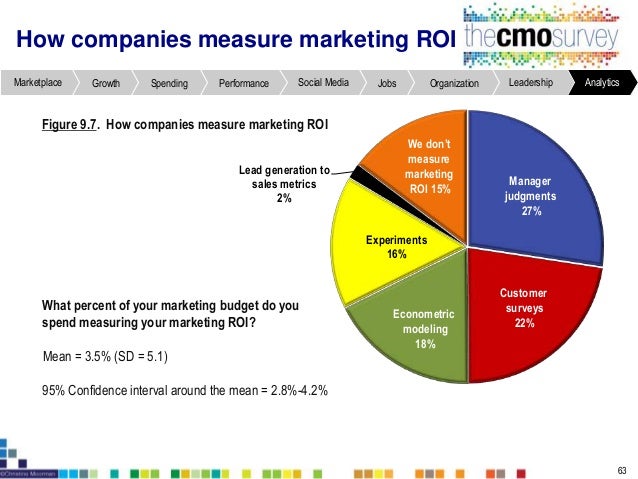
If you’ve gotten this far, you are probably not among the 42% of marketers who fail to measure marketing ROI at all according to a Duke University study.

But measurement of content marketing is moving beyond traditional ROI to the deeper value at points along what Robert Rose  calls the “consumer engagement curve” in his white paper “Built to Change: New Models for Management of Consumer Engagement.

This may have been running through the mind of Apple CEO Tim Cook recently as he responded to pressure from a right-wing special interest group holding stock, to not pursue any environmental initiatives that didn’t improve the company’s bottom line.

Cook rebuffed the notion by insisting that the measurement made good sense and that Apple does “a log of things for reasons besides profit motive.”

As a comparison, he noted “That’s who we are as a company.  When we think about human rights, I don’t think about ROI….I don’t think about helping our environment from an ROI point of view…If you want me to make things, make decisions that have a clear ROI, then you get out of the stock.”

That was a genius bit of strategic thinking and content marketing and shows Cook’s understanding of where his customers engage.  Other stockholders applauded too and voted the proposal down.

It isn’t always about ROI, and marketing is definitely no longer just about “banging the drum louder and louder,” although many slow to catch on will probably help keep desecration marketing via billboards on life support.

ROI has never been an issue there anyway.

Thursday, April 04, 2013

Where Explaining Marketing Seems Never-Ending

When it comes to understanding sales and marketing, there are four internal audiences that are a challenge for a community’s marketing arm (DMO.)  First let me comment on the one that is internal-internal.

For nearly a century now, marketing has included sales as one of many blended elements.  Effective sales today is more than just unloading something you have.  It is driven by providing value to the customer even if it turns out not to be something your community offers.

It is easy to spot DMOs that haven’t fully evolved because they are facility-driven rather than focused on exploiting their community’s full share of visitor-centric economic and cultural development.

The internal-internal challenge that even holistic DMOs face is getting those involved in sales activities and those involved in other marketing activities to better understand the needs in direct sales.

In an effective community DMO, sales people understand that others in marketing are sales enablers and need an intimate and real-time understanding of the roles they play in the success of sales in the overall marketing process.

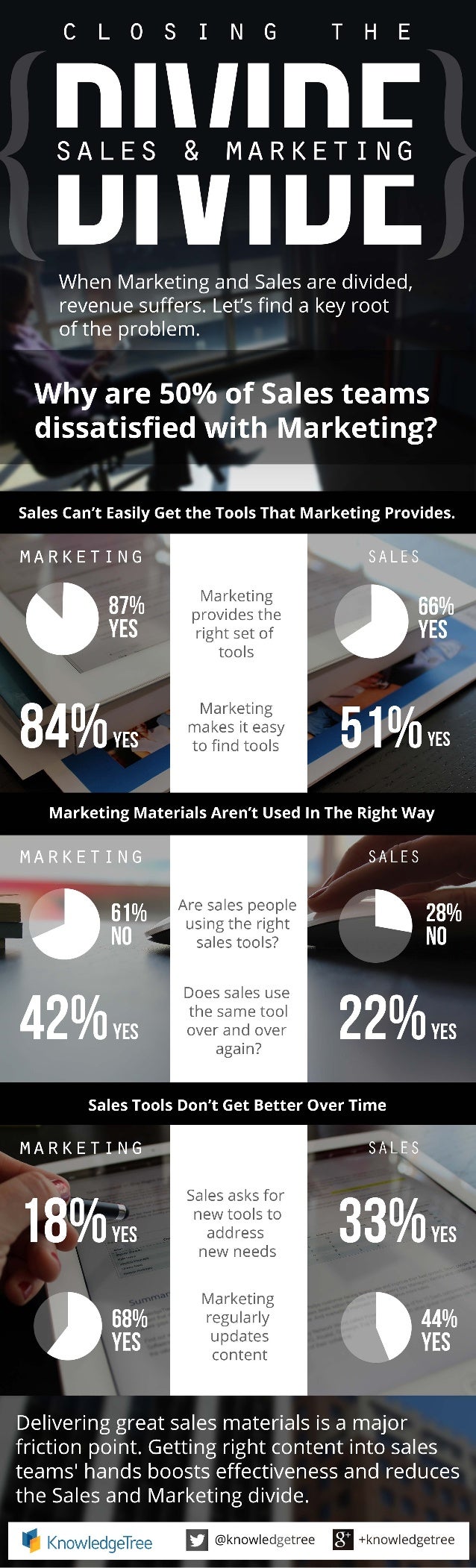
According to a study by Knowledge Tree, across all organizations half of sales teams are dissatisfied with the support they receive from their peers in other areas of marketing.  The disconnect usually revolves around collateral, a marketing term that refers to flyers, fact sheets, presentation materials etc.

Often by nature, those in sales are more literal and those in marketing are more conceptual.  To bridge this gap, the DMO for Durham NC where I live breaks the sales process down into a pipeline that maps the various stages and then shows the role of sales in a diagram of the overall marketing process.

Knowledge Tree’s Peter Mollins suggests in a blog post that marketers map various pieces of sales collateral to each step in the sales process with enough flexibility so that sales people can rapidly access the piece they need during the variability of each particular sales call.

A white paper produced by Knowledge Tree as part of its own “content marketing” breaks down what the company calls a “content lifecycle” for the collateral materials marketers generate to enable their peers involved in sales.

It suggests that those non-sales marketers devise very specific metrics to measure the effectiveness of each piece of collateral to better enable rapid evolution and improvement.  General increases in overall sales results are not enough.

Managing and updating content is a huge challenge for a data-driven community DMO.  But there are three other internal audiences that are also always a challenge for community-destination marketing organizations:

  • Local government officials, elected and administrative
  • Strategic partners such as downtown organizations and chambers that use the term marketing but practice primarily sales
  • Some visitor sector organizations, particularly many hoteliers at the local level who view marketing as just sales

These groups are not alone in the need to better understand marketing.  According to experts such as place-marketing guru Dr. Philip Kotler at Northwestern University, marketing is “terribly misunderstood in business circles and in the public’s mind.”

For many local elected officials, the only element of marketing with which they have frequent direct exposure are “yard signs” during campaigns.  On the flip side, the element of marketing to which they are most subjected as recipients, are those still practicing the nearly extinct form of sales as a mix of arm-twisting, cajoling and financial enticements, such as is done by many lobbyists.

No wonder that so many local officials struggle to understand customer-driven, holistic community marketing.

Likewise, many downtown organizations and chambers of commerce that sometimes contract with local government to court prospects for business relocation or expansion may use the term marketing but essentially practice only sales after these audiences have been primed by overarching community marketing.

Sales is particularly relevant for these groups because their focus is supply-side economic development while community DMOs work economic development from the demand-side.  Communities are most productive where communities understand, respect and exploit both roles.

In savvy communities these organizations work hand in hand with respective DMOs, even cross-populating collateral tools such as they do in Durham, NC where I live with both the Downtown Map & Walking Tour and the Official Visitor & Relocation Guide.

Leveraging respective roles such as this is hindered only when there is a failure to understand roles or when people who think in terms of sales begin to presume they understand overall marketing.

Many during my career in community marketing were fascinated with marketing but mistook it for advertising, another of the many elements blended into marketing.  Not surprisingly, they were often drawn to glitzy ad campaigns because they learned about them from ad sales people with whom they can relate.

DMOs also occasionally run into misunderstanding with some some in the lodging industry, one of six or seven industries that compose the visitor sector economy.  Nearly all marketing for a hotel is done at the chain level and involves primarily branding not destination marketing which is performed by DMOs.

Lodging facilities do not drive demand at the destination level, they harvest it once interest in the destination is generated by overall community marketing.  The best tool for harvesting these potential customers once they are destination aware is often sales, especially for those facilities focused on the 1 in 10 visitors who attend conventions and meetings.

Friction can arise if hoteliers do not appreciate that the role of a DMO is different than a lodging property.

Other visitor-sector entities practice a mix, deploying marketing to reach residents and specific elements to harvest their fair share of visitors.

The challenge for a community DMOs is to find and exploit opportunities to perpetually educate these groups and their stakeholders about marketing in general, and more specifically, the role of community marketing.

However, even under the best conditions, it isn’t unusual from time to time for individuals in one or more of these groups to mount an attack on and/or try to undermine a community’s marketing arm. Usually it is about power or money or both.

Effective community-destination marketing is best when relationships are mutually respectful.  Sometimes that means DMO execs are required to still work with individuals who may at the same time be trying to stab them in the back.

For community-destination marketing organizations, it is all just part of the job.

Tuesday, February 05, 2013

Charlotte DNC Study Raises The Bar and A Few Questions

Charlotte, North Carolina, down-state from where I live and once practiced visitor-centric economic and cultural development has raised the bar for communities still obsessed with facilities and mega-events.

Independent economic assessments, some conducted over a period of more than 30 years and looking at 50 different host communities and areas have found no discernable net impact from mega-events.

So Charlotte followed the example of analysis released last summer for Indianapolis after hosting the Super Bowl and had a similar input-output analysis conducted of the impact of the Democratic National Convention (DNC) hosted there last September.

Though executed by extremely reputable companies using a well-proven methodology with which I am very familiar and have used for many years and executed by individuals I know and respect, neither micro-analysis is enough to refute the earlier longitudinal analysis.  These studies do, however, provide additional details.

While input-output is very reliable when measuring impact over time, such as the annual impact of tourism on a community, experts caution when applying it to events of very short duration.  Still Indianapolis and Charlotte are to be commended for raising the bar several notches for future hosts considering these and similar mega-events.

Released last week, the Charlotte analysis of the DNC also raises some questions that weren’t probed in news reports.  In fact, it took a little digging to find the actual report.  Answers to these questions can better illuminate future efforts by other destination communities.

But first an observation.

Charlotte has always benefited from superb community-destination marketing (DMO) professionals.  However, a seemingly odd kind of co-dependency with business and civic officials there has made the organization seem trapped in an old-school, sales-driven and facilities-obsessed model.

This is usually symptomatic of when a community becomes captive to downtown interests rather than left free to pursue the broader, community-wide objective of reaping a community’s full share of visitor-centric economic and cultural development through holistic marketing.

As noted by the nation’s preeminent expert in marketing, Dr. Philip Kotler, it is rare to find even business people who understand marketing, let alone civic officials.  So they often turn to sales instead of marketing or glitzy advertising campaigns, which are ironically sold by people working in sales.

There was some speculation that the joint study on the DNC was conducted because the DMO had used inflated estimates to secure the event but this seems unlikely.  The organization has long been familiar with the methodology used in the DNC study and has deployed it many times to measure the overall impact of visitors on that community.

However, sales-driven DMOs may feel the need to override their research departments to make a proposed event appear greater than unsubstantiated estimates made by past host communities.  However, more often than not, this is a result of pressure from business and government interests eager to host the event.

Sales-driven DMOs are also often guilty of failing to re-calibrate the formulas used to benchmark mega-events with local variables easily obtained from their marketing research arms and various secondary studies on length of stay and spending patterns.

In this day and age, there is simply no excuse for a significant gap between the pre-booking estimate of impact and the post-event analysis of a mega-event, but if there is a culprit it is most likely a combination of booster hubris and political pressure.

The DNC analysis recently conducted for Charlotte is excellent and much more intricate than what was trumpeted by the news media.  All but one business publication seemed to fall into the trap, possibly set by the news release, of leading with the combined figure of direct, indirect and induced impact rather than putting the focus on direct spending and noting the other impacts later in the coverage.

Here are a few questions the study raised in my mind:

  • It is natural that the study tries to measure impact not on individual counties but by lumping six counties together.  Doing an analysis on each county would have been far more accurate but probably cost prohibitive.  This is important because there are no regional tax structures, only county and state.

The study makes a valiant attempt to estimate economic leakage and existing business dislocated by the huge event. It seems that lumping the counties made that task impossible.  Would it be far more revealing to conduct an analysis on each county and then add the impacts while fully accounting for leaking and dislocation?

  • The study notes that lodging businesses benefit the most by far and deducts 15% of those revenues for the amount redistributed to non-resident owners and for various fees.

However, that is the average under normal circumstances.  The huge DNC event increased occupancy by 63% over those dates the previous year and expert yield management increased the average rate for a rented room by an exorbitant 180%.

According to my friends in that business, isn’t it far more likely that under those circumstances the 15% deduction from impact should be more like 30-40%?

Also, is it really realistic to assume that existing visitor and resident spending was merely postponed?  In my experience it is usually forgone.

  • The estimate of direct spending includes $34.5 million in visitor-related spending and $42.2 million spent by three host organization to cover meals and upgrade facilities etc.

However, since a third or more of those donations were extracted from the local economy making them unavailable for other uses there, isn’t there a case to be made that this portion should be deducted from impact rather than added to it?

  • It is noted that many services were provided to the event in-kind by local governments including not only security for increased solid waste removal etc.

Shouldn’t the dollar estimate for these services be deducted from the direct impact?

  • Much was made by officials announcing the impact about the visibility generated by coverage of the event and the impression on delegates, news media and others attending.

However, shouldn’t the estimate of this impact be adjusted by estimating what the local private donations and in-kind public expenses could have generated if invested directly by the DMO into a longer-term, more sustainable earned media campaign?

There are many good reasons to host events, especially of the size that would be complimentary with existing business. But studies have long shown that mega-events themselves have little or no residual impact on community visibility and image, even if repeated every 18 months or so.

Sales/facilities-driven DMOs and communities are often not open to these questions. They seem locked in a perpetual and co-dependent dance - glorifying facilities, then subsidizing mega-events in hopes of masking performance gaps.

Then using these events as a rationale for an “arms race” with other communities for new or expanded facilities, all the while failing to fully exploit their community’s potential for visitor-centric cultural and economic development.

This is what makes these sales-driven DMOs highly vulnerable when in turn their communities try to passively-aggressively chain them to specific facilities rather than enabling fulfillment of their community’s broader tourism interests.

Once trapped in this cycle, it is very difficult to evolve instead to a far more productive market-driven approach but Indianapolis and Charlotte must still be commended for raising the bar.

If others follow and the measurement of impact becomes more and more strict, it will add greatly to the measurement of the one in ten visitors who attend events such as these.

Friday, February 01, 2013

Old-School Sales Isn’t Extinct, but it has Migrated

Studies show that on average half of every job is project management. Another 40% is sales if you define sales like Daniel Pink does in his new book entitled To Sell Is Human – The Surprising Truth About Moving Others. I guess that leaves 10% of the average job for getting coffee, water-cooler gossip and hopefully catching up on “best practices.”

Pink is defining “sales” as any action to move others to exchange resources such as money or time or behaviors such as attention or effort for something you have.

Doctors, for instance, are selling when they try to persuade us to eat right or exercise.  More than 1 out of 9 people still work in jobs defined as traditional sales.  However, Pink’s entertaining and fact-filled book makes an excellent case that the other 8 in 9 are still involved in some type of selling.

Customary sales is only one small slice of the pie when it comes to the full range of communication activities that fall under the umbrella of marketing.  However, in some ways, every element of marketing, especially advertising, fits Pink’s definition of sales as “moving others.”

In 1895, with only four motor vehicles registered in the entire United States, the first community-destination marketing organization (DMO) was organized.  However, in those days it was really only a sales organization, as far too many DMOs are still stuck today.

Within a year the first automobile dealership opened becoming the basis for a caricature of what many people have used to stereotype sales over the years.

However, today, the stereotypical sales-type is much more likely to work in politics including many working as lobbyists for special interests or on behalf of political action groups and some even in elected positions.

Many of the best examples of sales people working in politics are now found in traditional local downtown/economic development, particularly in communities where those organizations rely heavily on lobbying favorable treatment from local government.

Rather than becoming extinct, traditional sales people have found refuge in politics because that interplay between special interests, campaign donors, lobbyists and elected officials is one of the few areas still functioning as though access to information is still asymmetrical (where one party has more or better information than the others.)

This is why politicians and even some working in public agencies seem to prefer being spoon-fed rather than to read, eschewing data for anecdotal opinions and far too often for ego massage.

There too, these throw-back sales archetypes stand out because they specialize only in zero-sum, power-politics. To them, someone always has to lose if someone wins.

You are either on “their team” or you’re not.   For them, special interest is a calling card and conflict of interest a myth.

They are likely extreme extroverts, the kind who never listen because they dominate every conversation and stop only to think of what they will say next.

Nearly all are men, many thinly veil a disdain of women in power. They tolerate technology but almost exclusively prefer the telephone or face-to-face conversation.

When they get a response to a request via email, they almost always telephone back to have it repeated verbally. When they send emails, they almost always widely copy others. They practice cornering someone as an art form. Their expertise is self-proclaimed.

They can appear very successful but only in the absence of full-cost, triple-bottom-line accounting.  Many seek every means possible to handcuff community DMOs to facilities subverting their obligation to benefit the overall community.

Despite fitting a stereotype, these sales-types have always been rare but they will probably never be entirely extinct.

In his book The Honest Truth About Dishonesty, Duke behavioral economist Dr. Dan Ariely, while noting that we are all dishonest at some level, cites experiments revealing that those involved in jobs that require creativity, such as marketing where I spent my now-concluded career, are the most likely to be tempted to be dishonest because they are good at story-telling.

That being true, then the most tempted of the creatives are probably those in sales including many now working in politics because they are the most supreme of story-tellers, especially those who still mistakenly think of sales as synonymous with marketing.

According to experts such as Dr. Philip Kotler at Northwestern University, traditional sales is about unloading something you have while overall marketing involves “the science and art of exploring, creating, and delivering value to satisfy the needs of a target market at a profit.”

Professor Kotler also notes that marketing is “terribly misunderstood in business circles and in the public’s mind,” and nowhere is it more misunderstood than in political circles, making them even more susceptible to sales pitches from special interest lobbies.

The most effective community DMOs embraced holistic marketing long ago while a few merely changed words around to mask that at heart they remain primarily sales-driven and conspicuous because they are facility-obsessed.

Those that remain sales-driven lock their communities into a perpetual and co-dependent dance - glorifying facilities, then subsidizing mega-events in hope of masking performance gaps.

Then they use these events as a rationale for an “arms race” with other communities for new or expanded facilities, all the while failing to fully exploit their community’s potential for visitor-centric cultural and economic development.

This makes these sales-driven DMOs highly vulnerable when their communities try to passively-aggressively chain them to specific facilities rather than enabling fulfillment of their community’s broader tourism interests.

More in the future on how to discern sales-driven from marketing-driven communities.

Tuesday, March 22, 2011

Stickies Wisdom - Old School vs. New School Marketing

Some good things have been coming out of Wisconsin recently and I’m certainly not talking about union-busting or even Sweet 16 basketball or my good friend Bill Geist, master of the minimalist blog.

I’m referring to the humorous but insightful “stickies” posted by Lindsay, Stone & Briggs on the Madison-based firm’s website.  With permission I’m including two in this blog that illustrate what I call “old school” vs. “new school” marketing (click each to enlarge.)Marketing in 20th Century

The two illustrations, one labeled 20th century and the other 21st century, aren’t intended to be comprehensive and focus on advertising, just one component of marketing.Marketing In 21st Century

But even those still obsessed with the big, expensive, showy ad campaigns of yore will get the point, I think.

For other stickies go to the top, right of LSB’s website and click to enlarge them.

Wednesday, January 12, 2011

10 Realities That Can Rescue Your Community From Group Sales Obsession -

I started my 40-year career in community/destination marketing working in “group sales.” I was very good at it but I escaped. I didn’t do it alone. I had help on the “inside.”marketing_vs_sales

I’ve been clean now for nearly 40 years thanks to learning that “sales” never works in isolation like many who are still addicted will have you believe including many who operate or consult for convention hotels and conference centers.

People want to know our secret. How were we able then to rapidly grow three different communities as destinations for visitors including securing their fair market share of the 1 in 10 visitors attending conventions and meetings without holding those communities hostage to “group sales” addiction.

The “intervention” that ultimately brought so much success in community/destination marketing came from an old friend who successfully manages major convention hotels. His job, he told me, was to worry about “today,” and my job was to worry about “tomorrow.”

Disguised by my “holistic” approach to destination marketing, including pioneering the use of research and branding/image, is the fact that in developing three community destination marketing organizations largely from scratch one of my first priorities was to establish a strong group sales effort.

People want to know my secret. How as I able to grow all three destinations to “fair market share”for “conventions and meetings” without staying addicted to “group sales.”

After all, when I started my career, community/destination marketing organizations were known simply as “convention bureaus” and “group sales” was their only activity.

Here are 10 realities that show how our holistic approach to “marketing” enabled us to achieve greater “sales” results than other destinations could:

  • It’s always both/and, not either/or. Marketing includes sales and sales requires marketing. Sales is just one of several important marketing activities and overall marketing is a blend of activities, including but unrestricted by, direct sales. Overall marketing includes diagnostics/measurement (aka research), branding (aka image), earned media (aka public relations), paid media (aka advertising), and post-arrival circulation (aka point-of-sale sales).

  • Other marketing activities lower the barriers for direct sales. An example is that burnishing Durham’s image by reclaiming assets like Research Triangle Park and dispelling the myth of Raleigh/Durham as one place overcomes barriers that misdirect customers, rob the community of a rotation and otherwise neutralize sales results. Without marketing to clear the way and open doors, sales is just pounding your head on cement.

  • Sales is about “harvesting interest” while other marketing activities “plant the seeds and grow the interest” that creates the harvest. Other marketing activities plant the community’s story and get it on lists for consideration by visitors and planners, inhibit over-development of product and cannibalization, provide a platform so hotels and other businesses and facilities can harvest their share and stimulate post-arrival circulation to optimize spending and yield for the community outside the hotel.

  • Good sales decisions must be informed by other marketing activities. Uninformed by other marketing activities, direct sales can lead to “big game hunting” for subsidy-laden, mega-events and other poor sales decisions. Informed by research and other marketing activities, sales is less “ego” and more bottom-line driven.

  • Sales may deliver “heads in beds” but good marketing is about optimizing yields with “feet on the street.” While it may be the sole focus of hotels and meeting facilities to harvest “heads into beds,” it is the community and destination marketing organization’s job to put as many “feet on the street” as possible and that requires optimizing the attraction of both overnight and day-trip visitor potential as well as promoting circulation.

  • Knowing where you started and benchmarking progress is pivotal to arriving at successful sales. Research as a means to target and qualify prospects is not only integral to optimizing group sales but also to benchmark community-wide against fair market share, diminishing rate of return and when to diversify to other segments.

  • Pitting sales against marketing for resources is very limited, zero-sum thinking. Sales is about the “trees” but it takes overall marketing to first identify the right “forest.” Sales is product focused, “I have this facility and I want you to book it.” Overall marketing is focused on creating and retaining a customer base from which group sales can harvest.

  • Sales can afford to be generic, overall marketing is about being distinctive and place-based. Uninformed by other marketing activities, direct sales tends to focus on what is generic or similar with the competition. A marketing blend focuses on what’s distinctive and emphasizes place-based or unique attributes.

  • Selling of a “community-destination” is more about primary marketing while booking a hotel or meeting facility is secondary. While sales is a good technique to harvest potential for hotels and other meeting facilities, it must be blended with other marketing activities to draw interest in the community/destination overall which is almost always the first decision groups make.

  • Sales is prospecting, qualifying, presentation and booking, Sales promotion is micro-marketing. Even group sales require the use of sales promotions which are microcosmic blends of other marketing activities.