Showing posts with label Supply-Driven Economic Development. Show all posts

Thursday, June 11, 2015

The Well Worn Path from Penny-Wise to Pound-Foolish

Recent headlines in my local newspaper reminded me of how ironic one of the challenges was during the four-decade career I concluded more than five years ago.

The way the headline writers convey it, our City Council is divided about whether to endorse health insurance from a locally based corporation or send tax dollars off to a company in Connecticut.

Reading more closely, it is nothing more than jawboning to get a better deal, but whatever the reason, it is sending an unfortunate message to local businesses as well as universities here sure to undermine economic development.

Part of my job in visitor-centric economic and cultural development was one where mission accomplished was ever elusive.

it was challenging enough to remind both public and private sector players that a primary outcome for community destination marketing, a demand-side form of economic development, is to fuel the local business climate and the local tax base.

A corollary often lost even on economic developers on the “supply-side” is that it can be optimized only when local businesses and organizations strategically give preference to using or making purchases from other local businesses.

This has always been economic development 101.

But the reason so many in every sector don’t get it is because of a notion called siloed thinking which structurally permeates even the smallest of organizations.

I’ll use local government as an example but it is applicable to organizations as large as Duke University here, one of the state’s largest employers and even businesses that owe tax credits to their success.

Siloing especially infects the way organizations are structured.

This condition results in revenue streams being severed from how an organization conducts purchasing.

During my career, we trained in how to do economic impact analysis, in part, to help local festivals make a case to local government officials for funding but also to help deflect some in the private sector who always seem bent on “big game hunting” to bring in outside mainstream events instead, diluting sense of place.

But rarely if ever do local government officials or organizations anywhere tie their own procurement to local economic impact.

For example, any decision to ditch a locally based insurer for an out of state competitor should factor in the local property taxes paid by the local corporation, along with induced impact from its locally based payroll.

Also included should be the work-side spending of its commuter payroll, spending with local vendors and of course, the company’s local philanthropy.  Any decision to penny pinch should be informed by an economic impact analysis.

During the near decade I was in Anchorage during the 1980s, both the municipality (merged city and county) and State government would give a percentage preference to local vendors during bids, even if it meant a broker until local capacity could evolve.

During the 1990s, the ImPlan input-output model was made accessible with metrics calibrated for each county in the country.  It is the one we deployed in Durham during my former life, both through consultants and for local stakeholders through trained staff.

Rather than a percentage preference such as Anchorage had long used, it makes it possible to run an economic impact analysis to inform decisions including direct, indirect and induced effects as well as “leakage.”

Still, many organization continue to make “penny-wise and pound-foolish” decisions because siloing prevents them from being strategic when it comes to the local economy.

Unfortunately, it is endemic today across all sector.

It is why I still find myself explaining the importance of “buy local” to economic developers, sense of place to boomer developers and recently the importance of using Tar Heel artists to a state arts official.

Especially ironic is when I have to defend selective and sustainably tree cutting over clear cutting to consulting foresters, because the most accurate economic impact models in use today were first developed for the United States Forest Service.

So how did I get so smart? (smile)

I learned my former craft in the early 1970s from a generation of community destination marketing mentors who reached back before WWII.

I then watched as peers came unmoored from how economic development works, to the point that some even humorously tried to justifying imperial over-reach by arguing that it didn’t matter if the visitor spending they drew occurred in the business climate and tax base they were paid to promote.

Really?

I also saw peers over on the “supply-side” of economic development (recruiting relocating businesses) such as chamber of commerce types forgo the importance of using local vendors and local employees as metrics, to rationalize being able to poach members from other communities.

Siloing makes all of us appear stupid.

In the late 1970s, as the organizations I led as startups grew into adolescence and beyond, I began to study a new discipline of organizational structure designed to overcome the tendency of organizations and teams of individuals to silo.

If they haven’t been thrown out, there will be books I devoured on the topic of organizing like a matrix rather than a hierarchy still on the library shelves of the three DMOs I led over the decades since then until retiring at the end of 2009.

It was a theory put into practice by GE when it developed a new type of plant in Durham to assemble jet engines, just as I arrived here, structured around “teams” rather than the customary assembly line which opened in 1993.

But it was a much more difficult concept to execute in a community destination marketing organization, let alone a city, county or other large employer.  Inertia continued to rule

However, a new book I just read may be a breakthrough.

In Team of Teams, retired four-star general Stanley McChrystal and Chris Fussell, a former Navy Seal who also teamed up to form CrossLead, made the idea of a matrix much more practical and achievable for any type or size of organization.

They also provide a history of how organizations, on purpose, came to be siloed and examples of organizations who have overcome it only to have a new generation of leaders take them back to be siloed.

Team of Teams reminds us that on May 25, 1961, when President John F. Kennedy, less than four months after inauguration, announced to Congress that Americans would land on the moon before the end of the decade, our space program was a disaster.

That all turned around and this was successfully achieved less than eight years later on July 20, 1969  because George Mueller reorganized NASA into a matrix.  But during the 1970s and 1980s, NASA re-siloed, resulting in the Space Shuttle Challenger disaster in 1986.

Despite being well managed and contributing to community accolades, local governments in Durham are and have been heavily siloed for a long time.

An example other than procurement decisions being detached from from revenue streams is the sad state of urban forests.

The strategic approach to urban canopy in planning is undermined by cuts to code enforcement and isolation from urban foresters in general services where they are purposely made non-strategic.

Each of these functions is estranged from public works where trees are as more of a nuisance.

Thus Durham places little priority on green infrastructure and still has no strategic urban forest assessment or management plan of any kind, let alone one that is community-wide like the ones other leading cities began to create and implement nearly three decades ago.

In the meantime, Durham has been losing a net 18,000 trees a year not counting tens of thousands more lost to wasteful clear cutting.  All of this is estranged from local government sustainability and storm water treatment objective elsewhere.

Frustrated?  Eye-rolling?  Overly sensitive?  You aren’t alone as are many who work in local government including some of the brightest and most dedicated people I know.

Problems similar to this are endemic across the county in every sector of the economy.

But local governments can and should set an example because they are in the best place to do so strategically.  There is no better place to begin than by reading Team of Teams: New Rules of Engagement For A Complex World.

Tuesday, September 02, 2014

7 Things To Look For In Feasibility/Impact Studies

Supply-side economic developers often latch on to tourism as a rationale for mega-facilities such as theaters, stadiums and civic/convention centers, even though that demand-side form isn’t remotely their forte.

They do this as a means to siphon off visitor-related taxes as a means of financing things that will avoid voter scrutiny, masking that the real purpose for the facilities is to prop up nearby private property values so as to better enable development.

Flattered to have tourism acknowledged at all, in some places, demand-side community destination marketing organizations have played along, or worse, failed to grasp the inherent supremacy of demand-driven economic development.

Fortunately, as was almost pathetically apparent recently at the 100th annual conference of DMO execs, this clique is a dying breed.

It is easy to find fault with feasibility consultants, who in a perfect world, should be brought in to do a needs and impact assessment unfettered by the “push and pull” agendas of advocates and local officials who have already made up their minds and only seek cover.

So increasingly, the ability to dissect feasibility studies both to keep them objective and as probing as possible, and then later, to further dissect reports for news outlets, concerned residents, neighborhood groups and any still-objective officials, is a requirement of being a demand-side DMO exec.

The importance of learning to fulfill this thankless task first emerged as a “best practice” nearly three decades ago (1985) when a handful of DMOs began to circulate a ground-breaking essay coining the term sense of place.  They also began to grasp the risks inherent in mega-facilities.

Central to what had become a movement a decade ago is the increasingly irrefutable mountain of evidence that if mainstream mega-facilities such as these are not proportional in scale and very delicately feathered into the ecosystem of what makes a community distinct, they rapidly hollow out its appeal.

Why does this responsibility fall to demand-side destination marketing organizations?  First of all, it’s because they must be intimate with sense of place to craft appeals to visitors, including more than 8-in-10 newcomers and relocating executives.

This also makes them, by default, responsible as the guardians of sense of place.

The second reason this responsibility falls to DMOs is that this is the organization in a community charged with spearheading overall visitation, including any portion necessary to pay off the debt on these facilities, as well as that which can be harvested by these facilities to make them sustainable.

Here are 7 things I learned to look for during my now-concluded four-decade career when assessing feasibility/impact assessments for mega-facilities:

Residential Burden from Visitor-related Taxes

Just because they are called visitor or tourist taxes does mean there isn’t a cost to residents and other local businesses.

This is far more than the small amount economists have identified through research that will be absorbed by the businesses collecting these taxes (e.g., lodging, prepared food, admissions, car rentals or special business districts’ property taxes.)

The impact is also far more than the visitors who will be lost at the margins due to the tax, something economists can also compute.

Far greater is the fact that any time a tax is assessed on a visitor, it subtracts from funds they have to spend in local businesses during the trip, an amount that adds up very quickly.  It can also be computed in advance during feasibility/impact analysis.

If spent on marketing to draw more visitors to a community, a visitor-related tax is offset by more than a 6-to-1 increase in visitors, and tax revenue generated from their spending that can offset the local tax burden through more visitor spending.

But when spent on debt service to finance a facility, that amount immediately leaves the local economy to pay off bonds.  Even the amount ineligible for marketing will still take away from availability to fund roads, trails, wayfinding, and the operation of other cultural facilities and events underwritten by local government.

The public has a right to know how much this will remove from the local business climate.

People who say financing something is painless because a visitor tax will pay for it may not realize it, but unless it is reinvesting in community marketing, they are deceiving local businesses and residents.

Insist On Estimates of Downstream Improvement Costs

Also beware of studies that cite the impact of similar facilities in other cities without showing the differences between what was projected by consultants on those projects and how hey have actually performed.

Studies should also reveal ongoing costs for renovation and upfit, which will ultimately far transcend the original construction costs.

An example is the Charlotte Coliseum.  It opened in 1988 but was demolished and replaced by another in 2007 before its original construction cost, $104 million in today’s dollars, had been paid off.

Now just nine years old, the newer $265 million facility is already in need of a $28 million upfit.  While a bit extreme, this example isn’t unusual for other mega-facilities there and elsewhere.

The downstream costs should be estimated in preliminary studies of feasibility and impact.

Don’t Settle Just For Estimated Activity

Be sure the study reveals three trend lines:

  • Percentage of visitor participation across the nation over time in the related activity as a proportion of overall visitation;
  • National estimates of the time Americans devote on average to the related category; and
  • Percentage of their income spent on that activity.

Economists know that these three factors rarely change over time.  They may keep pace with population but not capacity.  Time devoted to leisure today for example is the same as it was in 1900.  In fact, “pure leisure” has declined since 1965.

About 1-in-10 hours on weekends is available for events.

Instead, new facilities create a transfer or substitution within a category, e.g. leisure, not detectable in direct competitors but at more vulnerable levels.

This is why performances in non-profit theaters increased by 5,000 annually between 2004 and 2007, but attendance declined as the number of theaters doubled.

Often this effect is masked as it is in commercial touring Broadway shows where playing weeks and revenue increased during a similar span, but attendance, while up and down, is essentially what it was twenty years earlier.

This is why mainstream facilities are always a two-edged sword.  There may be a visible bump in participation, but the hollowing out at other levels that are even more distinct to a community’s identity are barely detectable, until it’s too late.

Most developers and related consultants dismiss this because many depend on “churn” to justify their developments.  But a community that ignores this is destined to lose its soul, if it hasn’t already.

A staggering number of cultural facilities were built in the United States between 2000 and 2007, especially performing arts centers, and yet the percentage of visitors participating in and/or prompted by these events along with overall attendance remained flat.

The index for ticket sales to commercial concerts increased from .73 to 1.38 driven by the 5% of performers who are driving 90% of concert revenues.  But it was flat to slightly down when compared to the index for capacity.

Good studies for a new theater, for example, should show not only how capacity has increased overall through the years but that the percentage of adult Americans attending various types of concerts collectively over the past decade has been flat to down at 22%.

Yet of the nearly $16 billion spent by communities on 725 new cultural facilities between 1994 and 2008, most were spent on performing arts centers during just five years between 1999 and 2004.

Look Carefully At Trend Lines

A decade is not enough to spot decline.  For example, a chart of the last 15 years for attendance at conventions will show only a valley, a peak and a slightly lower valley.

Some consultants for convention centers add a trend line at the end going straight up.

But to see the long, slow decline in this segment of visitation requires zooming out to at least 1974.  Suddenly, it becomes clear that over the past three decades, both the valleys and peaks gradually each became lower and lower than those past.

Of course, conventions and meetings are still an important visitor segment, but any community looking at a convention center must also ask to see the corresponding trend line for the number of groups using convention centers.  This is about 30%, broken down further by cohorts of average size by both overnight and daytrip, e.g. 80-85% are 2,000 or fewer in size.

Charts should also overlay a trend line for capacity, showing the more than doubling of convention space during that decline as well as the explosion of major convention hotels with meeting space.

Durham and Raleigh are a case study of comparison.  The former built what we call a “boutique convention center” as the decline became apparent, while Raleigh erected a mega-convention center several years ago.

Yet during the five years they have co-existed, Durham and Raleigh have continued to draw the same proportion of overall visitors to each community who attend conventions, with Durham actually exceeding Raleigh during some years in the proportion attending other types of meetings.

Similarly, Durham opened a new performing arts center during that period—its twelfth—which supplanted one in Raleigh for touring Broadway and other performances.

Yet, this has not decreased the proportion of visitors to Raleigh who take in that activity or changed the proportion of residents so inclined in either community.

Mega-facilities increase supply, but not necessarily demand.  Those that succeed are often due to anomalies.  Make sure feasibility studies detail downside risks beyond those that are merely financial.

Beware Of Including Resident Impact

Research economists uniformly disregard resident spending as part of a facility’s economic impact.

This is not only because a new facility will result in a transfer, or substitution of leisure time use and spending rather than an increase.  It is also because residents would have been spending the same amount of discretionary income somewhere else in the economy if not there.

Still it isn’t uncommon for downtown advocates or local officials to shop for consultants until they find one that will inflate projected impact by including residents.

This may because downtowns have a win/lose inferiority complex born of years of neglect, but it may also have to do with adopting the “churn” mentality of some developers.

But anyone credibly evaluating a feasibility study should back out resident spending or show it merely as “economic contribution” but not value-added.

However, a growing trend is to try and compute “retained tourism” which is “locals willing to travel” for similar events but because of the proposed facility, will now keep that spending local.

We attempted to calculate it in Durham for facilities during the last decade.  It must be customized to each community because “locals willing to travel” will fluctuate greatly on how close or far away alternative communities and facilities may be.

It is a legitimate calculation if very carefully done based not on conjecture, but sound research.  Of course, as with visitor impact, this should distinguish between attendees prompted by events from those who take them in on trips for other purposes.

New Visitors Attributable To Vs. Required For A Proposed Facility

Consultants usually make an attempt to quantify the number of visitors who will travel for the main purpose of taking in events at a proposed facility either in lodging room-nights or admissions or car rental days or meals, versus those who may happen to take in events during trips for other purposes.

But it is just as important to also make sure there is a calculation of how many additional visitors the destination overall will be required to draw to make up the amount needed to pay for the facility either by direct subsidy or from revenues fueled into government coffers.

A good estimator will suggest, based on this calculation, a corresponding increase a community should simultaneously invest in community marketing to generate this increase in visitation.

A good performing arts venue hosting a mix of concerts and touring Broadway productions may generate up to 15,000 hotel room-nights from cast and crew, which to officials, may seem like a lot.

But remember that the tax is paid on the rate paid for the room, not the room itself.

Even for a destination such as Durham, where rates are the highest of its comp set, this means that such a facility will generate less than 1% toward a debt service requirement of $1.5 million.

So good business dictates an increase to overall community marketing of $250,000 to $500,000 annually to generate the rest of the revenue needed.

ROI

A good feasibility study won’t just calculate the raw impact of a facility but also the return on investment to local government from non-resident visitor spending.

This should be net the cost of the land and any costs related to relocating existing businesses or services as well as the cost of construction.

This will include taxpayer return on investment from any parking and concessions or revenue-sharing.

Local governments are notorious for accounting practices that make it difficult to trace revenues related to expenses but especially beyond just operations.  A study might go so far as to recommend a special account to do this.

The ROI should include related visitor spending broken down by prompted vs. those taking in the event on trips for other purposes as well as the induced value added to the economy.

The best practice economic model will also calculate unavoidable “leakage” specific to a community; e.g., supplies that must be ordered from vendors outside the community.

It should also make it practical for a community to institute policies and metrics that encourage use of local vendors and the hiring of employees who live in the community or otherwise deduct that from the impact of the facility.

A “best practice” community destination marketing organization can re-calculate these numbers annually using the same model.

In summary, communities that value the importance of sense of place not only for appeal to visitors and new business relocation or expansion, but also for resident attachment and passion should carefully evaluate any proposal for mega-facilities.

Preservation of sense of place and community revitalization require strategic decisions as much or more about “what not to do” as they do about “what to do.”

Those most appealing in the future will be communities that learn to say “thanks but no thanks.”

Friday, July 25, 2014

Durham Could Become Detroit If It Doesn’t Adapt

There is much for Durham, North Carolina, where I live, to celebrate in The New Geography of Jobs.

While the author often jumps from metro areas to multi-metro consolidated statistical areas in search of data without distinguishing, it is clear Berkley economics researcher Dr. Enrico Moretti finds Durham one of a handful of centers of innovation.

But the book is more than that.  It is an excellent primer to remind policy makers what is and isn’t economic development and why.  It also pinpoints how some cities avoid decline while others don’t.

They continually and strategically economically adapt.

Detroit was once like Durham is today, a center for research, technology and innovation but it became complacent and peaked in 1950.  Instead of patting themselves on the back, Durham leaders should be running scared.

The community is where it is today because it has economically adapted at least four different times during its history, five or six if you count transitions by Native Americans here.  That this is an almost temporal part of its personality is no guarantee.

Most communities. such as nearby Raleigh, another emerging innovation center, have been lucky to do it once.

When one examines Durham’s economic transitions, they were both gradual and farsighted but each took root long before its then-current economy peaked.

Durham’s status as a center of innovation today is rooted in a time more than a hundred years ago when it was a bustling center for tobacco and textile manufacturing, fifty years before they would dissipate and nearly ninety years before they would disappear.

Architects for new developments around the historic American Tobacco Complex elected to ignore truly historic elements dating back more than a century and emulate instead a building erected in the 1950s.

Those erected by the City ignored even that, defying its own design guidelines.

American Tobacco’s founders, though, began re-thinking Durham’s economic future a little more than 20 years after the final addition to the Old Bull Building was completed in the 1880s (now a National Landmark, it dates to 1874.)

This strategic foresight began to evolve just before the far more distinctive Neo-Romanesque portion was erected in 1900, also reflected in several other thriving historic districts such as Brightleaf.

These historic buildings and more than a million square feet of others of that vintage or earlier are filled with innovation workers today.  But the foundations of that transition were laid in 1892 when Durham’s tobacco and textile generation facilitated the relocation of Trinity College here.

The school was transitioning to the German university model with an emphasis on research over recitation.  This was less than two decades after Durham’s adaptation from agriculture to manufacturing.  Within a decade, seeds for the next adaptation were already being sown.

In 1907, Republican President Theodore Roosevelt moved to break up the massive Duke trust, one of two forged by Durham natives, one tobacco and the other fertilizer created from tobacco byproducts.

Its fall from grace began because of its complete monopoly of licorice, a flavoring used in tobacco.

Two years earlier his father, Washington Duke, had died just as J.B. Duke was founding The Southern Power Company, an entrepreneurial endeavor to help North Carolina adapt economically.  It’s now known as Duke Energy.

He would fight the breakup of his tobacco trust all the way to the Supreme Court four years later, but I think he had already seen the “writing on the wall” based on breakups of similar trusts.

In spite of their differences with Roosevelt, both father and son were also ardent Republicans, subscribing during its last few years to a wing committed to the downtrodden.

After breaking up his trust on behalf of the government, J.B. Duke walked away from tobacco for good just as the Republican and Democratic parties traded places on the issue of social justice during the election of 1912.

Roosevelt didn’t break up the Republican Party.  In fact he won every presidential primary but one that year.

But the party’s Wall Street wing used backroom tactics to block his nomination anyway, leaving the social justice wing no choice but to follow Teddy to a third party and to finally convert to Democrats.

The Party of Lincoln had become one that would have shunned its first President, just as today’s version would probably shun President Reagan.

J.B. Duke spent his last decade setting up another kind of trust, this one to create and endow Duke University from its Trinity foundations with one of the foremost goals of establishing a research-driven nationally recognized medical school.

By the end of WWII, Durham and Duke leaders were at the forefront of pushing a proposal by a UNC-Chapel Hill professor to forge a university park out of southeast Durham pinelands.

It would be solely dedicated to research and development. It’s known today as Research Triangle Park, “triangle” emblematic of the first three of now four universities involved, half of them also based in Durham.

The Park’s tenants are corporations, but employees have always spun off to launch another economic transformation, this time smaller innovation concerns.

By 1987 when time American Tobacco abandoned its plant in Durham for good two years before I would arrive to jumpstart the community’s first destination marketing agency, innovators were already beginning to gravitate to downtown to live and work alongside artists in converted lofts.

Even the city center district of Downtown Durham was receiving positive reviews for sense of place and authenticity long before it began trying to earn them.

Moretti cites research in his book for why innovators like to congregate in Durham besides the fact they like authenticity in their surroundings.  “Geography matters for the spread of knowledge, and knowledge quickly dies with distance.”

He cites research that the transference and synergy important for innovative ideas falls off dramatically between zero and 25 miles.  In fact Harvard researchers have correlated it to being less than a kilometer away or just over a half mile.

RTP is four miles from downtown Durham and Duke ranges from being adjacent to two miles from downtown.

Similarly, he notes that it is equally important to venture capitalists to be in very close proximity to their investments.

Clearly Raleigh developers and realtors who beginning in 1960 hoodwinked so many newcomers into commuting to Durham by disguising the location of RTP, undermined more than the housing market and philanthropy here.

In his book, Dr. Moretti also explains another reason innovation centers are very geographically compact.  Innovation concerns not only locate in clusters for the exchange of ideas, but like Facebook has recently admitted, they also buy other concerns and close them down.

This isn’t to eliminate competition but because the true objective of the transactions was to secure more talent.

Durham leaders, especially those responsible for economic development would do well if they haven’t really read and re-read The New Geography of Jobs, not to reinforce self-perceptions of exceptionalism but to see and understand broader influences.

For example, it may take decades before we know whether downtown revitalized because of shifts in macro-psychographics nationwide including whether it would have happened even without massive subsidies.

But far more important is that Durham learn from its adaptive past and also the past of great cities now in decline.

Other than accredited community destination marketing organizations, economic developers are not known for strategic thinking, especially on the supply-side.  Often this is because governing boards and stakeholders limit them to just “shoveling more coal on the fire.”

But for continuing and never-ending economic adaptation to perpetuate, strategic thinking is imperative, especially among elected officials.

It isn’t enough to celebrate today’s accolades, really a credit to preceding generations of Durham leaders.  But we can learn from their example and be inspired by their witness.

Judging by how far ahead past economic transformations took root in Durham, today’s leaders need to be focus on 2050 and beyond or risk Durham becoming another Detroit one day.

Friday, July 18, 2014

When Cultural Facilities Become Means Not Ends

In the mid-1970s as a newly minted community marketing exec for Spokane, Washington, one of the first people to drop by my office was an ad rep named John Kelly.

We couldn’t afford what John was offering, but in the process he gave me a peek at his parent company’s new research: one of the first, if not the very first, in-depth breakdown of the entire marketplace of conventions and meetings.

The next year John joined Alaska Airlines but our paths would cross several more times.  He was head of marketing there when I was running Anchorage, my second DMO.  Shortly after I was recruited to Durham he became head of Horizon Airline and then head of Alaska Airlines.

But the day of our first meeting sticks in my mind because the sixteen subsequent reports commissioned by M & C Magazine that I utilized before I retired from that profession, were something for which I found an alternative use.

Even more important than rationalizing how to reach convention decision makers,  I somehow saw them as a way to zero in on metrics that would help us calibrate market share not only for Spokane, but for the two other community DMOs I ran during my career.

Market share is a way to set realistic goals and allocation of resources based not only on generating demand but calibrated to changes in supply.  It is also a means by which a community can assist developers and avoid the churn that comes with overbuilding.

It also helps a community avoid over-reliance on any one market segment of visitors.

As John and I talked that day, Spokane was spending $2 million to convert what had been the state pavilion during the just-concluded World’s Fair into its intended after-use as a convention center, for which it had been carefully designed.

It was also from these reports and warnings from the sentinel heads of a few major hotel chains, that a few DMO execs began to detect in the early 1980’s that the meetings market was losing steam.

But for fits and starts, it has declined now to about 10% of overall visitors potential.

A consultant isn’t needed to compute a community’s fair market share or potential. Roughly it goes as follows:

Take the gross number of meetings and attendees nationwide.  Separate corporate and small association/government meetings from the 1% that are major conventions.  Separate the groups that rotate across the nation from groups that stay within a region or state.

Take size breakdowns and calibrate them for the roughly half or more that are day trippers from those who use hotels e.g., 57% market-wide and match it against overall community capacity.

Discount for the proportion that meet in a community’s peak season for transient business or leisure leaving the percentage that meet in a given community’s “needs” seasons.

Narrow down potential by those rotating to any given region during a given year, e.g. 23% in the South Atlantic.  Separate the proportion that use convention centers e.g. 30%, from those that use hotels, broken down by downtown, suburban and airport etc.

The result will help calibrate reliable goals for that segment of visitors as well as inform any discussion about facility needs.

In the 1890s when destination marketing organizations first evolved to shape community identities as a means to leverage visitors, conventions were not only a purpose for which people traveled but the easiest to pursue.

Back then few hotels had meeting space and most meeting facilities were privately owned.  In the 1910s, cities began building public civic centers and auditoriums.

They were first a qualify of life amenity for residents and second a way to potentially appeal to conventions as value added.

Thus they were called civic centers.  That may be the last era in which convention centers truly made sense.

By the 1920s and 1930s mass leisure travel gave cities far greater and broader potential for visitation but many communities and their DMOs remained fixated on conventions, as many do today.

They imagined that segment as an ever expanding lake of potential, never making adjustments for the fact that even when and if that were true, the number of cities competing was growing far faster.

They also failed to account for the explosive growth and popularity of major convention hotels as an alternative or that improvements in transportation meant that attendance at conventions gradually began to skew based on the region and state in which they were meeting.

Failing to grasp that the genius of visitor-related economic development is that it is meant to be “demand-driven,” ironically, many cities and their DMOs have fixated on the supply side of facilities instead, emulating old-school, Industrial smoke-stack chasers.

The unfortunate result has been erosion of the sense of place and community distinctiveness that DMO’s are sworn to defend, making their communities less and less differentiating and less and less appealing or worthy of affection.

Following World War II, officeholders, downtown developers and their allies cities stopped viewing convention centers, stadiums and performing arts facilities for their inherent potential and began to coopt them as a means for the public sector to prop up private property values.

After researching nearly nine decades of documents in scores of cities, in a new book public policy expert, Dr. Heywood Sanders has followed up his controversial  2005 study for the Brookings Institution with a much more in-depth analysis of these phenomena and the history behind convention centers.

For neighborhood activists, officeholders, policy makers and expecially DMO executives, Sander’s book belongs on the shelf of required reading of this nature such as Dr. Mark Rosentraub’s Major League Losers and the follow up Major League Winners.

And out next year, Building Cultural Facilities in U.S. Communities by Drs. Joanna Woronkowicz and  Norman Bradburn, an elaboration on the study Set In Stone they authored along with five other researchers for The University of Chicago Cultural Policy Center.

Convention Center Follies is a page-turner for anyone who has witnessed or be party to the backroom processes and copy-cat techniques so often used to rationalize these facilities along with stadiums, ballparks and performing arts centers.

Some in my former profession along with feasibility consultants are quick to quibble with details of these studies but a few are having a  critical-thinking epiphany.

First, if they are half right, the problem is just as big.  Second, it DMOs and consultants want clearer information, they need to become less defensive and far more reflective and critical themselves.

The communities I served may have dodged the bullet but that doesn’t mean they have been immune to the group think that has led to so many billions of dollars of public facilities being spent less effectively than it could have.

During my career, I witnessed first hand many of the things Sanders reveals, both as other communities followed this path but to a lesser degree in my own communities as well.

The formula hasn’t varied for almost 90 years.

Hatch the plan in private.  Find a way around voter approval.  Shop for data to support proposals rather than build proposals based on data.  Avoid factoring in macro overbuilding or long term trends.

Let the ends justify the means.  Never go back and recalibrate expectations based on performance or admit things that didn’t work. Hope memory fades before the even bigger down stream costs come.

As business professor friend of mine has written.  Communities are in denial that initial constructions costs are only a tiny fraction of the ultimate cost of facilities.  Officeholders rotate off, developers flip, community memories fade.

Seldom does the outcome endure.

Sanders reminds us that in 1956 when Booz and Allen conducted the first independent feasibility assessment of a convention center in the nation, it concluded the new facility was not feasible.

Developers and officeholders insisted that the head of the DMO in that community, probably with a gun to his or her head, insisted that it crunch numbers more favorable.

Today, it happens in reverse but that is probably when the ugly business of consultant shopping was born.

As feasibility consulting rapidly grew lucrative, many acknowledged that the accuracy of the reports was made irrelevant because community’s had already made up their minds by that time they were engaged.

If a DMO’s research was felt too conservative or one consultant’s numbers didn’t work, another would hastily be contracted as happened more than once during my career.

In 1984, when a new convention center was built in Anchorage as part of Project 80s (along with a sports arena and a performing arts center) the total amount of convention center space nationwide was closing in on 32 million square feet.

By the time my career ended two and a half decades later, that amount more than doubled during a time when it was clear that demand was in a long, slow decline, especially as a proportion of overall travel.

A look at the data shows the same thing has happened with sports facilities and performing arts theaters, far outstripping demand.

Cultural facilities are important, especially when they are carefully evolved as part of a diverse ecosystem designed to differentiate communities and foster unique sense of place but built in response to demand, not as a means to create it.

As Rosentraub cautions, cities need to do a whole lot more planning and a lot less hoping.

Tuesday, July 01, 2014

Nurturing Authenticity of Place

On a warm Sunday morning twenty-five years ago I was sitting on the ledge of what was then a Duke Power appliance store near my temporary office in the restored Kress Building looking down Main Street in Durham, North Carolina.

This was my first week of spearheading what was my third and final community-destination marketing start up.

I felt an incredible sense of urgency but I also knew by that half-way point in my career, that to leapfrog much more established competition we had to do things differently.

To me that meant not only differentiating Durham as place to visit but differentiating the very way we marketed it to potential visitors,  It would need to be very different or highly evolved from anything I had done in my previous two communities.

Peers then, and far too many now, thought that this was weird. The prevalent mantra was an approach best described as hyperactive, cookie-cutter follow the leader.

But two resources I had read a few years earlier kept ringing in my ears - an essay on “sense of place” by Dr. Wallace Stegner, who coined that term, and the definitive primer on strategy by Dr. Michael Palmer.

Later I would conduct studies to drill down more completely into Durham’s personality, but to begin with, start ups have to skim characteristics on the fly.

Running through my mind that day as I looked down Main Street were Durham values and personality characteristics I had already sensed.  In marketing parlance this is called honing in on a community’s brand, the nexus of internal and external perceptions.

The first apt descriptor to come to mind regarding Durham was genuine, real.  Quickly following that came diverse and eclectic which morphed to textured and finally, authentic, the core trait.

Few communities back then valued, let along exhibited those traits, preferring instead, a rush to replicate others in the geography of anywhere.  If they did any branding at all, they confused it with aspirations.

But I didn’t have to be in Durham but a few hours and days to know these were among Durham’s core, almost temporal values.

Later research confirmed and deepened snap judgments made when that’s all time would allow.

Being able to discern those traits probably came from pre-school explorations around our ancestral ranch, or perhaps gleaned while earning a degree in history.  Maybe it was just plain luck or a combination of all three.

While I quickly tested these descriptors on two community elders, individuals with roots going back before Durham’s founding, I already had some idea of what they meant in other contexts such as when a decade earlier the late Dr. Christopher Lasch had written about authenticity in a social context.

But I became a student of “authenticity,” particularly Durham’s, where it was so deeply rooted compared to other communities.  There had to be a reason they did things so differently from its founding, such as those neo-Romanesque chimneys on historic warehouses here.

In 1992, a paper I wrote at BYU for a folklore class in 1971 was footnoted in more serious studies, and while alerting me, my professor faxed me a copy of an article written that year by Dr. Regina Bendix entitled, “The Scientific Search For Authenticity.”

Five years later, I snapped up her new book, In Search of Authenticity, to learn more about the “longing” for it spurred by cultural influences such as modernization.

This led me to believe that is what motivated Durham’s founders to embed it so deeply here.

It was a counterbalance to the tobacco, textile and other factories we are repurposing today for the creative class.

It also explains why, after creating some of the world’s largest trusts and revolutionizing North Carolina’s economy after the Civil War, Durham turned to the preservation of historic sites only a few decades after the founding.

I knew that if we couldn’t trace authenticity, we wouldn’t be able to explain it, nor would we be be able fulfill our organization’s charge to be the guardian of that essence of Durham’s sense of place.

The term “authentic” wasn’t applied much to other places until a decade after my insight when at the end of that century, historical novelist Dr. Michael Crichton inserted a prescient line in his 1999 book Timeline, about a team of historians and archeologists who time travel back to 1357.

The billionaire Robert Doniger, a character in the novel who facilitates the expedition as a means to infuse authenticity into a tourist attraction utters the line:

“Authenticity will be the buzzword of the twenty-first century.”

Two years later, as if on cue, authenticity surfaced in research published by Dr. Richard Florida describing places most appealing to the creative class, a bellwether to community economic vitality.

I still remember the blank stares I got from two economic developer friends when I read them the passage about the creative class being drawn most to “authentic…experiences” in “authentic, indigenous and organic venues.”

Back then, while fronting for business interests, supply-side economic developers (tourism is demand-side) were in the midst of a more than two-decade frenzy to push for public cultural facilities such as convention centers and particularly performing arts centers as a a means to, in turn, more easily leverage capital from lenders.

In the pretense of spurring development, nationwide they pushed through $16 billion in arts facilities alone during this period, more than half on performing arts centers, with the greatest increase occurring  in the four years between 1998 and 2001.

Analysis shows that it paid off handsomely for adjacent developments but had negligible impact beyond.  Later I will explain why this binge had the unintended consequence of hollowing out so much community authenticity across the country.

In the 2000s, “oh-that-too” marketers ubiquitously tried to obliterate the meaning of authenticity with phony applications.

To the rescue came a 2006 speech/essay entitled The Geography of Somewhere by Dr. Scott Russell Sanders, followed a year later by the definitive book entitled, Authenticity: What Consumers Really Want, by James H. Gilmore and B. Joseph Pine II.

They summarize why it is so hard to communicate authenticity, because it is often perceived by what it isn’t.  It isn’t commercial. It isn’t fake.  It isn’t monetary, etc.

But derived from Shakespeare’s Hamlet, Gilmore and Pine distill what they call the two principles of authenticity, applied here to communities:  An authentic place is true to itself and strives to be always true to what it says it is.

Authenticity isn’t created, its nurtured.  Working with researcher John Henry of H2R Market Research, PGAV Destinations, a company that has created or revitalized attractions visited by 75 million people each year, has conducted the definitive analysis of perceptions of authenticity.

This included in-depth, nationwide research into the two-thirds of visitors who participate in attractions, which tourism textbooks define as:

historic sites/museums, parks/preserves/botanical gardens, performing arts, zoos/aquariums, art galleries/museums, amusement/theme parks, sports (spectator and participatory,) festivals/events, gaming and of course shopping and dining.

By nearly 4-to-1, travelers prefer destinations that are real and authentic over those that are fantasy, but fewer than 1 in 3 destinations visited in the previous year met those qualifications.

However, people view authenticity on a continuum with historical and natural attractions most authentic and, for example, performing arts (especially musical theater-sorry Broadway) as least authentic, with things like science centers and botanical gardens in the middle.

Each type of attraction also fits on an authenticity continuum with independent-locally owned stores most authentic while malls and formula stores least authentic.

Local-chef owned restaurants serving locally grown foods including heirloom veggies are most authentic whiled national restaurant chains are least authentic.

Those least authentic must strive to let a community’s authenticity rub off, such as The Streets at Southpoint, a super regional mall in Durham did with faux architectural details.

Of course, communities need a mix but to retain appeal as authentic, they must vigilantly manage the mix so that things most real and authentic are never taking a back seat to things fantasy.

That is, if like Durham, they are fortunate to have any left.

Trying to straddle is a sure way to becoming Anywhere, USA.

Wednesday, April 30, 2014

Nurturing an Indigenous Festival Ecosystem

Spurred by a headline in the local newspaper, I had a flashback to Paul Jeffrey and the former World Jazz Festival here when a new indigenous jazz festival launched in Durham, North Carolina last weekend.

It was one of more than a dozen indigenous but nationally-acclaimed annual festivals including several smaller jazz festivals I found waiting for me when I was invited here 25 years ago to to foster the community’s marketing organization.

Then City manager Orville Powell and the late Jack Bond, who was the Durham County manager at the time, asked us to incorporate a far more in depth and comprehensive community-wide calendar into our work, something still far too rare among other destination marketing organizations.

It made sense to expand our inventory to include not only visitor-ready events including annual festivals, but to each and every event in the community.

This way organizers would be fully aware when selecting dates to avoid any that would compete for audience, but more significantly avoid competing for sponsors, volunteers and even hotels rooms.

There were already a couple of thousand Durham events back then.  Today there are about 5,000 events each year but the ecosystem in which festivals and events thrive is extremely fragile.

It is reliant not only on respect by other organizers and the supply and demand for sponsors and volunteers but for sustainable capacity.  By that I mean that the core organization, group or cluster of individuals upon whose energy and passion indigenous festivals grow and thrive.

It is not an area of a community’s sense of place that can survive churn.

Pile on too many and the capacity to create and sustain indigenous events—only ones that make a community distinctive—and a community can go generic or from “somewhere” to “anywhere” in a hurry.

This new jazz festival was quick to reach out and incorporate several others that have been in existence in Durham, most fostered by jazz instructors and study areas at Duke and North Carolina Central universities here.

The former Durham World Jazz festival created and produced by Professor Jeffrey from the early 1980s until he retired many years later was also a multi-day, multi-venue festival.  It drew participant jazz performers from around the world.

When consultants created a master plan for Durham’s downtown, without checking the inventory of events held downtown or elsewhere, they included an off the shelf recommendation for more events.  Unfortunately, this may have undermined some existing events.

I recall many years ago when one of our strategic partners asked me if we would support the City spending $200,000+ to import a jazz festival from another city.  “No,” I said, because to his surprise we already had two or more indigenous jazz festivals that could use that underwriting.

The idea of an import was quickly extinguished and traditional supply-driven economic developers very wisely consulted with those of us on the demand-side of economic development for an understanding of the organic way sense of place evolves.

In many communities, supply-siders seem so numbed by the concept of churn created by commercial developers that they end up destroying sense of place which sadly once gone cannot be restored or reinvented.

Sense of place is organic.

Adaptive reuse of historic buildings are no guarantee of sense of place if they are populated with formula restaurants, formula retail and formula festivals and events.

Things such as indigenous festivals and indigenous restaurants and truly locally-owned, independent businesses are the crucial software that prevents historic preservation from becoming just another Disneyland, a simulation of sense of place.

To her credit, the organizer of the new Durham jazz festival that occurred a few days ago, reached out and incorporated others that had been struggling, bringing much needed oxygen and a dose of crowdfunding to a cast of corporate sponsors for underwriting.

Festivals can age out when the people with the original energy move on or because they need to be retooled or because of some temporary dislocation beyond their control. Volunteers can burn out too.

Two here that have seemed to struggle in recent years to find their original vibrancy and chemistry are Centerfest and the Bull Durham Blues Festival.  Neither is due to lack of trying or community enthusiasm.

More likely is that a delicate and fragile festival ecosystem had been disturbed making it difficult to find the original magic.  Money is often not the answer if internal capacity, vision or passion has been compromised somehow.

Watching a video at Durham’s Annual Tribute Luncheon which was tucked between our Full Frame Documentary Film Festival and the new jazz festival, I was struck by the audience’s reaction to images of Centerfest and the Bull Durham Blues Festival in their heyday.

Reminded of how vibrant they once were, the audience probably recalled the role these two festivals and many others played in downtown’s resurgence.

Some communities may need more festivals.  However, fortunate for Durham, our festival ecosystem is entrepreneurial and self-perpetuating and needs no “big game hunting.”

Instead, its health needs to be nurtured and given capacity.

When festivals inevitably begin to age out and lose steam, equally indigenous replacements need to be nurtured just as Dr. Cisely Mitchell, a trained bio-statistician and her partner trumpeter Albert Strong did with the Art of Cool Fest.

She also not only created an indigenous festival but gave exposure to scores of local performers as well as name acts, established as well as up and coming, something also at the heart of the Durham Blues Festival in its heyday.

Community sense of place is never about “big game hunting” for culture. It is always about careful gardening.

Wednesday, March 12, 2014

Short-selling Community Destination Marketing Returns

The City Council in Durham, North Carolina where I live has been wrestling with the idea of a 1% set-aside of property tax revenues to fund parks, something another council briefly tried to do to fund the arts back in the 1990s.

I had a front-row view of the struggle elected officials have with ear-marking during my now-concluded, four-decade, three-city career in community visitor-centric economic development, a function which is funded by earmarking a special tax assessed on visitors.

I find it interesting that most local officials seem to have mastered the idea of providing incentives for supply-driven economic development projects, even if only on the back end when the project is assured and increases in property taxes likely.

But when it comes to funding meant to fuel demand-driven, visitor-centric economic development, they seemingly try to siphon as much as possible away on the front end, essentially robbing their communities of 4 to 6 times the revenue they would generated if used as intended.

Like many, at first I thought the resistance to earmarking was about power based on the rhetoric of a few.  But more and more I came to realize that it is more often due more to a failure to think strategically.

Not because local elected officials can’t think strategically.  Most actually do.

But they are trapped in organizations where strategy-making is “inside-out.”  By that, I mean it is focused almost entirely on dividing up how resources are spent, with only the most general understanding of what drives revenues beyond merely voting to raise the tax rate from time to time.

Many businesses are similarly trapped in “bean-counting” cultures.  A great book that explains this and a much more effective alternative is entitled, Strategy from the Outside In.

Coincidentally, it happens to have been co-authored by Dr. Christine Moorman of The Fuqua School of Business here at Duke University, one of the very best.

The way visitor-centric economic development is supposed to work is revenue-based strategy-making.  A special tax on visitors is assessed and earmarked for the purpose of community marketing to attract and serve visitors. 

Local government then reaps a return of 6-to-1 in revenues from these visitors, mostly in the form of the portion of sales tax revenues that are returned to the City and County for general use.

Even if the return is restricted to only the ratio reaped from specific marketing efforts specifically and not from what it is able to spearhead overall, the return is 4.5-to-1, using Durham as an example because it is driven by analytics.

Yet even here, officials have always siphoned half of the funds up front before they could be put to work, effectively, in today’s dollars, trading $20 to $26 million for only $4.4 million up front.

This is the result of being resource rather than revenue focused as nearly all local governments are, more adept at dividing up the pie vs. growing the pie.

At Fuqua, Professor Moorman also directs the insight-laden CMO Survey, in partnership with the American Marketing Association and McKinsey & Company.  Click here to view the results of this year’s survey in slideshare.

There are always some interesting findings to glean from the survey, such as the portion of a marketing budget devoted to research is now benchmarked at 12%, about double what even data-driven community destination marketing organizations (DMO) such as Durham’s devote.

There is also some good information that could be used to help calibrate community destination marketing to a achieve a fuller share of visitor-related community tax revenues from the tourism sector, the way an individual business or corporation would.

From the survey, the percentage of overall revenues invested back into marketing to fuel more, varies depending on business to business or business to consumer activities (5.8% to 11%,) both of which are integral to community marketing to achieve demand-driven economic development.

Using this approach, the amount a community such as Durham would reinvest in community destination marketing should be 6.6%.

The percentage of marketing if Durham was a business with $842.4 million in sales from visitors varies depending on whether the markets are business to business or business to consumer, Durham marketing is a mix.

Using the formula of 6.6% the amount reinvested in community destination marketing to optimize the growth of local tax revenues back to Durham should be between $18 and $55 million, compared to the $2.9 million it does now.

The smaller amount is calibrated to a percentage of sales restricted to only what its marketing agency drives directly.  The larger amount is expanded to take into account the amount of sales it spearheads (spending by Durham visitors only in Durham, not coming to and from.)

Instead of $40 million, local governments here would reap $81 and $330 million to help fund not only tourism-related improvements but many other local government services.

This is what can happen when local government strategy-making is as much about optimizing revenues as how to divide them up.  It is also reliant on having a metrics-based, data-driven, best practice, highly accredited, leading-edge and sense-of-place driven community destination marketing agency as Durham does.

If your community doesn’t or you’re not sure, that is where to start.  A good indication there is a problem is if your local community marketing agency is hooked on subsidizing events or facilities or both rather than fueling revenues from which such needs can be addressed.

A preliminary analysis from a report that will be jointly published later this year by the IBM Institute for Business Value and the Economist Intelligence Unit asks the question whether marketers are leading and innovating or following.

Only 20% of the CMO’s surveyed were focused on “ROI accountability” as Durham's marketing agency is so the problem of being resource vs. revenue focused is not unique to local governments.

The more frequent Duke survey of CMOs finds that astonishingly 15% don’t measure marketing ROI at all and 27% go by “manager judgments” (another word for flying by the seat of the pants.)

It isn’t just local governments that can be trapped in “inside-out” strategy-making.

Wednesday, January 29, 2014

Nothing’s Really New

A friend of mine from my Alaska days in the 1980’s, having read this blog, emailed recently that I haven’t changed a bit.

He reminded me that on an airplane trip we took together over the North Pole to harvest potential business from Europe early in that decade, I did something I often do today in this blog.

He had watched me go through a huge brief case of reading materials, tearing pages from periodicals and using a handheld Epson device (regarded as the first laptop) to create notes and then print them out on ticker tape to staple to clippings for routing or mailing after I got home.

Running a community destination marketing organization requires gathering marketing intelligence wherever possible but my friend observed that in most cases, I was routing the clippings to other people in community, most unrelated to my former visitor-centric career.

A best practices consultant who interviewed several hundred community leaders hypothesized that this habit of circulating information was one of the reasons our organization was considered so much more relevant than peer organizations were in other communities.

I do enjoy it so I guess it is no surprise that I do something similar in retirement now with these essays.

Marketers for any enterprise should be on the forefront of trends and changes but far too many lag behind even within their own organization.  This is clear in the USA report from the “Annual Global CEO Survey” by PwC.

CEOs were the only members of the C-suite to cite technological advances as the trend that will be most disruptive in the future.  In the US, only 36% of CEOs believed that those responsible for their marketing and brand management were prepared to make the changes necessary.

I suspect this is why you often see marketing departments so out of touch with their organization’s sustainability efforts, such as when they use roadside billboards which require huge amounts of deforestation, ultimately reducing carbon sequestration and fostering pollution.

Of even more concern to CEOs may be that only 20% believed their R&D divisions were prepared for the coming changes that will be wrought by technology.

Looking at the verbatims, those surveyed have very large concerns. These are the ones pursued by those I refer to as “big game hunters” on the supply-driven side of economic development (as opposed to those working on the demand-side such as tourism) which they hope to land in their communities of states.

Even though small and medium sized businesses (SMBs) were hit much harder during the recession, they remain where the action is.  The 23 million SMBs in America (fewer than 100 employees) generate 54% of the sales, provide 55% of the jobs and fill up 30-50% of all commercial space.

Since the 1970s, SMBs have accounted for 66% of all net new jobs.  About 98% or 22.5 million are independent, locally owned concerns that account for 54% of all U.S. sales.

They are under threat from chains for which 600,000-plus franchised small businesses in the U.S. account for 40% of all retail sales and provide 8 million jobs.

It isn’t just technological trends where big business marketers are unprepared.  Studies show big business often doesn’t understand small and medium-size businesses which for 70% are their customers.

The battle ground for this misunderstanding is on Main Street.  Part of the solution is better exchange and sharing of marketing intelligence and data.

Many local organizations that represent small businesses eschew strategy plans in favor of frenetically running around in an attempt to find a “parade” and then desperately seeking to be at the head or at least be the convener.

They have no patience for being at a table of equals if they can’t dominate the conversation.  They fail to see that a strategic plan is merely a pathway to make it easier to spot and react to trends as they arise.

They especially fail to grasp that today’s new breed of strategic thinkers see into the future by analyzing the past, sometimes referred to as “temporal planning,” something I stumbled onto decades ago by virtue of fusing my college major into my eventual four-decade career in community marketing.

But the aversion to strategic thinking among many organizations portending to represent business is why businesses of all sizes - but especially small businesses - have lost patience with and increasingly find these organizations irrelevant, leaving them to devolve into places where only “whiners” congregate.

Identifying and responding to trends is best done when organizations share and treat each other not only as equals but with a deeply respected division of effort and expertise.

Strategic partnering such as this works best when all eyes are trying to spot trends regardless of relevance to one partner or another but then quickly to shuttle them to the partner for which they are most relevant.

I realize this is annoying for generalists, who having been successful at one thing assume they are now expert at everything, dismissing organizations with expertise specifically suited.

In parting, I’ll forward 2014 trends by Sparks & Honey which takes an ecosystem approach to 80 areas of trend and culture.  If you find this amazing, you should see one of their custom reports.

Share them with strategic partners at a table of equals and assign which organizations will take point based on expertise and focus.

My favorite?  I’m retired.  My expertise now is narrowed to sharing.

Call it “content marketing.”  Just don’t refer to it as part of the new “sharing/collaborative economy.”

That isn’t new.  Nothing really is.

Monday, December 16, 2013

Every Community’s Economic Development Imperative

In the early 1990s, downtown Durham was well into its second decade of a nearly four decade run-up to revitalization.  Through fresh “demand side” eyes, you could already see then what is very apparent today.

Yes, contrary to myth, downtown was not on life support when I arrived in 1989 to jump-start the “demand-side” visitor-centric economic and cultural development for Durham as a whole, the specialty from which I retired some years ago after almost four decades.

Nor was a “DNR” order in place for downtown when Durham’s fledgling “supply side” downtown advocacy group made an inspired choice for an executive five years later.  Both of us are now retired and have been replaced by possibly even more inspired choices, each facing a more sophisticated if not transcendent challenge.

“Demand-siders” by necessity see the glass as “half full” while those in the more developer-driven “supply-side” of economic development have a propensity to view the glass as “half empty.”

The former must be change-driven but reassuring by nature, the latter must often manufacture a sense of urgency to motivate action.  At a minimum, passion should be a job requirement for either.

Both types of economic development organizations are subject to pejoratives.   “Demand-siders” are stereotyped as just “tourism,” although that is only the means to far more pervasive ends.  To economists, the “demand-side” is one of the only sure-fire means to true economic value-added.

“Supply-siders,” including governments contracting with chambers of commerce and downtown organizations are often dismissed, to adapt from insiders such as Dr. Ron Coan, as smokestack chasers, chip-chasers, data storage and cluster-innovation chasers and now talent and facility chasers to name a few.

A “demand-sider’s” job is to make the best of what’s there and spearhead the consumer demand and awareness that will enable the market to do its magic.

“Supply-siders” tend to be more “build it and they will come,” which a New York Times headline some years ago completed as “but not for long.”  By this, inference was made that a matrix of facilities without community marketing is like “blinking in the dark.”

Even together, a delicate balance is required to avoid dislocation or diversion.  “Brick and mortar” is a tactic not a strategy and best serves as a response to the market versus a stimulus.

The bane of a “demand sider’s” existence is that both elected officials and the majority of business leaders tend to more readily grasp “bricks and mortar,” the forte of “supply-siders.”

It is understandable.  “Bricks and mortar” are more concrete and literal both as ribbon-cutting and as photo ops, but also as a constant visual reminder to voters.

By comparison, the “demand sider’s” tasks of changing behavior to fuel the demand that makes projects sustainable as well as to protect and promote a community’s sense of place are, while more measurable in a value-added sense, are also more subtle and conceptual.

The best of both worlds, is when both sides listen carefully to and leverage the expertise of one another and community leaders are respectful of both.

Both types of economic development originated more than a hundred years ago at the dawn of the Progressive Era but didn’t really begin to thrive on behalf of communities until they were un-joined at the hip, a movement that took hold in the 1960s and 1970s.

Communities and markets need both types of economic development but by their inherent natures, they each require and work best from opposite sides of the brain.

A sign of maturity, is the capacity to redirect requests from misguided, one-size-fits-all stakeholders back and forth among agencies on both sides of economic devolvement.

Both require “evangelists” but are best practiced with humility.

Left uninformed by the “demand-side” with its focus on distinguishing sense of place, fostering of place-based assets and creating “divergence” - “supply-siders” may be too quick to tear down, too comfortable with “churn,” addicted to “convergence” and driven to make communities the “same” vs. “distinct.”

A community needs both, and a little friction from time to time is good.   But let “demand-siders” or “supply-siders” get too much of the upper hand or forget their respective roles and the result is the same.

Community homogenization and irrelevance.

Tuesday, November 19, 2013

The “Low Hanging Fruit” Communities Overlook

In college I took only two courses labeled economics, one micro and one macro, even though I subsequently spent a forty-year career in economic development.

Let me explain why I think that when it comes to the former, so many communities and states overlook the “low hanging fruit.”

Of course, I also took a few other related courses that may now be labeled economics or at least business-related including those dealing with  behavioral economics (both consumer and organizational,) moral foundations theory and ethical systems design, which I found even more useful during my career.

Ironically, most economic developers from either the supply-side (traditional business or developer recruitment) or the demand-side (visitor-centric) don’t think much about economics, including the more relevant microeconomics. 

Humorously, Dr. Yoram Bauman, an environmental economist turned comedian, jokes that experts in microeconomics are “people who are wrong about specific (or little) things,” while experts about macroeconomics are “wrong about things in general.”

Seriously, the “low hanging fruit” of economic development involves simply plugging leaks.  A visual explanation of leaks is shown in this blog post from an ImPlan analysis of the visitor-related economy in Durham, North Carolina where I live.2010 Durham Visitor Economy

Repeated every other year since the late 1990s , it documents that in 2010, visitors to Durham spent $903 million including spending en route with $704.7 actually spent in Durham.

But $202.7 million, or nearly 30% of that visitor spending here, leaks out of the economy when businesses hire non-residents or purchase goods elsewhere that they could purchase here.

This is not just about visitor spending, either.

Even greater “leakage” occurs when government agencies, universities and other major employers purchase goods services from outside Durham that could be purchased here or the purchase of which here could empower entrepreneurs and small, independent businesses to provide them in Durham instead.

In 1989, when we set about to jumpstart a community marketing organization for Durham, as I had earlier, in part, for Spokane, Washington and Anchorage, Alaska, one of the first policies we adopted was one to address leakage.

To set an example, the organization hired only Durham residents or those who would relocate here.  We also purchased goods and services only from Durham vendors whenever possible, a principle of microeconomics.

The exceptions were forms of research where objectivity was essential.

Sound and comprehensive economic development involves not only seeking new spending and investment but optimizing circulation and minimizing leakage.

But “globalization” was taking hold and my peers in other areas of economic development brushed off the of idea of helping to plug leaks by parroting an eighty year old saying that “a rising tide floats all ships.”

We know how that turned out but back then I was labeled parochial, especially by some media outlets making hundreds of millions in advertising that encourages leakage by hoodwinking consumers into commuting elsewhere to buy what they could easily find in their own community.

Ironically, the first time that “ rising tide” saying appeared in print was on page 26 of the Charlotte Observer on September 26, 1915 during the “Progressive Era.”

It was being used in sermons to link Christianity with unions and other societal improvements and then before and after WWI to point to a “new and nobler social order.”

By 1950 it had been coopted by states working regionally to stimulate economic recovery and by 1962, it was popularized by President Kennedy in a speech.

By the time I arrived in Durham in 1989, it was being used by economic developers, including chamber of commerce executives, to brush aside microeconomic advantages from hiring and buying local.  Some had been lured to the notion because if freed from promoting their local business climate they could poach members from anywhere.

The North Carolina General Assembly has purportedly made it impossible for local governments to link economic development incentives to hiring and buying local and against the law for them to use it as internal purchasing policy.

But the answer has always been both/and.  Globalization took off in the 1990s but by 2005, even President Clinton’s economic advisor wrote in a Washington Post op-ed that some of the “boats” ran aground and by 2008, a Harvard Magazine analysis acknowledged the resulting disparity, now characterized by the 1%.

The importance of hiring and buying local as an economic development strategy has been renewed.  It has been revived in news magazines, and a white paper published by the New Economics Foundation included local purchasing in “Ten Steps to Save the Cities: The new economics agenda for thriving local economies.”

On November 30th, American Express will sponsor its third annual Small Business Saturday to encourage shoppers to “shop small” and support locally-owned establishments in their communities instead of big chain or formula retailers.

Last year, awareness of the campaign jumped to nearly 7-in-10 consumers and nearly half of them spent $5.5 billion in small, local businesses on that day alone.  Communities have a stake because dollars spent in local, independent business have more than twice the economic impact of those spent in chains.

Even without the backing, they should have.  “Buy local” initiatives such as “Sustain-A-Bull – Shop Independent Durham” where I live are shown to be an advantage for overall community economic performance.

Savvy communities are shifting their economic development resources from just business recruitment to retention to “buy local” as well as establishing “localist policy agendas.”

Duke University is arguably the most responsible for the rejuvenation of Downtown Durham by leasing millions of square feet of space that adaptive reuse developers took straight to the bank as backing for construction loans.

Beginning in the early 1980s, it has done the same to a much smaller extent to invigorate the Brightleaf and Ninth Street districts.

Just imagine the even greater community-wide influence it would have by redirecting all of it university and medical center purchasing to local, independent businesses or as incentive for entrepreneurs to develop the means to serve their needs.

The economic impact would be even greater.

Wednesday, October 23, 2013

Place Is More Than A Name Tag

During a witty presentation at a dinner recently, the adaptive-reuse developer of Durham’s historic Lucky Strike factory objected to being called a Raleigh developer, kidding that “I don’t know what I have to do to be a Durham developer.”

He lives in Raleigh where his family has strong generational ties.  Although the email address for his Durham employees and ventures  still says Raleigh, he does have a very valid point.

From now on I, for one, will defend his case and hope that I haven’t offended him in any way.

Being called a Raleigh developer probably began not as a pejorative but when someone tried to distinguish him from indigenous developers with whom he has competed for tenants and resources.

But the fact that he has a Durham base, pays Durham taxes and is proud of his Durham identity is Durham enough for me.  Besides, one of his sons with whom I was an early collaborator on the mammoth project has relocated with his family to Durham.

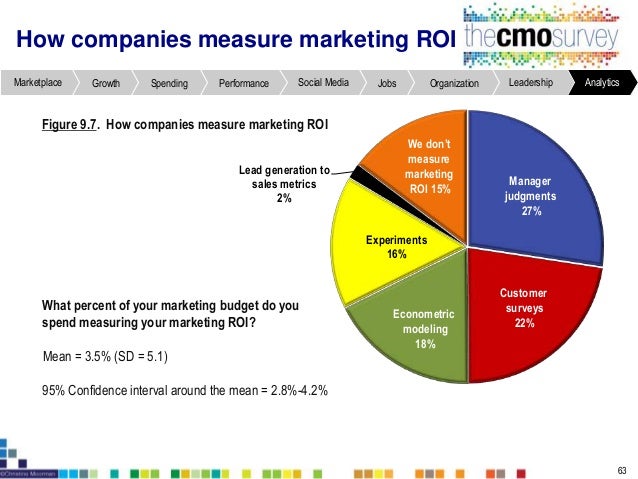
Drawing interest and investment from outside a community is one part of economic development especially on the premise they will hire local residents and use locally based suppliers.

However, the centerpiece of economic development is always to retain and grow the businesses that are already there in a community, particularly those that are indigenous.

But you know a paradigm has shifted when a developer from a rival community considers that label a pejorative, even in jest, and pleads the case as many do, to be given a Durham identity.

Many in my former field of economic development are betrayed by failing to be loyal to the very community they accept money to promote.  I remember some awkward conversations a decade or more ago in Durham.

I had to gingerly connect the dots for two of my peers in Durham back then that when you take a community’s money to promote its development, embracing the home team comes with the territory.

Here that means Duke, NCCU and the Durham Bulls regardless of your personal preferences.

At the very least, you are honor bound not to make life difficult for local teams by being distracted with personal connections elsewhere or trying to do a favor for neighboring colleagues. That is the job of economic developers in those communities.

These two peers dug an even deeper hole by trying to justify their allegiance to the Raleigh newspaper because the Durham paper had been bought by a company based in Kentucky.  The room grew quiet when I pointed out that the Raleigh paper was owned by a California company.

The term “local” refers not only to growing indigenous businesses, but to those who invest in facilities based in Durham and pay local Durham taxes.

When you represent a community, it is important to fully embrace it, not just when it is convenient.  That includes modifying previously-held personal preferences and alumni allegiances.

Too many in my former field of community marketing as well as other types of organizations in development come off as generic hired guns because they always seem more attached to their field of work than to the communities they serve.

They are easily betrayed when what they do seems “plug and play” and allegiance is paid to powerful interests over local stakeholders.  They always seem more focused on where they will land next or the next rung on the ladder than on the job at hand.

Because their focus is blurred, many are also ethically-challenged.

Part of my job before I retired was advising relocating or expanding businesses on how to become “Durhamized.”  I was pretty good at it, but gladly left that responsibility to my even more capable successor many years ago.

As local officials often tell me, I’ve done a very good job of retiring.

Monday, September 16, 2013

North Carolina Transformation Falls In Place – Part 3 of 3

In the third part of a series about the mid-century transformation of Durham and North Carolina, we pick up as the private sector approach to executing Dr. Howard W. Odum’s vision for a research park was stalling.

Durham officials had been simultaneously and vigorously pursuing another more hybrid approach to economically transforming North Carolina.

T.Y. Milburn had been busy persuading his late Durham friend’s successor, Governor Luther Hodges, that the state needed to take an extremely active role if the research park was to become reality.

Hodges who had been part of Umstead’s administration before he died, agreed.

Durham banker George Watts Hill was also busy with a group persuading the three universities – Duke in Durham, UNC in Chapel Hill and NC State in Raleigh – to co-found the Research Triangle Institute.

Some local Raleigh interests were hardest to enlist.

Fearing a few years earlier that they would lose out based on location, development and media interests there had poisoned regional relations by going Durham’s back to arbitrarily finagle an unorthodox and non-alphabetic reversal of order for the names for the jointly-owned airport.

Media interests did something similar to the order of names in the newly established multi-county designation TV viewing area (today called a Designated Market Area or DMA,) while artificially inflating it be larger in scope than much larger areas such as Charlotte, Baltimore, New Orleans and Las Vegas.

Trust had been poisoned but always more confident and self-assured back then, Durham officials were unpretentiously hard at work figuring out how to run water and sewer utilities to the Park.

Dr. George Simpson Jr., a 34-year-old war veteran and disciple who had worked with Professor Odum on the Park concept who was subsequently hired to lead it, and in part to sell the public-private approach, and soon wrote:

"Durham’s citizens have moved the Park forward with vision, leadership, and support…Other partners have been important…but the relationship with the City of Durham has always been special…"

But this was not enough to embed Durham in the Park’s narrative.  When Durham left the door open, Raleigh interests, less self-assured or as honorable as they are today, worked to divorce the Park from its Durham roots by seizing its narrative, something the architect finally admitted in the early 1990s.

They hoped to reap more relocating executives by obfuscating the Park’s location.  For more than 30 years this worked because whenever an attempt was made by Park officials to clarify, it was met with a veiled threat about cooperation or a condescending misuse of regionalism.

Durham, always worried about losing Raleigh support for the venture, naively placed its faith in the ability of executives to read maps in the days long before GPS made distortions by real estate developers and agents less effective.

As a result, tens of thousands of people who relocated to work in the Park ended becoming commuters, creating and fighting through unnecessarily traffic to work each day.

Even IBM was caught up in the confusion, mis-assigning “Raleigh” as the email locator for Durham-based facilities.

In time, Durham has reclaimed its story partly through formation of an organization charged with defending its identity and brand and because, well, GPS just doesn’t lie.

This in turn lowered barriers to visibility and for growth and revitalization, all without ever diminishing Raleigh.

In the end, Durham may have had the last word because while it fostered this engine for job growth throughout the region and transformation of the state, it didn’t have to shoulder all of the high costs of services that come with rampant residential growth.’

In essence, Durham was able to benefit through the years from more consistent and steady growth that has preserved its unique sense of place.

During Guest’s failed private sector attempt, Professor William Maughan, a forestry researcher who had been the inspiration for the founding of Duke’s School of Forestry and Environmental Studies prior to the war, had begun helping assemble Durham pinelands for the Park.

The heirs of a Durham merchant and farmer, Atlas Monroe (A.M.) Rigsbee had sold the Park project a thousand acres of southeast Durham farm and forestland which would become the anchor needed for the Park just four miles from downtown Durham.

The Rigsbee’s owned huge swaths of farmland long prior to when Willie Carver was born in Northern Durham.  A.M.’s. land, whose store at Rigsbee and Green streets served as the first town hall, stretched more to the south and east.  His brother T.J. owned another huge swatch west and south including where Duke West Campus is today.

This land and the Park became part of a foundation that continues to transform North Carolina even today but it wasn’t alone  That WWII and Korean War bomber pilot who first plowed my street was already making Durham a name for aerospace fabrication.

Milburn passed away in 1977 as Willie Carver did the year before I arrived in Durham in 1989 to jump-start the community’s way to pursue visitor-centric economic and culture development.

But I was very fortunate that one of the first people to invite me to lunch for a briefing was George Watts Hill.

Bridging back to the Dukes, all three had all witnessed when Terry Sanford, that young senator during Umstead’s administration, emerged as governor just before the Durham Committee of 100 disbanded.

As governor, Sanford vigorously leveraged connections to further cement the success of RTP by working to bring research facilities for EPA and NEIHS there.

They had all shared Durham with Sanford when he later served as president of Duke University from 1969 to 1985.  By the time I arrived, he has become United States Senator Sanford.

Whenever in town, he would would unpretentiously sit down to eat lunch and share stories with me on the stairs outside our temporary offices in Brightleaf Square, where he kept an office.

By then, those mid-century transformative Durham visionaries had already spawned other Durham economic developers such as chamber executives Robert H. Booth and James Camp who populated RTP under contract with the county in the 1960s, 70s and 80s.

They also laid the groundwork for a new demand-side economic development organization that I was brought here to lead for its first 21 years.  I noted then that Durham had been fortunate to economically transform four or five times during its history.

It was an honor to play a role in spearheading another transformation as a visitor destination which, in turn, continues to not only to bring a significant amount of non-resident tax revenue to Durham, but also helps spearhead adaptive reuse of many of its historic structures including tobacco and textile factory buildings.

But to paraphrase President Bill Clinton, none of these transformations, even some preceding those in which the Duke family participated happened through “some random evolutionary drift.”

Organizations and individuals such as those I describe above spearheaded each of these transformations.

Part 1 – Part 2