Wednesday, May 13, 2009

To Inform Us or Conform Us?

I smiled when I read that Durham changed its water restrictions to match those in a few cities and towns in nearby counties including the Town of Cary, Orange County and the City of Raleigh.

These areas have different water supplies, varying geologic basins and somewhat different watersheds and weather patterns but for many years they have shared water when one or the other runs into a drought or problems with water supply.

So why join them at the hip? Here’s the irony. People may deny it but I’ve heard it is so people won’t be “confused” by news reports on water restrictions.

Say What? Isn’t the “news” at its basis presumed to enlighten us? Shouldn’t that include shedding light on distinctions?

Yes, but that is very complex when to make as much money as possible, the “media market” stretches for 22, sometimes 23 counties in a vast oblong with no dominant center running from just west of Durham to the south and east…covering probably a hundred or so cities and towns and parts of three states.

Obviously the more population in a market area, the more you can charge for advertising.

While it may make sense on the business side, it must be hell on assignment editors, reporters, editors and crews on the news side. And while huge areas like this might make sense in a centric area, e.g., centered around one dominant city…they are far less relevant or beneficial to news consumers, advertisers or communities when the area is polycentric like ours.

Superimposing a centric model on a polycentric area has had the unintended outcome for local communities of greatly eroding truly local news coverage and marginalizing the connections historically so important between communities and their respective news outlets.

Another unintended outcome is the news from one community often gets overlaid on or homogenized to others because reporters and editors either don’t have time to unwrap or find it inconvenient to make local distinctions for such a huge area.

One result is where we see local policies being conformed to other localities, so people aren’t confused at the local level by news that isn’t applicable to them.

So the tail starts waggin’ the dog. Local officials are in a bind…because without distinctions in the news, one or more communities will always be implied to be slow or stupid if they aren’t doing what another is doing, regardless of how strong the rationale for distinctions may be. Why? Because perceptions more often than not trump reality.

Kind of basakward….

And that brings us back to an argument that has raged since this countries founding…federalism or what some call “one big place” thinking vs. leaving states, counties, towns and cities united but free to address issues at the very level at which we all live.

Tuesday, May 12, 2009

The Yang and the Yin of Community Image

I received two things today that provide a pinpoint illustration of the image issues that impact Durham.

First, the yang, a photo-letter of love from a new resident.

Second, the yin, word from a new recruit at a nationally recognized firm based in Durham that she had been guided to buy a house in Cary and commute by a Cary-based real estate broker who filled her head with notions about Durham being unsafe, infested with crime and having poor public schools.

As Councilman Eugene Brown (also a Realtor) put it, he’s been “putting up with these kinds of distortions and mendacities (I had to look that one up) for years.”

Obviously so has DCVB. And the next time I ask for Durham to get it “due” and I get one of those pious lectures about regionalism, I’m going to explain that they are preaching to the choir. It isn’t Durham that undermines regional cooperation, it is the junk spread by people like that real estate broker in Cary. And if they truly believe in regional cooperation, they need to come down like a ton of bricks on people perpetrating these distortions upon newcomers.

Sadly, I’ll be shocked the first time I hear them do that, which makes me doubt it was ever about regionalism at all but more like keeping Durham in its place.

Fortunately, he or she probably has repeated it so many times s/he believes it. And yes, sometimes the news coverage fuels the stigmas but this agent is a so-called professional who likely signed a code of conduct regarding truthfulness in statements and should know better. Fortunately, regardless of his or her motive (it would be easy to think it pecuniary) the vast majority of people outside of Wake County know it is rubbish.

Unfortunately, this recruit’s life (and other individuals that paid good money for the services of that agent) will be affected. Hopefully she enjoys it there. But I know she won’t enjoy the commute and she’ll be angry as hell when she learns there are many places right in Durham that are equal to or greater than some of those places in Cary.

Also unfortunately, there are too few Durham messengers, like Eugene Brown willing to do the heavy lifting. You can spot them because they fear confrontation and they cling to the notion that sticking our head in the sand and just disbursing more of the positive can out trump the negative. Of course that’s crazy…anybody involved in communication knows that negativity has more than twice the impact of positive. So it has to be both/and, not either/or.

We need to come to terms people like this Cary agent. They give this part of North Carolina a black eye that no amount of positive can trump.

In the meantime, retired or not, I’m going to keep fighting for Durham.

Monday, May 11, 2009

The Hazards of Relying on Datelines
and Mailing Addresses

There was a time when a reader could depend on a news dateline to signify where a story occurred. If there wasn’t a dateline, then readers could rely that the story occurred where that particular news outlet was physically located. And people could rely on a mailing address to be the same as the physical location.

But of recent, that has been dicey.

Misleading Mail Delivery Addresses

But for more than a decade, USPS has often but inconsistently assigned a mail delivery address for one community when the physical location is in another. For example, if you read Patterson Mill Country Store’s mailing address it reads Chapel Hill but the store is located in Durham.

Likewise, there are several other visitor-dependent businesses in Durham that have a Chapel Hill mailing address but are located within the City of Durham. While the rationale for that has always been suspect, it is even more problematic now that GPS and location-based content is standard for the Internet, Cell phones and Navigation systems.

The side effect isn’t just inconvenience for travelers. It has tripped up newcomers enrolling children in school, registering autos, paying taxes, or subscribing to cable service to name a few. It has even tripped up Google which for some reason relies on zip codes rather than GPS coordinates. Weird for a company usually leading edge.

In the 1990’s, DCVB worked with City-County Planning with a lot of help from Herald-Sun editorials to get USPS to correct thousands of these mailing addresses so they would coincide accurately with physical locations. Some businesses relocating to Durham have recently been adamant that mailing address be changed from Chapel Hill to Durham to coincide with their true physical location.

But there are still thousands of locations in Durham that are presently required to use mailing addresses that read as though they are located in Butner, Hillsborough or Chapel Hill, robbing Durham of association with some great neighborhoods and businesses and confusing newcomers, visitors and even residents.

Misleading News Datelines

Datelines are the name of the city or nearest city to the location of the story, and appear at the beginning of the first paragraph. But Durham’s brand is often diluted or robbed of exposure when postal substations or business parks are datelined instead.

The Associated Press (the office for the Carolinas is located in Raleigh) guidelines are very clear about datelines as follows, but are often not applied consistently when dealing with stories that occur in Durham. Often they are given no dateline in Raleigh papers, implying the story occurred in Raleigh, or they use a dateline of RTP, which is a research park based in Durham, four miles from Downtown and encompassed on three sides by the City with a Durham postal substation. But business parks aren’t eligible for datelines.

AP publishes these guidelines for datelines:

  • Datelines on stories should contain a city name, entirely in capital letters. ’04 stylebook

  • A dateline tells the reader where we obtained the basic information for a story. ’06 Values & Principles

  • The dateline for video or audio must be the location where the events depicted actually occurred. ‘06

  • When a story has been assembled from sources in widely separated areas, use no dateline. ’04

  • In contrast, a byline tells the reader that a reporter was at the site of the dateline. ‘06

  • Bylines may be used only if the journalist was in the datelined location to gather the information reported. ‘06

These seem very clear. And when inconsistencies are spied by Durham Image Watchers and then DCVB raises objections, they are almost always corrected, but often by then the damage has been done as the inconsistencies have already been picked up across the country and the world.

Address designations and datelines are probably the most prolific and elemental touch points for branding a community. No amount of hoopla or marketing will outweigh confusion created at these most basic levels of identity.

It is imperative that:

  • Institutions based in Durham or in an area of the county encompassed by Durham issue news releases with accurate datelines. If they are based in Research Triangle Park or have RTP’s Durham postal substation, then the dateline is Durham or Durham at Research Triangle Park but not just the name of the business park.

  • Institutions in Durham must politely ask the nearest AP office to properly dateline Durham locations regardless of where that office is based or where its reporters live.

  • Local government working with DCVB and the 19-organization Durham Public Information & Communications Council need to work with district postal officials (which have relocated from Raleigh to Greensboro) and press for reassignment of Durham street delivery addresses for all locations in Durham City and County.

Tuesday, May 05, 2009

Stealing a Little Gasoline

When I was a kid, we kept a tank of fuel at the ranch for tractors and equipment. We always had some acreage in oats or barley for live stock and if we didn’t finish work in a field we’d leave the tractor where we stopped to make it easier to finish in the morning.

When I was old enough to drive, I got in the bad habit of siphoning a little out of the tractor for my Jeep because I was always forgetting to fill up in town. But as you can imagine, when I went out to finish the field that next day, guess what…I’d have to drive back and refuel in order to finish the job. So my actions were short sighted and cost me in the long run.

Similarly, many North Carolina communities missed the point as the decade of the 1980’s began, when the late Buncombe County Senator Robert Swain first pioneered the local option “room occupancy and tourism development tax.” The move was farsighted but controversial. After all, many businesses then and even today aren’t even required to collect general sales tax, let alone a special tax, e.g., media advertising and personal services like haircuts, etc.

The objective of the “room occupancy and tourism development tax” was simple, yet brilliant tax policy. Re-invest 100% of the special visitor paid tax to self-fund community marketing and benefit local governments with a revenue yield of many times that amount reaped from overall taxable visitor spending.

But even after seeing the remarkable results in Asheville in just the first few years, most communities, Durham included, sought authorization to collect the special visitor paid tax but with little or nothing dedicated to visitor promotion which of course defeats the entire purpose.

Diverting the special room occupancy tax away from marketing is like me “borrowing” gas out of that tractor for my Jeep. The tractor still ran the next morning but it didn’t get as far. So communities that did this really shot themselves in the foot.

For Durham, however, four members of Durham’s Delegation to the General Assembly made sure through the years that Durham wouldn’t miss out and hopefully catch up…eventually.
  • First, then Representative Paul Pulley ensured a specific percentage, 25%, (a long ways from the 100% in Buncombe but much better than “0 %”) was set aside in Durham’s first occupancy tax bill to charter DCVB market the Durham brand and get the community on the list for consideration by visitors.

  • Next, when DCVB and Durham businesses proposed a 50% increase in the tax to make Durham marketing more competitive, the late Senator Walter Royall, enraged by an attempt to divert some of it, ensured the amount dedicated for marketing was increased from 25% to 40%.

  • Third, seeing that communities were having difficulty grasping Senator Swain’s concept, then Representative George Miller pioneered House Finance Guidelines so that other communities would use the tax more as it was intended, e.g., “no less than 2/3rds for marketing and up to 1/3rd for other tourism related projects” and communities like Durham would be conformed in the future.

  • Fourth, when rather than conform Durham to the State House guidelines, enthusiasts sought to increase the tax to fund a theater, then Senator Wib Gulley brokered a new formula that while still short of the 66% guideline will gradually bring the amount of the tax deployed to generate Durham’s full share of taxable visitor spending from 33% to 50% between the years 2020 and 2043.

Monday, May 04, 2009

“It’s Just A Movie”

When I would get too caught up in a story or a movie plot, my late Father would always look a bit disgusted and say “it’s just a movie.” He was a pretty straight forward Idaho rancher dude, just a few years back from seeing the destruction of WW II and Dachau Concentration Camp so I can understand him for not being romantic by nature.

Dad was probably always a little worried that as a boy with my friends, we often played soldiers using the gear they brought back from the War. So I can see his point now. He didn’t want me to romanticize it or believe fictional accounts.

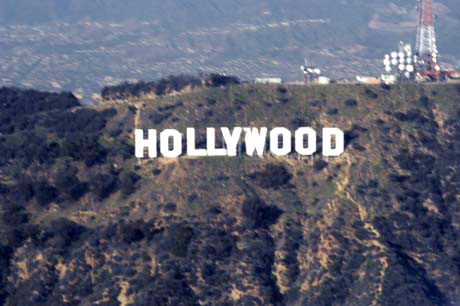
DCVB, as many destination marketing organizations are around the country, is Durham’s film office, so I’ve had reason many times to reflect on that comment when I hear people fret that a movie filmed here might not reflect reality.

People were very worried about Bull Durham 20 years ago. But when it turned into what is ranked as one of the best sports movie of all time, that concern quickly dissipated. It captured and exaggerated some aspects into caricatures…but they are still a part of Durham at some level.

Kiss the Girls concerned people because it involved two mass murderers. The author of the book upon which the movie was based, James Patterson, was quoted as saying that he picked Durham as the location after visiting here to attend a convention. He explained Durham was perfect, because no one would ever think something like that would happen here.

Now there is some concern about Main Street, because it purportedly portrays a community down on its luck. I’ve read the script and it isn’t anything like reality. But it is a good story…uplifting really. Durham in fact has never been quite that down on its luck in that sense but it wouldn’t be a good movie if Hollywood didn’t amp things up a bit.

(It does capture something subtly and that’s the condescension Raleigh folks often blurt out about Durham and that is all too real.)

Durham, in fact, has had at least four fairly rapid economic transformations and I guess some people could qualify transition as depressed….from primal forest to Native American game land and then farmland, to Scots Ulster grist mills and some plantations by mostly English from down east, to post-Civil War industrial powerhouse, to one of the leading communities in research, education, healthcare, biotech, etc.

My job is to protect the community’s identity. I’m not worried about movies though. After surviving the media frenzy over the Lacrosse case and looking at public opinion data before, during and after…I realize that a community’s image is resilient…at least Durham’s is.

The fact is, image is not determined by movies or TV shows or even the news. It is driven by deceits and stigmatizations that don’t have anything to do with reality, and it takes years to create those stigmas.

More on that later.