Showing posts with label Books. Show all posts

Friday, April 10, 2015

The Centrifugal Forces of Identity and Inequality

Short memories recently heralded the news of Durham, North Carolina’s population growth by attributing it to a revitalized downtown.

But that doesn’t explain why Durham was the fastest growing city in the state over the decade of the 1990s, a decade before downtown’s reawakening.

We forget that the Census of 2010 identified 178 million square miles in the U.S. where no one lives, meaning that around 47% of the America is unoccupied.

Carolina Demography reminds us that a decade ago, 40% of the nation’s counties had lost population between 2000 and 2004 including 10 in North Carolina.

But in the period between 2010 and 2014, 53% of the nation’s counties lost population including more than half of those in the South and half of the 100 counties in North Carolina, one of the nation’s fastest growing states.

Some of this is due to out-migration and some because the remaining population is aging out.

Rather than seeking to study and emulate places such as Durham as a “best practice, a few, very frustrated regressives in state legislatures here and across the country are pushing through repeated legislation to defile cities.

Otherwise reasonable people, they fit the definition Gallup uses in studies to identify those who seek to undermine any work environment, as “actively disengaged.”

But this relatively small group of regressives isn’t the reason this ongoing defilement of places is taking place in states such as North Carolina.

The enablers are those peers who are merely disengaged, roughly half, according to studies.

Just putting in time, these enablers fail to study or even read legislation trading the input of constituents for that of special interests paying for access or hoping for reciprocity.

An eventual sea-change when it inevitably comes will be when voters begin to hold accountable this latter group.

People often wonder if cities and towns really matter to people, in part, because it seems so many are in such a hurry to destroy what makes them distinct and marketable.

But surveys which I repeated in a former life after seeing confidential results of polling by news outlets show that individual cities not only matter but so do the neighborhoods and streets where dwellers live.

Since the 1950s, when broadcast licenses were issued for television, those meant to serve Raleigh, Durham, Chapel Hill and more than 20 surrounding counties, used their airwaves instead to try and erase the identities of individual communities.

The reason, of course, was that they could charge more to advertisers if they could hoodwink them into believing consumers would commute long distances to buy something readily available closer by.

Repeatedly, however, opinion polls showed that overwhelmingly, people preferred to characterize where they live by the name of a specific city, town or county.

Next in characterization came specific neighborhoods and streets and a very distant fourth came the notion of region so desperately pushed by broadcasters.

Rather than castrating cities and towns or trying to stamp out their identities, or pit rural and urban areas against one another, we should look at where the problems intersect.

A good start might be to carefully read a Brookings Institution report released last summer entitled The Growth and Spread of Concentrated Poverty, 2000 to 2008-2012 when the number of people living in distressed neighborhoods grew by 5 million.

Secondly is recommended a study of Complete Streets, particularly as they relate to economic development.  Don’t get too literal as you read this.  Strategically, it is relevant to rural areas as urban.

Third is a book entitled, The Vanishing Neighbor and its explanation of the importance of networks, especially those involving the less intimate “middle rings.”

Tying these resources together, a reading is recommended of a new book entitled Our Kids: The American Dream in Crisis by renowned sociological researcher Dr. Robert Putnum who also wrote Bowling Alone and co-wrote American Grace.

Putnam traces the roots of today’s inequality and lack of upward mobility through towns, neighborhoods, families, parenting, schooling and community and proposes remedies in each area.

What he calls the centrifugal dispersion that altered cities and towns creating economic and class disparities, especially racial, probably also created a vacuum and related suction, as centrifugal forces do in a pump, that similarly also impacted rural areas.

We need to work together not against one another to resolve both.

It must begin, I believe, by electing truly engaged public officials at every level and in every district.

I am referring to representatives who are willing to stand up against special interests and who hear the voices of all citizens equally, even if they are not raised equally.

Tuesday, March 11, 2014

The Who, How and How Many of Book Readers

When they hear that I spend five or six hours a day, on average, researching and writing essays since I retired going on five years ago, people usually ask me how many books I read now.

I read about two dozen on average a year, all but one or two on a combination of tablet, smartphone and desktop.

A Pew study released a few week ago finds that 3-in-4 American adults read at least one book a year.  The ratio reading e-books has risen to nearly 1-in-3.

Just since I retired, the the percentage of American adults with either a tablet or e-reader has risen to 50%, up from 3% who owned tablets and 4% who owned dedicated e-readers at this point in 2010.

Among American adults who read at least one book a year this includes 69% of males compared to 82% of females, and nearly 8-in-10 Millennials (ages 18-39,) nearly half of whom read an e-book compared to 17% of my generation.

There is little variation among those who live in rural, suburban or urban communities although print readers skew slightly rural and e-book readers skew slightly suburban.

Of those who read books in a given year, only 5% said they read an e-book without also reading a print book.

The median (midpoint) for number of books read by American adults is 5, in other words half of adults read more than 5 books and half read fewer putting me well above the midpoint.

This is not significantly different however than previous years.  Of more concern to me are the 1-in-4 American adults who don’t read a book at all in any given year including 1-in-3 men and far too many elected to high office.

My adopted home of Durham, North Carolina is less than 10,000 people shy of the 250,000 person mark needed to qualify for the annual ranking of America’s most literate cities conducted by Dr. John W. Miller at Central Connecticut State University but when it does my bet is it will rank in the top 15.

The ranking indexes six indicators: number of bookstores, educational attainment, internet resources, library resources, periodical publishing resources and newspaper circulation.  Of the others in the South, eight of thirteen are above the median.

The index is useful for setting community goals and for spotting areas of vulnerability.  The measures are key to upward mobility and overall community vitality.

This, I believe, is what bell hooks (a pen name she doesn’t capitalize) meant in her book, Rock My Soul when she wrote, “One of the most subversive institutions in the U.S. is the public library.”

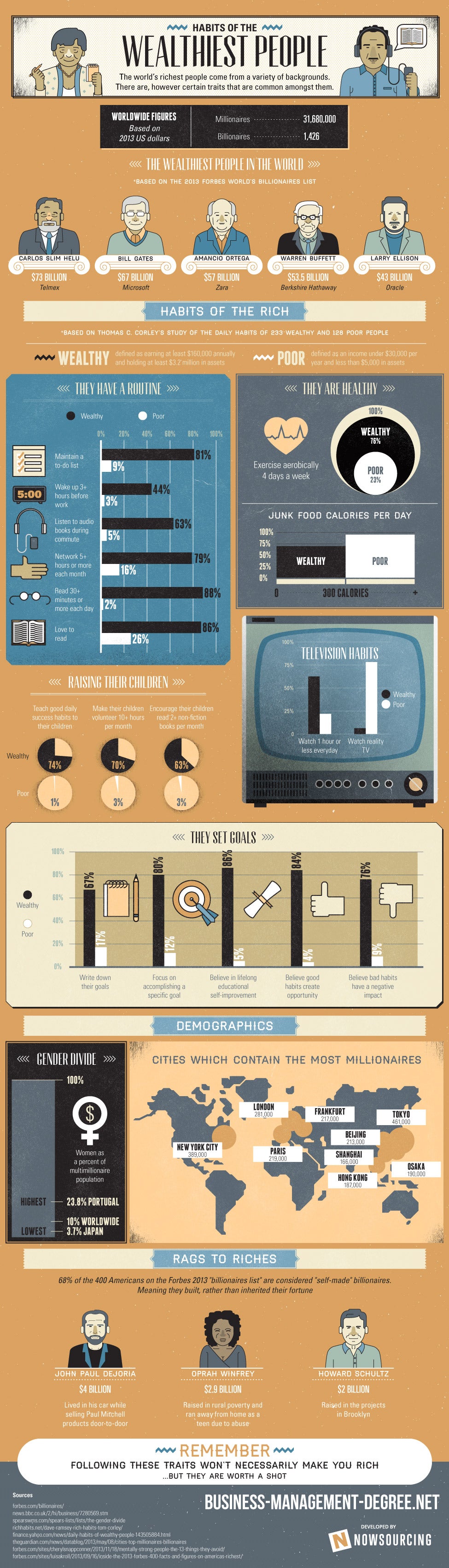
Of equal concern to me however is a study showing that only 2% of those in poverty read at least 30 minutes a day, compared to 88% of those who are wealthy.

Only 1-in-4 Americans in poverty have a passion for reading, compared to nearly 9-in-10 who are wealthy.  If we’re not worried about the adults, if we are going to break the cycle of poverty, we need to worry about the children born into poverty.

From my own experience, love of reading starts at home.

Tuesday, February 26, 2013

Down Time

Homes in the U.S. now have nearly half a billion devices connected to the Internet.  According to research by The NPD Group, nearly 4 out of 10 consumers who used to use PCs to access content have switched to tablets and smartphones instead.

Reading and sending email migrated to mobile devices many years ago, but today Internet browsing is the number one activity to have migrated to mobile platforms and reading books and magazines and I suspect newspapers is tied for third.

So when your Internet connection acts up as mine did for four days last week, I easily switched to my phone and tablet by turning off Wi-Fi but I was unable to research and write daily essays which I still find practical only on a PC.

I used the down time last week to catch up on my reading, which I now do primarily on tablet and smartphone anyway.  With access across to the same book over several very portable platforms, I find myself reading far more than the four books read each year by the average American.

As it is for 40% of tablet users and 56% of smartphone users, that is also how I access and listen to music including my personal collection of nearly 4,000 tracks dating back to but not including the hundreds of compact cassette tapes in my closet.

According to NPD research, two-thirds of U.S. consumers listen to music in their vehicle (which for me can also access services such as Pandora or my personal music library,) while about half listen on their PC and a quarter through their TV.

Unlike my Kindle which I left behind a few years ago when the app made it possible to read on my tablet or smartphone, research shows that having more connected devices results in greater use across platforms.

This isn’t going away, but apparently, I’m still pretty rare for my age cohort.  That will change.

However, it isn’t at all clear if a majority of members of the U.S. Congress or the General Assembly in North Carolina, where I live, have a handle on the importance of infrastructure overall let alone Internet infrastructure, in part because they read so little.

Maybe they need a little down time to catch up on their reading!

Friday, September 23, 2011

10 Reasons eReaders Are Reading More

Two things struck me about a Harris Poll on book reading released this month, but only one was a surprise.

One in every three American adults failed to buy a single book in the past year, up from 1 in 5 the year prior. The percentage who didn’t even crack a book in the last year increased to 16% including nearly 1 in every 5 Generation X and 17% of Baby Boomers.

The surprise though is that only 15% of Americans are using eReaders with another 15% likely to move in that direction soon. But given that they didn’t become readily available outside of libraries until 2007, I guess that rate of adoption is pretty good. The dedicated readers are now much more affordable but apps for smartphones or tablets are mostly free.

The research shows that people using eReaders read more books than those who read hard-copies. Of course, electronic books aren’t new. Project Gutenberg was launched about eight months prior to when I graduated from college in mid-1972 by another student who invented the electronic book or ebook. Michael Hart has now digitized about 36,000 items.

I began using an eReader in 2008 about a year after the Kindle came out but I’d already been reading many publications for work via computer for about ten years by then.

About two years ago I shifted to reading ebooks on my phone and tablet via apps for Kindle, Google Books and iBooks. Even though I purchase those I download into Google Books via my favorite local bookstore, I have mixed feelings because I love actual bookstores, especially independents and find myself browsing whenever one is nearby as well as during stops on cross-country trips.

But here 10 top-of-mind reasons why I find eReaders so useful:

  • Within moments of hearing or reading about a book, I can download it via my phone or tablet or computer or, depending on where I purchased them, on a dedicated reader.

  • The books are then available on three platforms and each one synchs to the place where I finished reading on another.

  • The backlighting and ability to enlarge fonts makes them very useful in any light whether it be at night before I fall to sleep or out on a deck at the lake. I read a thousand-page book during one cross-country trip using only the screen on my smartphone.

  • I can easily check the meaning of an unfamiliar word or click through to read a citation or to enlarge a chart or image.

  • I can read during moments of opportunity regardless of whether I’ve been thinking ahead. This includes during meetings when the subject matter has begun to recycle, in waiting rooms, in restaurants when I’m dining alone or waiting for friends to arrive, even when I’m stuck in traffic.

  • I now digitally receive and/or read all but one of the five or six newspapers I regularly read as well as five of the eight magazines to which I subscribe.

  • eReaders make it easier to read several books at one time.

  • eBooks can be loaned for a limited period of time to other readers. They can also be sent as gifts.

  • eBooks can be searched by clicking on parts of the table of contents or by searching key words or by highlights and notations I’ve made and want to share or reference again.

  • If an eBook is ever lost or deleted on one of the readers or my computer, it can be quickly re-downloaded. If I change or upgrade a phone or computer or tablet, I can easily access them again.

Of course, while ebooks may be even "greener"now that libraries are loaning via apps, I still buy some types of books in hard-copy. Books of large-format photography or with elaborate historical illustrations or data-charts and especially poetry which I have to read aloud to truly enjoy are examples of hard-copy books that I buy.

I hope there will always be a place for bookstores, not only for browsing but possibly, in the future, as a portal where a very limited number of copies of each book is on hand - but can be downloaded using the bar code.