Showing posts with label South. Show all posts

Monday, December 07, 2015

This Ongoing War 150 Years Later

In North Carolina, it’s no surprise to learn that “since 1960, one third of the world’s arable land has been lost to erosion.”  Nor, according to scientists, that “46-58 thousand square miles of forest are lost each year – equivalent to 36 football fields every minute.”

Tar Heels have witnessed the link between depleted soils and deforestation in the decades before the Civil War when more than a third of North Carolinians moved away.

By 1850, 31% of native North Carolinians then living in the United States resided in some other state.

Backwardness regarding slavery and race relations as well as resistance to public education and infrastructure played a big role in the out migration as did poor land use practices by plantations.

It’s well documented by unapologetic historians such as the late Dr. William S. Powell.

I’ve been reading or rereading two others recently, one written the year I was born (1948) entitled From Slavery to Freedom and another just released entitled, The Old North State at War: The North Carolina Civil War Atlas.

Both shed new light.

The latter shows the population breakdown by race and freedom-status broken down by county just prior to the Civil War, as well as the vote by county for or against succession.

You can see a divide back then running down between what is now Durham and Wake/Raleigh with 5 points more slave-holders in Wake.

Wake/Raleigh also had twice the number of slaves as Durham/Orange and nearly three times the number of free Blacks out of 30,463 statewide.

There were a little more than 125,000 households in North Carolina in 1860 and 28.2% owned slaves.

Yet in 1861, Durham/Orange voted by more than 3 to 1 against succession from the Union while Wake/Raleigh voted for it by a few hundred votes.

As the rhetoric heated, the state as a whole was almost evenly split on the issue with a slight nod against.  People’s minds back then were more focused on the wealthy paying more in taxes here.

Within weeks though, secessionists won out both because of a general sentiment of “you can’t tell us what to do” and being surrounded by states that had or were succeeding.

The North won the Civil War that resulted, which effectively ended with a surrender in Durham.  Thanks to resistance by Southern Generals Lee and Johnston there wasn’t the subsequent guerilla war Southern leaders wanted.

But that didn’t mean war was over.

Another war erupted almost immediately between Democrats who were controlled by white supremacists and Republicans.

Just as a small percentage of the population had monopolized power in North Carolina and kept it backward, then pushed it into a war to defend slavery as a way of life for a few, a similarly small percentage held power in this follow up war.

Political rhetoric is powerful as we still see today.  It can close minds more easily than open them, something given comprehensive coverage a few days ago in an On the Media radio show entitled Lies, Lies, Lies.  

Republicans lost this follow up war and soon became all but extinct across the South because the party had became divided into an increasingly conflict-weary faction seeking social justice leading to a takeover by its Wall Street wing.

Just as Democrats had become divided into factions over slavery leading up to the Civil War, resulting in President Lincoln’s election, factionalized Republicans lost the follow up-struggle.

Following the South’s defeat and preservation of the Union in the Civil War, reunited Democrats fell sway to the rhetoric of a small fraction of white supremacists who this time sought not only to reinstate limitations on civil liberties, but to virtually annihilate the Republican Party in the South, which they did.

As a result, civil rights in the reunified country were put on hold for another hundred years and even today, seem lodged between ongoing institutionalized bias on one hand and a futile obsession with effacing racist symbols on the other.

The two political parties have switched roles today.

It began gradually in the decades leading up to the 1930s on issues of social and environmental justice, then became increasingly apparent after WWII and symbolized by the 1960s.

As someone who was raised a staunch Republican which I remained until nearly 25, I have been particularly interested in the history of the Republican and Democratic parties.

My Republican roots go back to the party’s founding.  But many of those ancestors would no longer be welcome there.  People who sense I lean Progressive probably don’t realize that it is the Republican Party that has shifted.

Understanding how the parties have evolved helps me understand how I briefly moved to the left in my mid-20s before finding my comfort zone as an Independent except wherever forced to briefly sign up so I could vote in primaries.

Today it is Republican ideology that seems to view everything as a threat to way of life, dominated by a few who seem to want to annihilate not only Democrats but anyone who dares to be moderate.

We see it in the refusal to negotiate or reach bipartisan agreement, even when Democrats sign on to Republican-generated innovations such as carbon credits or healthcare overhaul using exchanges that emulate the requirement for car insurance.

Further evidence is research showing that the root of Republican opposition to addressing climate change is the knee-jerk stereotyping of anyone concerned about the environment as a “watermelon,” green on the outside, red (as in Commie for you Millennials) on the outside.

The one thing that remains constant is that just as a tiny minority held North Carolina back after the U.S. was founded and the Civil War was fought to preserve the way of life lived by only 28% of Tar Heels, policies here are still driven by a small percentage in power.

The only thing certain is that the pendulum will swing yet again, but not the problem.

The parties may reverse roles yet again one day and apologists, as always, will try to smooth everything over like propagandists did between 1866 and 1966 by transforming the issue of slavery into “states’ rights.”

Democracy truly exists only when a majority of people vote, not just when the vote is a majority of those showing up.   Maybe similar to governing boards, popular elections should be valid only when there is a quorum?

As a moderate Independent who more and more has a little “time on him” as they say in my native Idaho, I am more and more aware of the dangers of failing to admit to myths when in pursuit of greatness as a nation or perpetuating a way of life.

I know far too many reasonable Republicans and far too many crazy Democrats to believe the rhetoric when one or the other party gives in to zero sum thinking.

But as President George Washington lamented in 1795, the problem may be in the nature of political parties, meant as a means to help people make decisions but then used as a reason not to think:

“However [political parties] may now and then answer popular ends, they are likely in the course of time and things, to become potent engines, by which cunning, ambitious, and unprincipled men will be enabled to subvert the power of the people and to usurp for themselves the reins of government, destroying afterwards the very engines which have lifted them to unjust dominion.”

Lament indeed!

Monday, March 17, 2014

The Roots of Our Cussedness

On a cross-county plane trip 25 years ago to interview for a job in Durham, North Carolina, I happened to read Dr. David Hackett Fischer’s then-newly published book Albion’s Seed: Four British Folkways in America.

One chapter in particular, “Borderlands to the Backcountry,” turned out to be an insightful introduction to my soon-to-be adopted home just as reading John McPhee’s Coming Into The Country had been a decade earlier as I relocated to Anchorage, Alaska in a similar capacity.

Having read books such as this allowed me to grasp the deep cultural influences in the DNA of these places, years before I would have otherwise, something crucial to my now-concluded career in community visitor-centric economic and cultural development.

Reading Albion’s Seed also ignited a passion for family history, something I had only tinkered with prior.

This all came to mind again a few weeks ago while reading “The Great Adventure of the Outlaw Blalocks,” Professor Philip Gerard’s installment in this month’s Our State magazine’s North Carolina’s Civil War history series.

The true story is about a marriage on Grandfather Mountain between members of two Scots-Irish families, one unionist and the other secessionist who had been feuding since before the families had immigrated to America.

They came here from along the border lands or marches that stretch southwest between Scotland and England down from Durham, England through the hills, valleys, lakes and uplands.

The culture of their homeland also jumps across the Irish Sea to include Ulster where many had earlier been forcibly moved.  Nearly a quarter of a million immigrated here between 1717 and the outbreak of the American Revolution, two-thirds in the last decade.

Here they were called by the Americanism “Scots-Irish” but these immigrants would have called themselves either Scots or English or Anglo-Irish or Saxon-Scotch. The majority spoke English.

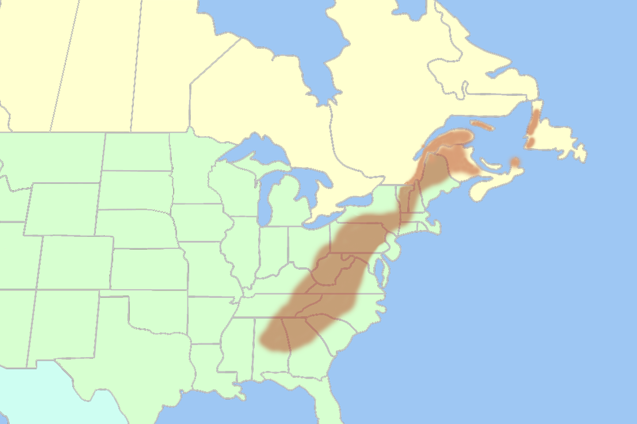
They settled along the Appalachian Mountains stretching from New England in an arch down through North Carolina and across the “old” southwest of Alabama, Mississippi, Arkansas and then parts of Oklahoma, Missouri and Texas.

They came primarily as families.  Most were skilled or semiskilled but had primarily worked as tenants or renters on land held by absentee landlords.

These homelands had been seared by seven centuries of wars between Scotland and England only to be marauded by large gangs of rustlers.

Different than the branches of my family who came to America two hundred years earlier, most Scots-Irish other than the early Quakers did not come for religious reasons.

Like my Scots-Irish family branches with names such as Harper, Buzby, Neeley, Crawford, Martin, McCrory, Laughlin, Gilmore, Bradford, Montgomery and Lowrie, these immigrants were proud, independent and resentful of being subordinate.

Mostly the Scots-Irish immigrated for land and opportunity but their border land origins gave them what we affectionately refer to as a “cussedness” in North Carolina including an aversion to assimilation.

This also included a distrust of governments, institutions and clergy, a reformist-dissenter sense of faith, a legacy of families that unified into clans for support and a belligerence toward other ethnicities including a xenophobic outlook in general that remains embedded in many today.

This legacy also included a sense of freedom and liberty interpreted for individuals and private property but not applied to groups, something apparent today among gun rights adherents who insist on interpreting an amendment meant for militias as personal, no matter what harm guns do to society.

Ninety percent of the back-settlers as David Hackett Fischer calls them were either from North England, the Scottish Lowlands or Ulster.  We hear their influence today in Country Music and architectural vernacular such as “cabin” and “log cabin.”

In the 1840s, prior to the Civil War, nearly all of my Scots-Irish ancestors became Mormons and headed west past the Rocky Mountain “front” to settle along the “back-side” of that iconic mountain range.

But they took with them many of the traits described above including pronunciations I heard in Eastern Idaho growing up, such as “deef” for deaf, “harse” for horse, “card” for cord and “wandered” for wondered, a deviation you can hear clearly in the iconic “He Stopped Loving Her Today” by the late George Jones.

We owe it to Scots-Irish influences every time we use the endearment “honey” or hear it from a waitress, same with “man” as a reference for husband or significant other, as in classic country song “Stand by Your Man.”

I returned east of the Appalachians a milder version, possibly because my Scots-Irish lines of ancestors had gradually selected out the more positive traits while retaining more than a little “cussedness.”

Today, nearly 6 million Americans have this heritage but as I have noted from reading Albion’s Seed, its cultural influence is felt much more broadly, especially in states such as North Carolina where even today you can still see it shaping otherwise seemingly inscrutable public policy.

It is why a state that is well aware that its brand is its scenic beauty can give out-of-state billboard companies free reign to blight first and last impressions along roadsides by clear cutting billions of dollars of publicly-owned roadside forest.  It’s why it will soon earn a reputation for mega-dumps.

It seems illogical and self-destructive until realized that this springs from a resentment of restrictions on use of property even if the value of that property is parasitic to tax-payer funded roads and even though any benefit will go to a few narrow interests at great expense and harm levied on the overall population in terms of air and water pollution, global warming, etc.

This is also the cultural source of resentment of zoning regulations, design guidelines for neighborhoods, historic preservation, open space and urban forests all crucial to sustain unique sense of place, a “cussedness” that doesn’t even flinch at “cutting off one’s own nose off to spite one’s face.”

When I moved to North Carolina in 1989, I was aware that the state had been conflicted during the Civil War and that Scots-Irish, including many living in the South, fought valiantly on both sides or against both sides.

Here were people represented both by those who truly embrace what it means to be American and those who remain a world apart, no matter how many generations their ancestors have lived here.

This has been extremely well documented in a new book entitled, The New Mind of the South, by journalist and author Tracy Thompson. She traces how and why this region of the country seems to be divided by new and old cultural influences.

The book reminded me that I had been aware that the month I interviewed here that it had only been ten years since Ku Klux Klan members had murdered five protestors sixty miles away in Greensboro.

My interview had also been preceded just eight years earlier by the lynching of a black man by members of the Ku Klux Klan in Alabama, something common across the South for many decades following the Civil War.

A few months after I relocated in 1989, I drove past a highway sign erected by the North Carolina State DOT on a U.S. Highway that signaled that a town 47 miles south of Durham was the home of a KKK Grand Dragon.

A state official told me at a luncheon that my newly-adopted home town had always been a “black town” because it had a reputation as accepting of different ethnicities, cultures and lifestyles.

Many I initially encountered who had been born in my newly adopted state before the mid-1970s were still eager to persuade me that the Civil War was not fought over slavery at all but rather because the South didn’t want to be told what to do as they had learned in school from propagandized texts.

They were shocked and angered by what I had learned in school including irrefutable evidence that not only was the war fought over slavery, but only a decade following its end, Southern, white-supremacist Democrats had cut a secret deal.

They would not dispute the one electoral vote election of Republican President Rutherford B. Hayes in return for the withdrawal of all federal troops from the south.  What resulted was the evolution of 80 years of Jim Crow laws reversing much of the freedoms earned by that war.

It isn’t hard to draw a line from there to the efforts by Republicans, this time in states such as North Carolina, now to roll back the progress that has been made since the 1960s.

In many ways, there are two South’s today, one having taken the best from that Border Land culture, and one holding on to its most regressive influences more than two centuries after being transplanted to America.

I may differ with many of those influences as they are manifest today, but along with a dose of Puritanism from other branches of my family history, I definitely sense those traits that are Scots-Irish within me, including more than a little “cussedness.”