Showing posts with label Motorcycles. Show all posts

Friday, September 05, 2014

Tweaking Parenting Style to Reduce Poverty

Keeping a promise made at the end of the essay posted yesterday, this follow-up reveals two fleeting encounters with stereotypes of my own, as well as a couple of studies brought to mind by a surprise stop along the way.

No matter who we are or the color of our skin or where we grew up or how tolerant and accepting we have become or think we are, we’re all bigoted in some way.  The trick is to catch ourselves.

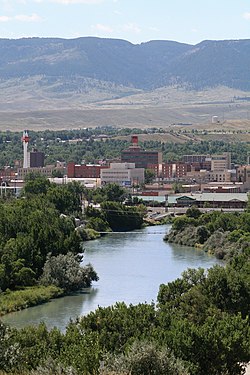
For me, one of two fleeting glimpses occurred along U.S. Route 36 as Mugs and I crossed the Wind River Reservation last month on the stretch of slightly rolling hills in Wyoming that finger up between the Middle and Southern Rockies.

By the way, if you’re not into Walt Longmire novels, or the acclaimed TV series, a good non-fiction about the struggles between cultures there over the past hundred years is Geoffrey O’Gara’s lyrical and even-handed account in his book entitled, What You See In Clear Water.

Another of his books is one I’ve re-read on other cross-country trips since I retired from a four decade career in destination marketing.  I first read it in 1989 as I relocated from the Far West to Durham, North Carolina, and the author wrote while he was relocating from the east to Wyoming.

Entitled A Long Road Home: Journeys through America’s Present in search of America’s Past, it intersperses memoir and history with excerpts from the back roads travel guidebooks written during the Great Depression of the 1930s by writers employed by the WPA Federal Writers’ Project called the American Guide Series.

While I was tooling along at the maximum speed permitted on that stretch of the Reservation, a Native American rancher slowly pulled out in front of me without accelerating so while maintaining speed I simply signaled into the other lane to pass.
Suddenly the pickup feinted into my lane to block me and the driver laid on his horn while flipping me the bird.  My mind flashed a stereotype of Native American drivers (as well as farmers in Idaho) commonly held by ranchers where I grew up.

Then I could see in my rear view mirror that the rancher had pulled on the highway for only fifty feet or so to then turn back into his ranch via another road.

By the time Mugs and I settled into Casper for the night I was ready for a tall cool one at a steak place where another encounter reminded me that I, too, am subject to stereotypes.

Surrounding me suddenly in the bar area where I was eating, were members of a motorcycle gang called the Silent Sinners, many of whom were apparently returning from a big bike rally up in Sturgis, South Dakota, in that nook pointing into Montana and Wyoming.

The group is an offshoot of a branch of the Sons of Silence in Colorado and one of eight clubs linked by the Justice Department as conduits for criminal enterprises.  Turf for this group included Wyoming and northern Utah, but the overall reach of the Sons of Silence is across 12 states.

But the members around me that evening were congenial, kidding me about having grilled chicken and veggies in a steak place and for drinking red spirits rather than brown.  Later they acknowledged that they suspected I road motorcycles by the Harley emblem on my trailer hitch.

A friend of mine who lives on the west coast of Florida assumes that any neighborhood with a couple of motorcycle owners must be sketchy, stereotyping the 9% of Americans who do by lumping them with the 5%of riders who belong to outlaw gangs.

That night I caught a glimpse of both my own prejudice and being prejudiced against by others.

Early the next morning, Mugs and I set off across the roller coaster hills and dales of Wyoming rangeland that run along the Southern Rockies as they jut up from Laramie, while imagining hired guns for the cattlemen’s association riding north during the late 1880’s Wyoming Range War to attack immigrant settlers.

Soon we dropped down onto the flatter plains that run north through Denver and up past Cheyenne where we turned east down across the high plains of Nebraska, then across its Great Plains where my ancestors began their trek out to the Rockies in the 1840s.

At Lincoln on the western edge of the corn belt plains, we stopped for the night.  Running through my mind that day as things turned violent in Ferguson were two studies.

Pundits had been excusing the violence centered around the looting of 56 stores as an outgrowth of frustration over poverty but poor people are no more violent than other Americans, and maybe even less.

To the frustration of legitimate protestors, their activity had provided cover for criminals, just as research sociologists have long warned that petty crime and blight does, making poor neighborhoods victims of crime.

As I noted yesterday, nearly 4,000 African-American slaves had toiled in the county around the city of St. Louis, including what became Ferguson, in 1860 just before the Civil War.

I don’t know that any descendants of those slaves live there today.  It was predominately white until 1980.  But a 2010 study by researchers at the Institute for the Study of Labor found that even today in parts of counties such as this, the legacy of slavery is still manifest by economic inequality, especially the gap in education.

But the paper “Being Black Is Not A Risk Factor: A Strengths-Based Look At The State Of The Black Child” points to findings that support the idea that it is “being poor in general that is the real risk factor.”

Nearly half of “black children in families living below the poverty threshold live in areas where at least 30% of the residents have incomes below the poverty threshold.”

The ratio is 1-in-4 in Ferguson, MO, but more like 1-in-2 among African-Americans there and in similar places compared to 35% of blacks, 33% of Hispanics and 13% of whites nationwide. 

A number of white progressives as well as some African-Americans get very upset at references to poverty as cultural, perhaps because many assume that implies it is brought on by race.  But in my reading this is far too narrow a use of the term cultural.

When in his remarkable essay entitled, “Inconvenient Truths About Poverty,” conservative critic and columnist Joe Queenan, who himself grew up in poverty, references poverty as “rooted in interlocking self-fulfilling prophecies, he isn’t writing about race.

The next morning Mugs and I headed south to St. Joseph, Missouri, and then to avoid traffic and road construction in Kansas City and St Louise as well as the corridor between, we took a new route along much more scenic U.S. Route 36 to cross the Mississippi at Hannibal with plans to cut south to Nashville.

We stopped for gas at Chillicothe where in 1855, Reverend David White, a minister in the Christian church was run out of town on threat of lynching for preaching against slavery.  This was also the route Mormons had taken back to Illinois in 1839 when threatened with an extermination order by the governor.

Across the bridge we looked for a “Blue Highway” south to Paducha but turning too soon, the GPS took us back southwest through incredible Illinois countryside, back across the bridge at Louisiana, Mo and down scenic State Route 79.

At I-70 I headed west past St. Charles, taking the I-270 beltline to get around traffic and stopping for gas to get my bearings and find the best way back across the river and back on track.

Two elderly black gentlemen on each side of the pump in front of me were talking in loud voices although they were both agreeing with the rhetorical question, “why were those boys walking down the middle of the street anyway?”

Out of curiosity, I asked “Where is Ferguson anyway?” I was on my way in the store to get water and received a resounding chorus of, “Son, you just crossed over it.”

There is always a lot of finger-pointing in news reports about poverty, much of it inferring that police and teachers aren’t doing enough.  But rarely does the role of parenting get any play.  According to many studies, perhaps like me, none of us feel we are very good at it.

I remember reading a typology of parenting once that across all groups 32% of parents are “authoritative,” the ideal mix of demanding and responsive, 31% are negligent, 22% are permissive and 15% are authoritarian.

Again, it is not about race, but in a book I read about a decade ago entitled Unequal Childhoods: Class, Race, and Family Life, Dr. Annette Lareau reviewed research that studied the differences in parenting styles across races and socio-economics such as middle or working class and poor.

Lareau found that working class parents and those in poverty practiced what she called “natural growth parenting,” with children free to roam around unstructured. They seemed to feel that kids will soon have it tough enough.  They give orders but avoid too much interference.

Middle-class parents practice a style she calls “concerted cultivation” focused on coaching, teaching self-control, negotiation, understanding how to challenge authority and time management.

Both approaches have drawbacks.  As the saying goes, its also takes a village to raise a child.  The late Dr. John Hope Franklin, a friend and incredible African-American scholar, told stories about how neighbors would discipline him on his way home from school.

Franklin’s research was used in court desegregation classes.  He felt that black parents of his generation felt their children needed to excel, but many in the generation after desegregation mistakenly spent too much time trying to cushion life’s bumps.

He wouldn’t be surprised that a new study in Michigan found that minority parents were far less likely today to follow child restraint laws and guidelines when they drive, but might be to know that this was regardless of socio-economic status.

Dr. Lareau found that the different parenting styles of middle class and poor or working class parents may reinforce class-based inequality by reproducing it from one generation to the next.

She argued in her book that this distinction “arbitrates opportunity in America more powerfully than any other demographic characteristic including race.”

A recent study that correlates to self-regulation in childhood found its strongest link to parenting style, especially among low income children and males regardless of minority status, household composition and parental education.

A newly published study by Canadian researchers entitled, “In Praise of Demanding Parenting: The Effects of Parenting Style and Poverty on Obesity” finds parenting style significant regardless of age, sex, parental education, immigration status, family functioning score, birth order or maternal age.

Authoritarian parents risk self-esteem; permissive parenting risks regulator deficits.  Each parenting style has advantages and disadvantages but it is worth considering the role parents, families and neighborhoods can play in overcoming poverty.

Tuesday, September 03, 2013

Two Wheel Calculus

I happened onto an accident scene two weeks ago at the base of the ridgeline where I live in Durham, North Carolina.  Moments before I headed down to grab lunch, a car had turned right in front of a scooter, giving no time to react.

As I drove my Jeep slowly past the scene, a paramedic seemed to shake his head almost imperceptibly.   Later I learned that the rider, a cook and a young Durham native in his prime, did not survive.  The driver was charged for not yielding the right of way and misdemeanor death by vehicle.

I returned home and took my much heavier Harley-Davidson Cross Bones out for a spin to shake off the effects from seeing that fatal accident scene and to remind myself how defensively you must ride, anticipating that drivers don’t see you or may do the unexpected at anytime.

Raw statistics show fatalities on motorcycles are 30 times that of cars but that drops 48% by not speeding, another 42% by avoiding alcohol and 37% more if you have antilock brakes.   That puts it far below the average for cars, especially for riders in my age group and when you religiously practice defensive driving.

Also wearing a helmet, especially when it is full face, helps a great deal.  Any DOT-approved helmet helps.  Research shows that riders without a helmet are 40% more likely to suffer a fatal head injury in a crash, 60% of which are the fault of drivers not riders.

Texas gave into special interests who successfully argued for repeal of that state’s helmet law and by doing so validated the research with lives when that state saw a 31% increase in motorcycle fatalities.

Accidents happened in the blink of an eye and ones such as the one near my house may not be avoidable no matter what you do, even if you are in a car.  It is a reminder to live every minute as though it was your last.

As a young boy I learned to ride Honda 50s and 125s across range and farmland.  But I first learned to ride defensively 46-years-ago last week when I purchased a 1967 VeloSolex 3800 from Cycles Pithioud (ad in image below) in what is now yuppified Voltaire quarter of Lyon, France.

Solex was launched in 1946 and I bought No. 4,111,740.  Lyon is a city in east-central France that was founded by Romans in 43 BC.

The dealership in that location which now sells Hondas was about five minutes from the incredible Renaissance and Gothic-laden Vieux Lyon district across the bridges over the Saone and Rhone rivers where they straddle a narrow peninsula through the city where I lived a week or so.

The VeloSolex dealer was also 8 minutes down the Saone from another one of the places where I stayed for a few weeks overlooking the Place du Marechal Lyautey and midway down to where the two rivers merge.

My new Solex was essentially a bicycle powered by a 49 cc engine that you lowered onto the tire where a ceramic roller then powered the front tire through friction.

It was a very cool way to tool around town even given the hard-earned craziness of French drivers, who nonetheless always seemed aware of those of us on two wheels.

My favorite jaunts were over the rivers to the Cathedral of Saint-Jean-Baptiste in historic section or up the hill there to the Basilica of Notre-Dame de Fourvière, places where this Idaho-ranch-boy would regularly sneak in to listen quietly in the near darkness to incredible music.

The little Solex would also chug its way up just northwest of town onto the nearly 300,000-acre Les Dombes.  This is where ancient fish farmers and then later Trappist Monks sculpted 1,500 ponds and lakes out of wetlands.  The rain-filled ponds would also be regularly drained and the clay bottoms mined for bricks or sediment planted with crops and then allowed to refill.

Today Les Dombes is an incredible sanctuary for migratory birds.  It was also easy enough to truck north or south 20 miles through quaint villages to wine vineyards villages.

But the little Solex was certainly not sufficient to get me the two hours up into the gorges of the Alps such as those around Grenoble which hosted the Winter Olympics a few months after my time there and were dominated by the unorthodox Jean-Claude Killy.

A Harley such as I ride today, would have been perfect for the Alps.  In fact, federal Gendarmes, a unit originated at 15th century cavalry, patrolled French highways on huge motorcycles by 1967.

I was never able to master the French-bump method of skiing moguls that Killy popularized.  However, my bother-in-law Rick is a master.  Leaning over and carving around moguls, which is called sculling, was too ingrained in me by then.

By contrast, a “bump” skier like Rick stays just as low but not as far forward and much more relaxed.  Instead of sculling the mogul, “bump” skiers ski the tops, pulling up their knees to absorb it and then using their knees to pivot off.

It was very radical at the time.  Seventeen years after my visit to the Alps along the French border with Italy, as a community marketer for Anchorage, I was part of a small group that won that city the honor as America’s choice to host the 1992 Winter Games.

We lost out to Albertville, France in that same part of the Alps.  Anchorage tried again and lost the bid to host in 1994.  Now a similar committee there is exploring a bid for the 2026 Winter Games.

I prefer to ride a Harley sitting back and relaxed and shifting with my heel rather than crouched forward and toe-shifting as many riders do on other styles of motorcycles.  Young riders may see my style as old-fashioned or traditional.  But hell, what is riding a Harley all about if it is not tradition.

VeloSolex is still manufactured and sold on that same street in Lyon, a nine minute walk from where I bought the one in 1967.  But today they have sleek designs by Pininfarina, a famous Italian industrial design firm that has also collaborate with Alfa Romeo, Ferrari, Fiat and Maserati to create many classic sports car designs.

They even have a very cool fold-up version and an electric version.  Unfortunately, lawmakers have failed to pass legislation to make this type of vehicle safer in North Carolina leaving it possible for people as young as 16 to ride them without a license or insurance.

One dealer who opposed the bill was quoted as saying that he thinks “everybody should be responsible for their own actions…I really think they just can’t demand it all of a sudden and take everybody as a group and make them pay.”

I understand that conservatives worry about losing various liberties.  As a moderate Independent, so do I.  But it astonishes me that they seem to fail to grasp that requirements like carrying insurance etc. whether on a two-wheeler or for personal healthcare isn’t about losing freedom.

Requirements such as these are to prevent the costs of our actions and/or our accidents from being shifted onto other taxpayers and consumers.

The damage to vehicles and to lives is just the tip of the iceberg when it comes to full-cost accounting for accidents.  There is also the cost to families, the cost of investigation, the cost of adjudication as well as the costs to other consumers left by the uninsured.

It seems like requirements like insurance are to preserve freedom, not take it away.  Just sayin’.

I’ll stick with my the Harley, but you won’t hear me whining about requirements to carry insurance, get a license and wear a helmet.  It is as much for others as it is for me.

Tuesday, January 08, 2013

Becoming Extinct

My blood type is O-Negative.  I’m a universal donor which I was told means anyone can use my blood for a transfusion but if ever needed, I’ll need this specific blood type.  It is a actually a little more complicated than that but it is true in life-threatening situations.

In the USA, O is the most common blood type.  O-Negative isn’t the most rare but it is found in only 8% of US Caucasians, 4% of African Americans and Hispanics and 1% of Asians.  On weighted basis, that means O-Negative is found in 4.3% of the population worldwide.

My blood type is also becoming extinct.  The negative is for RH which means I don’t have a Rhesus monkey in my background, as apparently  85% of the population does.  Many think o-negative is the purest blood group. It can’t be cloned. My diet is closest to the cave man.  On one genealogical site I can trace ancestors back to Adam.  Others theorize this blood type may mean I am linked to ancient astronauts.

Okay, now I’m getting spooked!  Studies have shown however, that donating blood as little as twice at four-week intervals is linked to a drop in blood pressure, heart rate and blood sugar levels.  The subjects in these studies were obese and I don’t have those conditions but maybe it will work for those pesky triglycerides? 

Scientists determined blood types in the early 1900s.  Nazis adulterated the science to rationalize genocide.  According to author Charlotte Libov – “In World War II, Japan segregated some of its fighting units by blood type because its commanders believed that soldiers with the same blood group would work together better.”

In his mid-1990s book entitled Eat Right 4 Your Type, Dr. Peter D’Adamo devised diets and exercise for each of the major blood types and an encyclopedia linking blood types to various health conditions.

Last year Harvard University’s Dr. Lu Qi and a team of researchers published a study linking various blood types and the risk of heart disease.  Blood types, according to Libov “are determined by the differing antigens and antibodies that the blood contains.”

For example, some blood types are more susceptible to bacterial infection and others to viral.

There are actually 32 blood group systems used to identify blood type.  Last year scientists at the University of Vermont identified two new attributes that will make transfusions even more accurate.

I think all of this is to say that I need to get my butt the three miles down to the Durham Red Cross blood donation center once a month, another good excuse to clean out the pipes on the ole’ Cross Bones.  Or I could exercise.  Or eat red meat less often but that wouldn’t be very cave-man-like.

I read an article last month about “microlives” or increments of 30 minutes of life expectancy.  Statisticians at the University of Cambridge have computed the risks inherent in various habits.

Apparently, eating an extra portion of red meat a day will cut a man’s life expectancy down by about one year and is apparently much riskier by some measures at my age than riding a motorcycle.  I wonder what it is for those of us with an O-Negative blood type?

In an article this month by Frank Bures entitled The Rewards of Risk in The Rotarian magazine, he writes in part about the studies of risk-taking by Dr. Frank Farley at Temple University and their role in our lives.

Farley divides personalities into categories of “T” for thrill.  “Big T” people, whether “T-mental” or “T-physical,” seek challenges and enjoy the thrill of seeing what they can do.  A few, unfortunately, veer into “T-negative” things such as gambling and crime.

“Then,” Bures notes, “there are what Farley calls “small-t” types – people who are risk-adverse, who let their lives be circumscribed by what they fear: failure, loss, humiliation, pain.”  He notes that 18% of the US population is affected by anxiety or the fear of possible future misfortune, a rate five times that of a third world country.

I guess, for some, I may be considered a “Big T” person, even though I’ve been retired now for three years.

I’ve spent a lot of time on a Harley, learned enough to fly an airplane, researched and written more than 860 essays such as this (Big-T mental, at least for me,) taken four-6,000-mile east-west cross-country trips with my Mugs, my English bulldog and four north-south trips with a friend.

I’ve also spent as much time as I can with family, especially my daughter and grandsons.  I treasure speaking with her several times a week as she drives to her work as a healthcare attorney or waits for the boys during an activity.

I haven’t even touched a number of other passions and interests yet, but life in so-called retirement has been rich and rewarding, so I am very blessed.

There are some things I need to do less, like eating red meat, and some things I need to do more, such as exercise.  Regarding the later, I am either a “small-t” or just lazy.

But I hope I can keep “letting go of life’s handrails” as Dr. Farley puts it because as Bures concludes in his article – “Not taking risks along the way is the biggest risk of all.”

Tuesday, September 18, 2012

Why Does Harley Kill The Things Riders Love?

As many people are aware, I ride a Harley-Davidson Cross Bones and fall is the perfect time of year to take extended excursions.  There are many reasons people ride motorcycles including the fact that bikes such as mine get 45 miles to the gallon, but none more important than the rider’s proximity to scenery and nature.

There are 25 million motorcyclists in the US including 6 million women as of 2008.  According to a new study released last month 9.7% of the nation’s adult population use motorcycles to take 244.6 million trips along roadways (not including off-road) solely for outdoor recreation, predominantly scenery.

So why is it that Harley-Davidson’s 635 full-service dealers across the nation are among the most frequent users of roadside billboards that desecrate the very reasons people take these trips? It seems to me that their primarily is just to signal they are available to provide services if needed.

Motorcyclists were among the earliest adopters of navigation systems such as one that is glove-friendly by Garmin that comes pre-loaded with the locations of Harley dealerships.  Far more motorcyclists have adopted Smartphone apps for the same purpose (my fav is CoPilot) which make it possible to similarly access directions and business locations via Bluetooth connections and hear them through speakers in the rider’s helmet.

So is this just a rare instance in which the otherwise incredibly disciplined Harley-Davidson has fallen out of step?  Statistics show that these roadside monstrosities are now used by just 1 in 12 consumers over the course of an entire year, but even at that the fact remains that deliberate distractions are something no motorcyclist needs.

Or is it just that, like so many other organizations, Harley’s sustainable business strategy, which was so highly touted this spring, or its environmental policy, or perhaps both, have failed to dictate the use of only advertising media that doesn’t harm the planet by destroying trees and vegetation so critical to cleaning the air and storm water along roadsides.

Outdoor cruising by motorcycle is a huge business now.  For this purpose alone, riders and passengers spend $14.3 billion on bikes and accessories and another $52.6 billion on trip-related expenditures.

Direct spending alone generates an economic contribution which includes 410,972 jobs, $20.8 billion in personal income and $5.5 billion in tax revenue - $2.6 billion of which funds state and local services.

There have to be far less destructive ways to reap a share of this economic impact.  Other motorcycle manufacturers have found a way to do this without bringing harm to their riders who are the life-blood of their business.

Maybe these other manufacturers are aware of polls such as one taken in North Carolina, where I live, which show that 78% of Independent voters, 70% of Democrats and 68% of Republicans hold the view that billboards detract from the appearance of their communities and more than 80% oppose removing more trees so billboards can be seen from even long distances.

Do the math.  Isn’t it high time for Harley-Davidson to update its marketing practices?

Friday, June 22, 2012

8 Take-Aways From Each Side Of The Helmet Law Debate

My late father would become apoplectic at mention of the law mandating the use of seat belts after it was enacted in 1986 where he lived and now in force in every state except New Hampshire for anyone in the front seat and for all passengers in 26 states and the District of Columbia.

So I have a window into the seemingly absurd objections by lobbyists for motorcycle owner organizations to laws in many states, including North Carolina, where I live, requiring the use of DOT-approved helmets, even going so far as to muzzle government-sponsored educational programs.

The battle over helmet laws has been raging since the late 1970s when many began to be rolled back.

Personally, lessons learned in my formal training on how to ride a motorcycle were enough to convince me not only to wear a helmet, but a full-face helmet, since injury to the jaw and face is more prevalent than to the top of the head.

Dad understood the logic of seat belts, he just objected to being “required to use them”  so debating with him about this and a variety of other issues taught me to look behind controversial issues to try to learn why otherwise reasonable people might be contrary to something that seems to be in their own best interest as well as the interests of society.

Here are 8 take-aways from reports for and against helmet laws:

  • Helmet use is estimated to prevent 37% of fatalities among motorcycle operators and 41% of fatalities among passengers.


  • There were 8.2 million owned and registered motorcycles in 2010, compared with 4.3 million in 2000,) but the 1.8 fatalities per 1000 vehicles has increased only 0.3 percentage points.


  • Helmets do not prevent motorcycle crashes:
    • 34% of all motorcycle fatalities involved alcohol making awareness and intervention programs  more effective than helmet laws.


    • 25% of all motorcycle fatalities involved invalid licenses making promotion of safety programs and licensing and testing more effective than helmet laws.


    • Half of all motorcycle fatalities involve another vehicle and that vast majority of these are the fault of the other driver so motorist awareness programs as well as motorcyclist “conspicuity” programs would be more effective than helmet laws.


  • While motorcyclists are as likely to be covered by insurance as other motorists, studies show that insurance doesn’t cover the costs of investigating accidents which studies show average more than $7,000 each.


  • Enactments of universal helmet laws have consistently been associated with a 90- to 100-percent increase
    in helmet usage, a 20- to 40-percent decrease in fatalities and fatality rates, and approximately a 67-percent decrease in serious head and brain injuries.

Prior to the most recent recession, the economic impact of motorcycling was nearing $30 billion annually.  Riders on average are over 40 years old, college educated with above average household incomes.

Studies are showing that motorcycle accidents are higher for younger riders, higher for sport bikes than cruisers and most are unrelated to speed.  In my experience, the biggest danger to riding a motorcycle comes from drivers of cars and trucks who are distracted by everything from billboards to putting on make up to texting.

The respective arguments by safety officials and motorcycle organizations all make sense, but rather than obsessing with helmet laws, my overall take-away is a hope that they spend more time listening to each other and mutually prioritizing and working toward solutions that make the most sense.

Tuesday, June 28, 2011

Re-Jumpstarting The United State Bicycle Route System

Motorcycles have something over electric or hybrid cars because, you can hear them beside you or coming up from behind. That makes a difference to the bicyclists with whom I frequently share the hills and dales of winding country-two-laners near where I live and enjoy riding my Harley.

“Loud pipes save lives” is more than a slogan and we must have counted two hundred bicyclists during a beautiful ride this past weekend for brunch at the Saxapahaw General Store, unpretentiously cloaked as a “Five-Star Gas Station.”

My adopted home of more than two decades, Durham, North Carolina, is now not only dissected by the East Coast Greenway which runs from Maine to Florida but now recognized as the headquarters of the nearly 3,000-mile route, 25% of which is on traffic-free pathways like the American Tobacco Trail here. At times the Greenway conjoins with the recently revived United States Bicycle Route System.

Unless bicyclists are very experienced, the Greenway route is still best traveled and enjoyed as excursions on short traffic-free spans while on other trips via car, bus, rail or air, where airlines now provide special boxes to carry bicycles baggage holds.

That’s how I suspect most communities market the Greenway. Community/destination marketing organizations along the route can click on each state on the interactive route map to find more specific area maps at the bottom of each page.

It is hard for me to believe that the idea of the East Coast Greenway only began during a 1991 conference in Massachusetts which, coincidentally, was shortly after I relocated to the southeast here to jumpstart Durham’s community marketing effort.

While Durham now appears on the Greenway map, it is a bit confusing to visitors that equally-trail-rich Raleigh seems to get unusually large billing for being only connected by a spur. The East Coast Greenway actually cuts west of Cary, North Carolina and on to Fayetteville before veering down to Wilmington to follow the coastline for the remainder of the way.

This is probably because the Greenway conjoins with US Highway 1 and US Bike Route 1 for a bit, and when the route and map were first created it probably wasn’t yet known that it would ultimately diverge to the west and down through Durham.

USBR 1 cutting down through Virginia and into North Carolina to Raleigh is one of only two segments designated since 1981 as part of the proposed US Bicycle Route System by the Association of American State Highway and Transportation Officials (AASHTO.) Click here to enlarge the map. It appears Durham will be on a future east-west BR.

Recently several additional routes, USBR 1 in Maine and New Hampshire and USBR 20 in Michigan and USBRs 8, 95, 97 and 87 in Alaska, have been approved. If you wonder what “experienced cyclist” means, try driving anything motorized down US 1 through nearby Raleigh and you’ll get an idea of the experience needed to maneuver through congested areas.

The FastLane blog a week ago on the US Department of Transportation website and a FAQ on the website for the Adventure Cycling Association which has been contracted by AASHTO to facilitate more route designations to the system indicate that 44.7 million Americans age seven and older rode a bicycle six or more times in 2008.

Bicycling is now the seventh most popular recreational activity in the nation. Click here for Adventure Cycling resource page with links to various studies on economic and community benefits.

According to a post a few days ago on the website GOOD, Americans made 4 billion bicycling trips in 2009, up from 3.3 billion in 2001. To put that into perspective there are now between 10 and 11 million motorcycle trips annually in the US. From my observations, we share the road together much better than automobiles do.

Click here to search the US Bicycling Route Map by state or by route which is probably the most useful for the majority of bicyclists who would use part of the system during a trip. It is also a good place for official community destination marketing organizations to find specific links to the appropriate segments.

Click here for links to various Durham maps showing local routes for biking and hiking, the locations of bicycle racks or overall greenways and trails.

Thursday, March 17, 2011

Gen Y Are Going All Harley!

People subject to stereotyping may think that I’m a typical Harley-Davidson rider since I’m nearly 63 years old even though I didn’t take up motorcycling until two years ago.img-9_html__98441_zoom

Even most H-D enthusiasts are under the out-dated impression that enthusiasts of this American icon are older and getting older.

Not so anymore.  Matt King, the editor of HOG magazine (Harley Owners Group,) writes this month that beginning in 2008, Harley-Davidson took over the top spot in sales of new bikes of all engine sizes to the age group 18-36, or Generation Y.

Harley-Davidson is more popular with Gen Y than it was even to Baby Boomers when they were that age based on total sales.  Signaling the power of the brand, 94% of Gen Y riders who start with previously-owned Harley’s indicate that when they buy a new bike, it will be a Harley-Davidson.  The next most popular brand appeals to 15%.

Now what about that cross-country on the Cross Bones that I keep toying with?  For inspiration, I’ve been reading about Bessie Stringfield, an African-American woman who made eight solo long distance rides in the ‘30s and ‘40s covering every state.  And that’s during a period when roads weren’t as safe, nor was much of the country for an African-American.

She rode, according to a brief by Charles Plueddeman in HOG, for 63 years, owning 27 Harley-Davidsons after she switched from the 1928 Indian Scout she learned to ride on at age 16.  Ms Stringfield died in 1993 at the age of 82.

I think I can do it…now about that Liberty sidecar so Mugs can come along, “pink” doggles and all???  Sweet!

Friday, October 08, 2010

Editorial Needed To Go Deeper and Further

A Winston-Salem Journal editorial published a few weeks back and reprinted in the editorial section of the Durham Herald-Sun came up short in my opinion.

It supported making a new law applicable not just to motorcycles but scooters and mopeds. I agree but…

The editorial needed to go further and at the same time the data used in support was so general as to be alarmist. Here are some clarifications from my viewpoint:Capture

  • There are 14.53 deaths per 100,000 vehicles in the nation according to the NHTSA. To get any perspective though, it is important to disaggregate the rates of 50-60 for motorcycles.

  • Sport and supersport motorcycles run 11-23 deaths per 100,000 even though they amount to only 9% of registrations a few years ago according to the Insurance Insurance Information Institute .

  • Cruisers like my Harley Cross Bones and Standards run far lower than sport bikes and vehicles as a whole with 5.9 deaths per 100,000 although they make up half of all registrations. That is far lower than cars and vehicles in general.

  • 59% percent of motorcycle fatalities were not wearing helmets, 35% were speeding, 25% had an expired license and 29% of fatalities driving motorcycles involve alcohol compared to 23% in other vehicles.

  • I may have misunderstood the editorial but endorsements are already required to ride a motorcycle. The problem is learners permits which require little effort and people just renew rather than get an endorsement.

People shouldn’t be apprehensive about riding but it is a good idea to look at the safety record of various types of bikes. Driver safety is a major point of emphasis for manufacturers and they should make measures like anti-lock brakes and air bags either on the bikes and/or in jackets universal.

More importantly, in my opinion, completion of a rider safety course should be mandatory to even get a learners permit for any of these vehicles.