Showing posts with label Ferguson. Show all posts

Wednesday, March 11, 2015

Really, Pretty Centrist

I am a self-described moderate but people who know me say I can sound “pretty liberal.”

But a core of regressives in our state legislature as well as in the U.S Congress make moderates and even true conservatives sound liberal.

In truth, I get exasperated with a tendency by some liberals to sound as though they are always trying to absolve groups and individuals of personal accountability.

An example is a story last week on New Republic by Dana Goldstein entitled, Inexcusable Absences about some truancy laws that hold parents accountable.

My concern as I read the recent DOJ report on the police department in Ferguson, Missouri, is that as a society we have an obsession now with institutional accountability.  That blinds us to an even more significant underlying problems in neighborhoods and homes.

In fact, there is ample evidence that even the problems of some individuals within institutions can be traced back to the homes and neighborhoods where they were raised.

But if you get “bleeding heart” beginning of Goldstein’s story, she makes several very valid data-driven points about how we can institutionally deal better deal with truancy institutionally, but few to enlighten societal interventions at home.

Okay, am I sounding moderate enough now?

I may have dismissed the article too soon had I not read Goldstein’s phenomenal book recently entitled The Teacher Wars, a well-written and documented overview of 175 years of American education.

It was particularly enlightening when read, as I did, in tandem with the just published revision of The Libertarian Mind written by David Boaz.  There is actually more agreement than people who only judge them by their titles might think.

This country was founded by liberals and libertarians who did not see those outlooks as incompatible.

The Teacher Wars illustrates just how old, tired and ineffective the polices are that are now being rehashed by regressives elected to high office across the country.  The far right still fails to grasp that we are not all born equal.

The book also illustrates how misguided teacher unions have been to shield unengaged teachers from consequences.

The Libertarian Mind brought to mind a friend I see on occasion frequenting a restaurant in our neighborhood.  Get him started and he will spend all the time you have and more explaining how the federal government is to blame for the collapses that brought about the Great Recession.

He has a point but fails to grasp that it is the free market that fails to incorporate the full cost of its actions into a fully sustainable cycle, instead pushing what are called negative externalities off onto society.

Taking responsibility for consequences is also a theme in The Libertarian Mind whose adherents would probably agree with the right of Michael Brown’s parents to sue the Ferguson Police Department as a rightful consequence.

But it is much more complex when consequences are enforced on poor parenting or neglectful neighbors and landlords or on personal behavior regardless of circumstances.

This is also an area today’s liberals avoid, seeming instead to absolve consequences by viewing personal responsibility through the lens of victims of circumstance such as objecting to work requirements for safety net benefits even though those were required when the nets were first erected, ironically by liberals.

Everything seems to revolve around that pesky little issue of free will.  Libertarians seem to reject any other influence and liberals often seem to sweep away free will altogether.

The sticky wicket seems to be what is blameworthy.

But none of us has been held entirely responsible for each of our actions so criminalizing poor or inadequate parenting may not ensure personal accountability either and certainly doesn’t seem fair or consistent with any of the world’s spiritual cultures.

Consequentialism and Communitarianism, are to me at the opposite ends of a spectrum, one seeming to view the world only through individual responsibility and the other viewing responsibility as a result of community interactions rather than personal behavior.

So there too, I find myself clinging as a centrist, though as I get older liberals probably see me as “pretty conservative” and my more conservative friends see me as “pretty liberal.”

Tuesday, December 02, 2014

Through A Different Lens

Secretly, journalists had to be asking themselves why more people weren’t up in arms in Ferguson, Missouri last week as “lookie-there” reports circulated about the tiny number that were torching the private property of neighbors in response to a grand jury report.

I don’t mean to be cynical.

Virtually no one on the front lines in that highly competitive and breaking news-obsessed line of work has the luxury of mindfulness or even personal accountability when it comes to fueling the “rush to judgment” these story feeding frenzies create.

Nor do they seem to ever go near the issue of personal responsibility unless it is white collar crime and related to a fall from grace.

Take away the relatively small number among us on either side of that tragedy that made up their minds with far too little information and then further subtract those of us who seemed to have formed an opinion just to reinforce a larger point and we’re left with the vast majority of us who simply have compassion fatigue.

From the beginning, even after I passed through there at the height of turmoil last summer, none of the narratives in the Ferguson case fully made sense to me.

Not even the incredible job ProPublica did on crunching data seemed to go anywhere near deep enough to draw conclusions beyond better policing.  The topic of race seems to inhibit any effort to look for deeper social influences.

I’ve always got the impression I am slightly progressive leaning as an Independent because of my concern for social justice but it is increasingly clear at times like this that I may be among the 10% of voters who truly are straight up Independents.

Part of the reason is compassion fatigue brought on, in part, by well-meaning folks who want to do right but pile on seemingly without a clue.

Are there rogue cops?  Yes, but not nearly as many as there are on TV shows or in movies where the predictable narratives skew either that way or to superhuman.

Is everyone who acts out in response to authority, guilty of something?  Not unless you throw in those with mental disabilities and those who are just being jerks.

I’ve sat in enough rooms over the years with very well-meaning people, including those who are or have been underprivileged, to know that the latter have compassion fatigue too, but more so, they hate to be patronized.

I remember having a discussion about adopting a metric to measure closing gaps in school achievement when a county manager began to lecture me that studying and publicizing gaps would be racist.

A friend among one of the groups we were discussing quipped, “Are you kidding?  Do you really think we aren’t fully aware of the problem and want to do everything possible to close it?”

No one deserves to die but everyone involved plays a role when these things occur.  Focusing only on police restraint or latent racism by either party seems to fall short.

More than a decade ago, a friend of mine in education would often explain to groups that closing the achievement gap in schools had to take place between kindergarten and third grade because some children started out already more than a thousand books behind.

Unspoken though, because no one wanted to go there, was why were they so behind and how do we change that?

The seminal influence begins before birth (no pun intended.)

During the events in Ferguson, I reread a updated edition of a book I had read back then entitled, Unequal Childhoods: Class, Race and Family Life by Dr. Annette Lareau.

It is based on in-depth observations over time of 88 African-American and white families across the spectrum from middle class, working class and poor families with children ages 9 and 10, of which twelve are discussed in the book.

There were families of each race in each class but the definition of class was a combination of both household income and education level.

Lareau and her researchers also did a follow up ten years later.

She found that all of the parents wanted their children to be happy and to thrive but they fell along a spectrum of parenting about how to do that.

At one end, there is extreme “natural” parenting and at the other extreme “concerted cultivation” parenting.  In the extreme, both styles have pros and cons.

For example, during my pre-school years, my parents had a natural style but as I grew up, it evolved more toward concerted cultivation. But either way they were probably always more to the center of the spectrum.

I also had a number of friends raised at each end of the spectrum. Looking back now, my parents, one of whom did not complete high school and both of whom worked more than one job at times to pull themselves barely into the middle class, did a very good job.

Lareau wasn’t looking for an either/or answer but a correlation to what would predict an upwardly mobile trajectory for those in poor or working class households and what links there might be for keeping middle class children from downward mobility.

For a quick video overview of the times per week the researchers spent observing the children both in school and within the home as well as the follow up ten years later click here.

I have found that many people talk about this study without ever having read either edition of the book so I definitely recommend reading it cover to cover more than say an overview such as the one linked here.

The positive links she found to upward mobility or sustaining middle class status once achieved vs. cycling downward didn’t relate to race as much as they did social class and parenting style.

A third of Americans raised as middle class (income) fall out of the middle as adults including 38% of black men and a somewhat lower proportion of Hispanic men.  Achievement gaps on test scores play a role.

A lot of things can affect how things turn out for us as adults but Lareau’s studies are particularly fascinating because they provide insight into the interplay of parenting, neighborhood and institutional influences.

For parents who are poor or working class, a natural style of parenting becomes the default because the logistics of housing safety, clothing, doctors appointments, getting to bed and ready for school, not to mention putting food on the table often take precedence.

The natural parenting style tends toward directives and completely unstructured and undirected play time.  But it isn’t just less intensity about organized leisure or learning activities that differentiates the natural style.

There more likely isn’t the time to interact by answering questions with questions and exploring options such as certain behaviors or coaching on how to deal with authority and institutions or how to question adults….or reading books.

Clearly the boys in Ferguson not only knew how to blow off authority and social norms but apparently may have also over reacted.  It doesn’t excuse shooting them either, but there has to be some accountability on both sides.

Police restraint is not the panacea.

Of course, many of us see when the concerted cultivation style goes awry, e.g. domineering helicopter parents, a sense of entitlement that it is the job of parents to make sure a child is never bored and far too little unstructured time.

But the true value of the concerted cultivation style is having conversations with children where they explore feelings, thoughts and options as well as learn to learn by reading books well in advance of formal schooling.

Any effort to ensure social justice, including addressing poverty, needs to be informed by Dr. Lareau’s research and others.  She talks about race and distrust of the police regardless of class.  But she sees more potential solutions looking at class.

My friends on the left often point to the robotic, lockstep manifest by many on the right and they are right to be concerned.  But even among those deeply concerned with social justice it is important to guard against becoming brittle, rigid and kneejerk in its pursuit.

And those who react forcefully to the notion that poverty can become a culture need to come to the realization that not everything is about race.

Friday, September 05, 2014

Tweaking Parenting Style to Reduce Poverty

Keeping a promise made at the end of the essay posted yesterday, this follow-up reveals two fleeting encounters with stereotypes of my own, as well as a couple of studies brought to mind by a surprise stop along the way.

No matter who we are or the color of our skin or where we grew up or how tolerant and accepting we have become or think we are, we’re all bigoted in some way.  The trick is to catch ourselves.

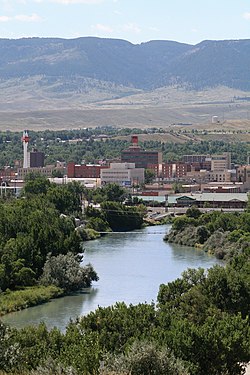
For me, one of two fleeting glimpses occurred along U.S. Route 36 as Mugs and I crossed the Wind River Reservation last month on the stretch of slightly rolling hills in Wyoming that finger up between the Middle and Southern Rockies.

By the way, if you’re not into Walt Longmire novels, or the acclaimed TV series, a good non-fiction about the struggles between cultures there over the past hundred years is Geoffrey O’Gara’s lyrical and even-handed account in his book entitled, What You See In Clear Water.

Another of his books is one I’ve re-read on other cross-country trips since I retired from a four decade career in destination marketing.  I first read it in 1989 as I relocated from the Far West to Durham, North Carolina, and the author wrote while he was relocating from the east to Wyoming.

Entitled A Long Road Home: Journeys through America’s Present in search of America’s Past, it intersperses memoir and history with excerpts from the back roads travel guidebooks written during the Great Depression of the 1930s by writers employed by the WPA Federal Writers’ Project called the American Guide Series.

While I was tooling along at the maximum speed permitted on that stretch of the Reservation, a Native American rancher slowly pulled out in front of me without accelerating so while maintaining speed I simply signaled into the other lane to pass.

Suddenly the pickup feinted into my lane to block me and the driver laid on his horn while flipping me the bird.  My mind flashed a stereotype of Native American drivers (as well as farmers in Idaho) commonly held by ranchers where I grew up.

Then I could see in my rear view mirror that the rancher had pulled on the highway for only fifty feet or so to then turn back into his ranch via another road.

By the time Mugs and I settled into Casper for the night I was ready for a tall cool one at a steak place where another encounter reminded me that I, too, am subject to stereotypes.

Surrounding me suddenly in the bar area where I was eating, were members of a motorcycle gang called the Silent Sinners, many of whom were apparently returning from a big bike rally up in Sturgis, South Dakota, in that nook pointing into Montana and Wyoming.

The group is an offshoot of a branch of the Sons of Silence in Colorado and one of eight clubs linked by the Justice Department as conduits for criminal enterprises.  Turf for this group included Wyoming and northern Utah, but the overall reach of the Sons of Silence is across 12 states.

But the members around me that evening were congenial, kidding me about having grilled chicken and veggies in a steak place and for drinking red spirits rather than brown.  Later they acknowledged that they suspected I road motorcycles by the Harley emblem on my trailer hitch.

A friend of mine who lives on the west coast of Florida assumes that any neighborhood with a couple of motorcycle owners must be sketchy, stereotyping the 9% of Americans who do by lumping them with the 5%of riders who belong to outlaw gangs.

That night I caught a glimpse of both my own prejudice and being prejudiced against by others.

Early the next morning, Mugs and I set off across the roller coaster hills and dales of Wyoming rangeland that run along the Southern Rockies as they jut up from Laramie, while imagining hired guns for the cattlemen’s association riding north during the late 1880’s Wyoming Range War to attack immigrant settlers.

Soon we dropped down onto the flatter plains that run north through Denver and up past Cheyenne where we turned east down across the high plains of Nebraska, then across its Great Plains where my ancestors began their trek out to the Rockies in the 1840s.

At Lincoln on the western edge of the corn belt plains, we stopped for the night.  Running through my mind that day as things turned violent in Ferguson were two studies.

Pundits had been excusing the violence centered around the looting of 56 stores as an outgrowth of frustration over poverty but poor people are no more violent than other Americans, and maybe even less.

To the frustration of legitimate protestors, their activity had provided cover for criminals, just as research sociologists have long warned that petty crime and blight does, making poor neighborhoods victims of crime.

As I noted yesterday, nearly 4,000 African-American slaves had toiled in the county around the city of St. Louis, including what became Ferguson, in 1860 just before the Civil War.

I don’t know that any descendants of those slaves live there today.  It was predominately white until 1980.  But a 2010 study by researchers at the Institute for the Study of Labor found that even today in parts of counties such as this, the legacy of slavery is still manifest by economic inequality, especially the gap in education.

But the paper “Being Black Is Not A Risk Factor: A Strengths-Based Look At The State Of The Black Child” points to findings that support the idea that it is “being poor in general that is the real risk factor.”

Nearly half of “black children in families living below the poverty threshold live in areas where at least 30% of the residents have incomes below the poverty threshold.”

The ratio is 1-in-4 in Ferguson, MO, but more like 1-in-2 among African-Americans there and in similar places compared to 35% of blacks, 33% of Hispanics and 13% of whites nationwide. 

A number of white progressives as well as some African-Americans get very upset at references to poverty as cultural, perhaps because many assume that implies it is brought on by race.  But in my reading this is far too narrow a use of the term cultural.

When in his remarkable essay entitled, “Inconvenient Truths About Poverty,” conservative critic and columnist Joe Queenan, who himself grew up in poverty, references poverty as “rooted in interlocking self-fulfilling prophecies, he isn’t writing about race.

The next morning Mugs and I headed south to St. Joseph, Missouri, and then to avoid traffic and road construction in Kansas City and St Louise as well as the corridor between, we took a new route along much more scenic U.S. Route 36 to cross the Mississippi at Hannibal with plans to cut south to Nashville.

We stopped for gas at Chillicothe where in 1855, Reverend David White, a minister in the Christian church was run out of town on threat of lynching for preaching against slavery.  This was also the route Mormons had taken back to Illinois in 1839 when threatened with an extermination order by the governor.

Across the bridge we looked for a “Blue Highway” south to Paducha but turning too soon, the GPS took us back southwest through incredible Illinois countryside, back across the bridge at Louisiana, Mo and down scenic State Route 79.

At I-70 I headed west past St. Charles, taking the I-270 beltline to get around traffic and stopping for gas to get my bearings and find the best way back across the river and back on track.

Two elderly black gentlemen on each side of the pump in front of me were talking in loud voices although they were both agreeing with the rhetorical question, “why were those boys walking down the middle of the street anyway?”

Out of curiosity, I asked “Where is Ferguson anyway?” I was on my way in the store to get water and received a resounding chorus of, “Son, you just crossed over it.”

There is always a lot of finger-pointing in news reports about poverty, much of it inferring that police and teachers aren’t doing enough.  But rarely does the role of parenting get any play.  According to many studies, perhaps like me, none of us feel we are very good at it.

I remember reading a typology of parenting once that across all groups 32% of parents are “authoritative,” the ideal mix of demanding and responsive, 31% are negligent, 22% are permissive and 15% are authoritarian.

Again, it is not about race, but in a book I read about a decade ago entitled Unequal Childhoods: Class, Race, and Family Life, Dr. Annette Lareau reviewed research that studied the differences in parenting styles across races and socio-economics such as middle or working class and poor.

Lareau found that working class parents and those in poverty practiced what she called “natural growth parenting,” with children free to roam around unstructured. They seemed to feel that kids will soon have it tough enough.  They give orders but avoid too much interference.

Middle-class parents practice a style she calls “concerted cultivation” focused on coaching, teaching self-control, negotiation, understanding how to challenge authority and time management.

Both approaches have drawbacks.  As the saying goes, its also takes a village to raise a child.  The late Dr. John Hope Franklin, a friend and incredible African-American scholar, told stories about how neighbors would discipline him on his way home from school.

Franklin’s research was used in court desegregation classes.  He felt that black parents of his generation felt their children needed to excel, but many in the generation after desegregation mistakenly spent too much time trying to cushion life’s bumps.

He wouldn’t be surprised that a new study in Michigan found that minority parents were far less likely today to follow child restraint laws and guidelines when they drive, but might be to know that this was regardless of socio-economic status.

Dr. Lareau found that the different parenting styles of middle class and poor or working class parents may reinforce class-based inequality by reproducing it from one generation to the next.

She argued in her book that this distinction “arbitrates opportunity in America more powerfully than any other demographic characteristic including race.”

A recent study that correlates to self-regulation in childhood found its strongest link to parenting style, especially among low income children and males regardless of minority status, household composition and parental education.

A newly published study by Canadian researchers entitled, “In Praise of Demanding Parenting: The Effects of Parenting Style and Poverty on Obesity” finds parenting style significant regardless of age, sex, parental education, immigration status, family functioning score, birth order or maternal age.

Authoritarian parents risk self-esteem; permissive parenting risks regulator deficits.  Each parenting style has advantages and disadvantages but it is worth considering the role parents, families and neighborhoods can play in overcoming poverty.

Thursday, September 04, 2014

Risk Factor Ruminations on the Road to Casper

By the time the events surrounding the shooting in Ferguson, Missouri began to dominate news reports last month, Mugsy and I had just turned onto a segment on the return leg of our most recent cross-country road trip that was new to us.

As it almost always does during a feeding frenzy when far too many news outlets resort to speculation and grasping at anecdotes and dichotomies such as saint and sinner, those with agendas tend to usurp attention.

Running Durham’s organization responsible for serving the news media at the time, I had a front row seat to this formulaic pattern during the the now infamous claims of a stripper against some Duke Lacrosse players.

The police and the local newspaper had rightly closed the case, but the paper in nearby Raleigh threw gasoline on the embers, inflaming listserv advocates in Durham anew and within a day, a similar national frenzy ensued making it very difficult year to be in the “calm down business.”

Predictably, racism had become the storyline in Ferguson and I wondered as we cut southeast from Dubois, Wyoming along the Wind River Range if any of those producing stereotypical reports that day had ever read the report I did before I left home entitled Being Black Is Not A Risk Factor.

It’s being poor but it is even more complicated than that, which came to me the next day when my thoughts turned to another study on the stretch from Lincoln to Nashville including an unexpected stop.

The report is the kind of analysis of African-Americans by African-Americans that seems to quickly divide those eager to show progress in the struggle to overcome stereotypes from those who won’t let them go for fear of losing leverage to continue the struggle.

I first witnessed this in the early 1990s when an African-American, Dr. Shelby Steele, now a fellow at Stanford’s Hoover Institute, first published a remarkable book entitled The Content of Our Character: A New Vision of Race in America.

It was also made apparent a few years later when a series of essays were published entitled, The House That Race Built, including a favorite of mine by Nobel Prize-winning Toni Morrison.

There is a coarseness in news coverage surrounding race that for me is at the root of why 80% of blacks think Ferguson raises important issues about race while nearly 50% of whites think it got more attention than it deserved.

It isn’t because these whites are all racist, although plenty of both blacks and whites are.  It is due to the fatigue that stereotypical and anecdotally-frenetic news coverage creates reminding me somehow of a verse in Paul Simon’s Me and Julio Down by the School Yard:

In a couple of days they're gonna take me away
But the press let the story leak
When the radical priest come to get me released
We was all on the cover of Newsweek

Apparently the BBC refused to lay it because it mentioned Newsweek by name.

That stretch I was driving that day of US Route 26 crosses the reservation for Eastern Shoshone and Arapaho people along its way to Casper near where two of my great-great grandfathers and a great (x3) stopped to build a ferry across the North Platte River in 1847.

This is Longmire country for fans of the acclaimed A&E series and/or the Craig Johnson novels upon which it is based (although the area around Santa Fe is used as a stand-in.)

When I watch television, it is entirely via streaming now and I find I am drawn to shows and movies where the landscape also serves as a character such as Longmire, The Killing, Wallander, Endeavor, Night Train to Lisbon, etc.

This part of Wyoming is a gently rolling sagebrush steppe of the Great Plains filling a gap between the fingers of the Middle and Southern ranges of the Rockies.

I have always been on the least intolerant end of that spectrum but still within a few hours that afternoon, I was able to catch fleeting glimpses of my own prejudice, one while crossing the reservation and one during dinner that night during a layover in Casper.

Until the end of the 1850s, a decade or so after all but two of my sixteen fifth generation ancestors had made the cross-country trek from various parts of America to settle along the western slopes of the Rockies, news coverage simply reported events.

Oh, there was plenty of vitriol and opinion too, but in July 1859, a new dimension was added when the first-ever news “interview” was conducted by Horace Greeley of Brigham Young during a stop in Salt Lake City by the New York Tribune publisher.

In Manhattan, Kansas, in route from New York to San Francisco, the then 48-year-old Greeley had caught up with Tribune journalist Albert Richardson to take a new, quicker route just opened with partners by the founder of the Pony Express.

As Richardson had earlier passed by what would become Ferguson, Missouri, land had just been donated to the Wabash Railroad coming down from Toledo on the condition that a station be built there.

At the time, nearby St. Louis had a population of around 160,000.  But the surrounding county, including around Ferguson, was still very rural.

While Richardson notes that city streets there were filled with debates between pro and anti-slavery residents, out in the county, including where the Ferguson Train Depot would soon rise, there were still 1,156 slaveholders holding 3,346 African-Americans in slavery.

The Leavenworth and Pikes Peak Express Company ran its stagecoaches along part of the route one of my great-great grandfathers had captained a wagon train five years earlier, but then along a much faster route through just-founded Denver and then up and over the Southern Rockies.

Not only states, but towns within states such as Kansas, were divided as free or pro-slavery at the time and a fascinating read is the book entitled Beyond the Mississippi written by Richardson two decades later from notes in his journal.

Downloadable free including into a Kindle app, Richardson’s narrative, a first-hand snapshot of Missouri, Kansas, Colorado, Utah and California in the pivotal years just before the Civil War, is a great cross country travel companion.

The news interview is rapidly becoming a thing of the past when it comes to news reports.  There are still quotes and sound bites but mostly anchors now interview other reporters who respond to questions by substituting opinion and conjecture as stand ins for others who were directly involved or with direct knowledge.

Tomorrow, more about those fleeting insights into my own stereotypes and the real risk factor.