Showing posts with label Self-Regulation. Show all posts

Monday, January 12, 2015

The Pivotal First 36 Months

Studies I’ve been reading on “rearing” have made me reflect on my own as well as how much they should inform solutions to problems in today’s headlines.

I was destined to be a fifth generation Idaho rancher and based on the fact that my mother dropped out of school when she was 16, it wasn’t likely I would go to college.

A mother’s education level is usually a strong predictor of a child’s educational aspiration, attainment and occupational success.  Still in her mid-twenties my mother taught herself to type and worked her way up to managing the practices of two doctors and two dentists.

She is a bit of an anomaly as that predictor goes, because she dropped out of high school to elope with my dad as he headed into WWII, staying near Camp Roberts, while he was training for a tank battalion and then spending the time he was overseas working in Denver.

I got off to a rocky start when I came along three years after the war due to an allergic reaction to formula that wasn’t resolved until I was six months old when during a blizzard my parents gave me whole milk.

It was an inauspicious start for my then fifth-generation rancher destiny as the only son of an only son.

So maybe that is why my fourth generation rancher father tried so hard from then through my preschool years to “breathe fire into me,” something I would also futilely try to do during my now concluded career for some co-workers.

Throughout my career, no one ever accused me of not having enough fire, but trying to “breathe fire” into someone never works, regardless of the education level.

People who aren’t ambitious or passionate or growth-oriented by then, also lack what the Japanese call Kaizen, a drive for continuous and never-ending improvement that may trace to their first 36 months of life.

Still in his 20s, my dad - whether he realized it or not – was trying in his own intense way to give me the “scaffolding” necessary to instill the handful of life-skills that must be largely inculcated during those first 36 to 60 months including rising to challenges and learning from mistakes.

My mom, who was in her early 20s, had a different type of intensity but in her own way also helped erect this “scaffolding,” especially through music.

It is clear that my parents incorporated many things into their parenting style.  The examples they set offset my mother’s lack of educational attainment, including a relentless focus on effort over talent and perseverance in the face of obstacles.

They weren’t what today we call “helicopter parents,” preferring a balance of unstructured play, especially in nature, to organized activities.  Nor did they ever tolerate a second of entitlement.

I can see now how much attention they also gave to learning from criticism, persistence, and embracing challenges.  All of these factors have now been confirmed by researchers in psychology to lead to high performance.

I am not aware of a statistical breakdown of adults in society with executive function and self-regulatory deficits (beyond attention-deficit) but I’ll bet kindergarten and elementary school teachers could give an educated guess.

Regardless of class status, today’s parents spend far too much time either making excuses for their children’s educational or work performance or greatly overestimating and placing too much emphasis on their intelligence vs. their effort and performance.

K-12 teachers are slightly more “engaged” and slightly less “actively disengaged” than Americans as a whole, but parenting may be partially responsible for why those who are not engaged miss 2.3 million more workdays annually than teachers who are.

As an aside, officials concerned with creating jobs such as Governor Pat McCrory in North Carolina, where I live, would do well to study Gallup’s reports on worker engagement.

Engaged workers report twice as much job creation as well as good customer ratings, profitability and productivity as well as lower turnover, fewer safety incidents, less theft, absenteeism and defects.

North Carolinians are not as engaged as we think we are.  Unfortunately, the Governor must deal with the fact that engagement among members of the General Assembly is no better than workers overall, fewer than 1-in-3 there with nearly 1-in-5 at cross-purposes even within his own party.

In my mother’s lifetime (my dad passed away shortly after 9/11,) she has seen her children and seven grandchildren leap from the working class backgrounds of my grandparents to middle and upper middle class.

Three have undergraduate college degrees, one a law school degree and another just accepted into top tier law schools, one with a Master’s and another with a PhD, and one who leapt directly from community college to a career in IT administration for the world’s largest video game concern.

More importantly, they are all hard workers and thrive in the workplace, engagement that is never guaranteed by educational attainment.

Americans believe in the individual-centered American Dream.  It is rooted in the belief that “all men [and women] are created equal” but science shows that there are many other more powerful influences that shape individual aspiration, none more important than those detailed in the book Unequal Childhoods: Class, Race, and Family Life.

According to the study, “two-thirds of society ultimately reproduce their parents’ level of educational attainment while about one-third take another path.”

But it is purely arrogant for those of us who transcended to delude ourselves into believing that it is due to our own willfulness.

A few months after I retired, researchers at the University of Illinois at Urbana-Champaign identified something of a paradox regarding willfulness and willpower.

As an aside, nearly all of the campus is located in Urbana but Champaign was added to placate Champaign boosters-sound familiar?  A toxic sense of entitlement can invade communities as well (smile.)

It turns out that people willing to ask questions and those who question whether they will succeed, perform better than those who are convinced they will or who spend too much time on self-affirmation.

By the time we reach the ages of 3 to 5 years old, we learn the handful of building blocks needed for success in life known as “executive function and self-regulation skills.”

Dimensions of these skills include:

  • “The ability to hold information in mind and use it.
  • The ability to master thoughts and impulses so as to resist temptations, distractions, and habits, and to pause the think before acting.
  • The capacity to switch gears and adjust to changing demand, priorities and perspectives.”

Self-regulation is the ability to override one response or behavior and replace it with a less common but more desired response.

The researchers who discovered the paradox of will power have already turned to the study of how what we say to ourselves “shapes the course of our behaviors,” the essence of self-regulation.

Parents such as mine gave me the “scaffolding” for developing these skills by challenging me and then stepping back and letting me try to manage things on my own and learn from my mistakes as well as helping me talk and think through what worked and what didn’t work.

I owe them everything.  We may all be “created equal” but those of us who think we are living the American Dream were fortunate enough to have these influences in those first few years.

We have an obligation to help those who didn’t, but the real solution is to focus society on remediation for kids between the years of 3 and 5 before it is too late.

I ran into more than a few people in responsible positions during my career with deficits or even dysfunction in one or more of the three skills noted above, some with high IQs.

Other than being irritating to those who had to work with them, they imposed a lot of lost productivity and long-term contributed to some very poor outcomes, but they were functional nonetheless.

None of us demonstrate mastery of executive function skills 100% of the time.  But our jails and prisons are populated by individuals who never learned them or were never given the chance to learn them because their parents never learned them.

A meta-analysis of studies published a few months ago by neuropsychology and criminology researchers in Amsterdam and led by Jesse Meijers found “a robust relationship between antisocial behavior and executive function deficits.”

In studies published in 2004 and 2008, researchers have determined that “impoverished rearing conditions” actually alter brain functions responsible for executive functions.  To many, we should be looking at rearing and parenting for solutions rather than law enforcement or the justice system.

For children in that 36 month window, reading this simple little 16-page guide is a way today’s new parents can learn how to teach them.  However, the guide won’t teach someone how to show by example or instill them in parents who missed out when they were young.

The more I live and learn, the more I realize how lucky I am and how unfortunate many are.

Maybe the American Dream is really about humility.

Friday, September 05, 2014

Tweaking Parenting Style to Reduce Poverty

Keeping a promise made at the end of the essay posted yesterday, this follow-up reveals two fleeting encounters with stereotypes of my own, as well as a couple of studies brought to mind by a surprise stop along the way.

No matter who we are or the color of our skin or where we grew up or how tolerant and accepting we have become or think we are, we’re all bigoted in some way.  The trick is to catch ourselves.

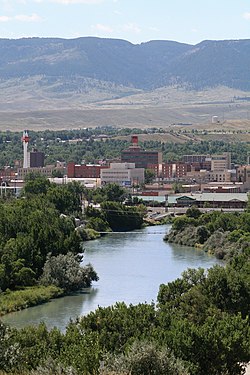
For me, one of two fleeting glimpses occurred along U.S. Route 36 as Mugs and I crossed the Wind River Reservation last month on the stretch of slightly rolling hills in Wyoming that finger up between the Middle and Southern Rockies.

By the way, if you’re not into Walt Longmire novels, or the acclaimed TV series, a good non-fiction about the struggles between cultures there over the past hundred years is Geoffrey O’Gara’s lyrical and even-handed account in his book entitled, What You See In Clear Water.

Another of his books is one I’ve re-read on other cross-country trips since I retired from a four decade career in destination marketing.  I first read it in 1989 as I relocated from the Far West to Durham, North Carolina, and the author wrote while he was relocating from the east to Wyoming.

Entitled A Long Road Home: Journeys through America’s Present in search of America’s Past, it intersperses memoir and history with excerpts from the back roads travel guidebooks written during the Great Depression of the 1930s by writers employed by the WPA Federal Writers’ Project called the American Guide Series.

While I was tooling along at the maximum speed permitted on that stretch of the Reservation, a Native American rancher slowly pulled out in front of me without accelerating so while maintaining speed I simply signaled into the other lane to pass.

Suddenly the pickup feinted into my lane to block me and the driver laid on his horn while flipping me the bird.  My mind flashed a stereotype of Native American drivers (as well as farmers in Idaho) commonly held by ranchers where I grew up.

Then I could see in my rear view mirror that the rancher had pulled on the highway for only fifty feet or so to then turn back into his ranch via another road.

By the time Mugs and I settled into Casper for the night I was ready for a tall cool one at a steak place where another encounter reminded me that I, too, am subject to stereotypes.

Surrounding me suddenly in the bar area where I was eating, were members of a motorcycle gang called the Silent Sinners, many of whom were apparently returning from a big bike rally up in Sturgis, South Dakota, in that nook pointing into Montana and Wyoming.

The group is an offshoot of a branch of the Sons of Silence in Colorado and one of eight clubs linked by the Justice Department as conduits for criminal enterprises.  Turf for this group included Wyoming and northern Utah, but the overall reach of the Sons of Silence is across 12 states.

But the members around me that evening were congenial, kidding me about having grilled chicken and veggies in a steak place and for drinking red spirits rather than brown.  Later they acknowledged that they suspected I road motorcycles by the Harley emblem on my trailer hitch.

A friend of mine who lives on the west coast of Florida assumes that any neighborhood with a couple of motorcycle owners must be sketchy, stereotyping the 9% of Americans who do by lumping them with the 5%of riders who belong to outlaw gangs.

That night I caught a glimpse of both my own prejudice and being prejudiced against by others.

Early the next morning, Mugs and I set off across the roller coaster hills and dales of Wyoming rangeland that run along the Southern Rockies as they jut up from Laramie, while imagining hired guns for the cattlemen’s association riding north during the late 1880’s Wyoming Range War to attack immigrant settlers.

Soon we dropped down onto the flatter plains that run north through Denver and up past Cheyenne where we turned east down across the high plains of Nebraska, then across its Great Plains where my ancestors began their trek out to the Rockies in the 1840s.

At Lincoln on the western edge of the corn belt plains, we stopped for the night.  Running through my mind that day as things turned violent in Ferguson were two studies.

Pundits had been excusing the violence centered around the looting of 56 stores as an outgrowth of frustration over poverty but poor people are no more violent than other Americans, and maybe even less.

To the frustration of legitimate protestors, their activity had provided cover for criminals, just as research sociologists have long warned that petty crime and blight does, making poor neighborhoods victims of crime.

As I noted yesterday, nearly 4,000 African-American slaves had toiled in the county around the city of St. Louis, including what became Ferguson, in 1860 just before the Civil War.

I don’t know that any descendants of those slaves live there today.  It was predominately white until 1980.  But a 2010 study by researchers at the Institute for the Study of Labor found that even today in parts of counties such as this, the legacy of slavery is still manifest by economic inequality, especially the gap in education.

But the paper “Being Black Is Not A Risk Factor: A Strengths-Based Look At The State Of The Black Child” points to findings that support the idea that it is “being poor in general that is the real risk factor.”

Nearly half of “black children in families living below the poverty threshold live in areas where at least 30% of the residents have incomes below the poverty threshold.”

The ratio is 1-in-4 in Ferguson, MO, but more like 1-in-2 among African-Americans there and in similar places compared to 35% of blacks, 33% of Hispanics and 13% of whites nationwide. 

A number of white progressives as well as some African-Americans get very upset at references to poverty as cultural, perhaps because many assume that implies it is brought on by race.  But in my reading this is far too narrow a use of the term cultural.

When in his remarkable essay entitled, “Inconvenient Truths About Poverty,” conservative critic and columnist Joe Queenan, who himself grew up in poverty, references poverty as “rooted in interlocking self-fulfilling prophecies, he isn’t writing about race.

The next morning Mugs and I headed south to St. Joseph, Missouri, and then to avoid traffic and road construction in Kansas City and St Louise as well as the corridor between, we took a new route along much more scenic U.S. Route 36 to cross the Mississippi at Hannibal with plans to cut south to Nashville.

We stopped for gas at Chillicothe where in 1855, Reverend David White, a minister in the Christian church was run out of town on threat of lynching for preaching against slavery.  This was also the route Mormons had taken back to Illinois in 1839 when threatened with an extermination order by the governor.

Across the bridge we looked for a “Blue Highway” south to Paducha but turning too soon, the GPS took us back southwest through incredible Illinois countryside, back across the bridge at Louisiana, Mo and down scenic State Route 79.

At I-70 I headed west past St. Charles, taking the I-270 beltline to get around traffic and stopping for gas to get my bearings and find the best way back across the river and back on track.

Two elderly black gentlemen on each side of the pump in front of me were talking in loud voices although they were both agreeing with the rhetorical question, “why were those boys walking down the middle of the street anyway?”

Out of curiosity, I asked “Where is Ferguson anyway?” I was on my way in the store to get water and received a resounding chorus of, “Son, you just crossed over it.”

There is always a lot of finger-pointing in news reports about poverty, much of it inferring that police and teachers aren’t doing enough.  But rarely does the role of parenting get any play.  According to many studies, perhaps like me, none of us feel we are very good at it.

I remember reading a typology of parenting once that across all groups 32% of parents are “authoritative,” the ideal mix of demanding and responsive, 31% are negligent, 22% are permissive and 15% are authoritarian.

Again, it is not about race, but in a book I read about a decade ago entitled Unequal Childhoods: Class, Race, and Family Life, Dr. Annette Lareau reviewed research that studied the differences in parenting styles across races and socio-economics such as middle or working class and poor.

Lareau found that working class parents and those in poverty practiced what she called “natural growth parenting,” with children free to roam around unstructured. They seemed to feel that kids will soon have it tough enough.  They give orders but avoid too much interference.

Middle-class parents practice a style she calls “concerted cultivation” focused on coaching, teaching self-control, negotiation, understanding how to challenge authority and time management.

Both approaches have drawbacks.  As the saying goes, its also takes a village to raise a child.  The late Dr. John Hope Franklin, a friend and incredible African-American scholar, told stories about how neighbors would discipline him on his way home from school.

Franklin’s research was used in court desegregation classes.  He felt that black parents of his generation felt their children needed to excel, but many in the generation after desegregation mistakenly spent too much time trying to cushion life’s bumps.

He wouldn’t be surprised that a new study in Michigan found that minority parents were far less likely today to follow child restraint laws and guidelines when they drive, but might be to know that this was regardless of socio-economic status.

Dr. Lareau found that the different parenting styles of middle class and poor or working class parents may reinforce class-based inequality by reproducing it from one generation to the next.

She argued in her book that this distinction “arbitrates opportunity in America more powerfully than any other demographic characteristic including race.”

A recent study that correlates to self-regulation in childhood found its strongest link to parenting style, especially among low income children and males regardless of minority status, household composition and parental education.

A newly published study by Canadian researchers entitled, “In Praise of Demanding Parenting: The Effects of Parenting Style and Poverty on Obesity” finds parenting style significant regardless of age, sex, parental education, immigration status, family functioning score, birth order or maternal age.

Authoritarian parents risk self-esteem; permissive parenting risks regulator deficits.  Each parenting style has advantages and disadvantages but it is worth considering the role parents, families and neighborhoods can play in overcoming poverty.