Showing posts with label Ranching. Show all posts

Tuesday, February 23, 2016

Perspective About the Open Range

I’ve waited until the illegal occupation of the Malheur National Wildlife Refuge was behind us before responding to friends who have wondered what I thought about it because of my background.

I was born and spent my early years on ranchland that my great grandparents and grandparents had homesteaded as well as assembled, along the Henry’s Fork River in view of the Tetons.

But as the only son of an only son, I was also the end of 5 generations of Idaho ranchers in that line stretching back to the early 1860s when it was yet to emerge from what remained of Oregon Territory.

My dad and grandfather were true ranchers.  In rhetoric, they would have probably shared a few of the rational sentiments expressed during the occupation in Oregon.

But they would not have sympathized with the militants.

There have always been a few ranchers and “rancher-wanna-bees” in the West, who not only didn’t respect public property but didn’t respect any property that wasn’t their own, as illustrated by the way militants desecrated the property they occupied.

We often forget that the roots of private property have always been conditional.

My grandfather was famous even before I was of school age because he had fired a warning shot from a Winchester Model 1894 .32 WS Saddle-Ring Carbine that I still have hanging on my wall as an heirloom.

It was a Sunday morning and he had caught another rancher stealing water while others were in town attending Sunday School.  “Ne’er-do-wells, moochers and thieves” he would have called these recent militants.01624_s_aaeuyfyqe0025

He also had a respect for public lands and land managers that at least philosophically, had waned somewhat in my dad when he took over the ranch.

It probably didn’t help that in the early 1950s dad was once forced to admit to poaching a moose out of season, when his best friend, a rural mail carrier, had left his wallet behind.

Dad knew the two WWII were guilty but he had rationalized it by dismissing the importance of the regulations to sustainable wildlife and most of all he resented having to take the fall to preserve his friend’s federal government job.

But I remember dad suddenly slamming on the brakes to our Jeep one day as we crossed the Vernon Bridge on our way back from the courthouse in Saint Anthony and then sprinting down an embankment.

It was common to see my dad angry.  He was one of those people who seemed to express several different emotions that way, including fear, but I had never seen him about to come to blows until that day.

He had caught a neighboring rancher dumping trash in the river and came close to kicking this particular ne’er-do-well’s butt all the way up the embankment because of it.

But ironically, he would have probably complained if a government official had been doing the same thing he had done. 

To understand some of the controversy between ranchers and public lands’ managers, you have to understand a new breed of rancher that came along after 1936, four decades before termination of homesteading led to the so-called Sagebrush Rebellion.

But before I touch on what occured eight years ago, it may help to understand that up until the 1880s, even in states such as North Carolina where I’ve lived for nearly 40% of my life, laws about property were very different than they are today.

Up until that time, it was legal for other people to run their livestock on your land unless you fenced it in.  Everything was fair game unless it was fenced, pretty much the opposite of what it is today.

That began to change in North Carolina when in 1873 five counties, including one from which Durham, where I live, was carved eight years later, petitioned the General Assembly to pass legislation enabling local “no-fence” laws.

It was a movement that was not implemented statewide until 1958.

No-fence laws meant that instead of putting the onus on property owners to fence their land or be overrun by livestock, instead the owners of livestock were required to fence them in. 

But as this movement took hold in North Carolina, out West range wars were raging in states such as Wyoming.

Only instead of intimidating public land agencies, cattlemen bent on running their livestock anywhere they damn pleased were hiring gunmen back then to run off settlers, usually immigrants.

Just as Harney County, Oregon does, Idaho still has open range laws today which include areas west/northwest of our ranch that we occasionally used, including some forested summer range, where at age 6 I participated in my first roundup.

However, we kept areas fenced where we didn’t want other livestock to range including meadows and areas where we raised winter feed crops such as hay, oats and barley.

Pivot irrigation has meant that farmers have increasingly pushed into that area now and parts have been set aside as herd districts, which is a designation by counties set aside from open range.

But long before the 1934 Taylor Grazing Act provided for grazing rights on public lands, smart livestock growers, including sheepmen, were careful not to overgraze these area.

They leased state lands and set up an allotment/share system governed by a board of directors, similar to the way they handled water rights, that kept the range healthy by limiting the number of animals.

This allowed the rangeland recover, a form of stewardship that apparently these militant ranchers today don’t grasp or practice.

But like today, there were always some ranchers who weren’t smart in this way.

That’s why I have no sympathy for ranchers who overgraze public lands out West, let alone renege on fees for that privilege and then threaten bodily harm to folks just doing their jobs.

That goes, too, for those who do sympathize with that behavior.

You get a sense of this corrupted logic when you read reports where some of militants in Oregon were actually interviewed.

My earliest Idaho ancestors, dating back 155 years ago had an appreciation for public lands because, well, it was almost entirely publically owned back then.

They understood that their ability to thrive was due to policies that leveraged some of these lands so railroads were built and to provide for homesteading, water reclamation, wildlife management, timber products for shelter and fuel, as well as roads and schools, even electricity.

But between 1870 and 1900, the number of beef cattle in the 17 western states increased from 4.1 million to nearly 20 million while sheep increased from 5 million to more than 25 million, overtaxing very fragile rangeland.

The federal government did what they could to legislate some sort of control on public lands but little was done until the Great Depression resulting in the 1934 Taylor Grazing Act.

This established what were thought to be sustainable livestock numbers as well the number of ranchers permitted to graze on public lands, as well as the fees to be paid for that privilege, part of which went into range restoration.

But almost immediately, a few ranchers began to abuse the system by buying tiny amounts of land around a water source adjacent to public lands and then expecting the public to shoulder the burden of providing their rangeland while relentlessly bullying land managers to let them overgraze.

By the 1970s, when I was in college, public sentiment turned in favor of other legitimate but competing uses of public rangelands including recreation such as hunting and fishing and protection of wildlife habitat, endangered species and cultural assets, not to mention water quality.

Small towns near public lands today are much more likely to petition for a change to a higher status of public land designation than they are sympathetic to the agenda of militants such as those who took over the Oregon bird sanctuary recently.

In addition, economists have noted that rural communities adjacent to public lands are thriving economically far more than those that aren’t.

I also have no doubt that some regulations as well as regulators have grown too thick and cumbersome, ironically in an effort to stem the very behavior the militants exhibit.

Unfortunately, news coverage of this far more prevalent side of the story is meager let alone coverage of ranchers seeking reasonable solutions compared to the overly simplistic “hate government” narrative.

Like I’ve said before, my parents and ancestors were very conservative philosophically but they had no patience for ne’er-do-wells especially if veiled as armed militants.

They appreciated the role of the commons and were suspect of anyone with a sense of entitlement.

Tuesday, October 28, 2014

A Mucking Memoir

My musical sensibilities were fostered not only by my mother’s wonderful voice and piano playing but by my paternal grandfather’s tenor as he sang along with an old ratio in the horse barn on our ancestral ranch along the Tetons in Idaho.

It is there at age six, while helping him muck out the barn that I first heard a song that has served as a backdrop to my life over six decades now, although recorded and sung by many different artists along the way.

My musical tastes are eclectic but penned by Jimmy Work, the country song-standard, Making Believe I realize now in reflection, has been one of my constants.

Or maybe it is that old radio that set the tone.  The old horse barn is gone now, preserved only in family photos (behind my dad in the image shown further down in this memoir.)

I wonder what became of family artifacts such as that old radio or my great-grandfather’s “HB” branding irons that hung there by the door, remnants of which are preserved in the state of Idaho’s archives.

The one with just the initials went on the left thigh of our horses.  The other including an underscore went on the right rib of our cattle, perhaps foretelling my career one day branding communities.

As family heirlooms, I wish I had that old radio and especially those branding irons.  As all artifacts do, they would sure tell some stories.00083_p_aaeuyfyqe0638_z

When I first heard Making Believe sung by Kitty Wells, my then six year old ears had also recently been kindled to doo-wop.

I had caught a few bars of Earth Angel one day as my grandfather was tuning the radio back to country from listening to opera arias, then sponsored by Texaco, as we did each week.

Yup, that’s where I first heard one of my favorites, O Soave Fanciulla with my grandfather, who had barely finished second grade, singing along at the top of his lungs as we shoveled horse manure, a reflection that came to me a few weeks ago as my mind wandered during Phantom Of The Opera recitatives.

The old barn radio is also where I first remember hearing the voice of Vin Scully calling the 1955 World Series won that year by the then Brooklyn Dodgers over my favorite New York Yankees.

My dad and I watched a year later on our new television while still listening on the radio as Don Larson pitched a perfect game for the Yankees in a rematch which Scully also called.

It is why even today I listen, if only while changing channels to Dodger games, which he still calls, and why the World Series has always been more enjoyable for me as a backdrop on the radio.

By 1955, it had already been 16 years since my grandfather had been able to work the ranch he had homesteaded and then assembled by incorporating purchases of those of my great-uncles and great-grandparents.

My dad started running this ancestral spread while finishing high school.  The years he had been away at war, the ranch fell fallow with my grandparents only keeping some prized horses.

When my dad returned from WWII, my grandparents turned the ranch house as well over to my parents and moved a dozen miles south down the Henry’s Fork into St. Anthony, population 2,600.

But after I was born in 1948, my grandfather resumed being a daily fixture around the ranch, volunteering words of wisdom to my parents and paling around with me each day or me with him.

He passed away in the fall of 1964 a few months after he and my grandmother gave me their old WWII-era Jeep for my 16th birthday.

The Beatles first charted U.S. album Meet The Beatles had come out that year, a month after, I Want To Hold Your Hand,” hit the charts as a singleHis passing was less than two months after the conclusion of the group’s first tour in America.

By the time of his funeral, we were already eagerly singing Anna, This Boy and Till There Was You, both in glee club at school and when used by my mom as a form of bribery to get two friends and me to sing in the church youth choir she conducted.

She was quick to remind us that Till There Was You had been written for a musical back when I had first caught that glimpse of rock and roll out in our barn.

My mom wasn’t musically defensive though.  A few years earlier when with these same friends we eagerly directed her attention to the Marcel’s doo-wop new hit Blue Moon, we even joined in with “dip di dip di dip” and all.

Only after they had left did she drop in passing that Blue Moon dated back to a musical three decades earlier when she had been younger than I was when first catching a few bars of doo-wop on the barn radio.

It seemed like music had changed forever and from the 1960s until the early-1970s I turned away from country music, but that all changed when I first heard Gram Parsons and Emmylou Harris introduce a genre called country rock.

In 1977, when I was a newly minted community marketing exec, Emmylou brought me back to my roots when she revived Making Believe, followed a year later by a version by Merle Haggard  as I took on my second community marketing agency in Anchorage.

When I headed to Durham in 1989, a duet version of Making Believe by Loretta Lynn and Conway Twitty was on the charts.  Another duet version followed by Patty Loveless and Vince Gill, whose voice my grandfather’s most resembles in timbre.

In part, it may be why I selected Gill’s Go Rest High On That Mountain for my father’s funeral in 2001, just as one day (sooner than I think), I may be recommending for my mother’s, a duet version of Sarah McLachlan’s Angel in duet with Emmylou Harris.

It reminds me of my mother’s voice and piano style now in her mid-80s before her fingers became are too twisted to play.

Making Believe continues to be a soundtrack for my life now in a new stage, most recently sung in duet by Willie Nelson and Brandi Carlisle, who is young enough to be his great-granddaughter.

Nelson’s first song writing credits and demos stretch clear back to 1955 when I was listening to that old radio in our horse barn. Of course so does his career as a sales manager for encyclopedias, perhaps an early influence?

Making Believe isn’t my signature song: that would be Desperado, which a co-worker in Anchorage set to calligraphy and framed for me.

But it sure has been an old and familiar friend all these years.

Wednesday, September 10, 2014

The Face of the Earth Moved like the Waves of the Sea

As the only son of an only son of Idaho ranchers stretching back to its territory days and a decade earlier in Utah, after 116 years, I was the end of that line.

Beginning in 1850, most had raised, trained and traded horses with only a few head of cattle for personal consumption, but some were in the cattle business.

But beginning in the 1870s, those raising horses also began adding herds of cattle they would sell commercially.  By the time I came along, my parents raised mostly cattle and only a few horses, many to work the ranch but some purely for nostalgic reasons because of the famous genetic lines they symbolized.

In his incredible 1990s book entitled, Beyond Beef: The Rise and Fall of the Cattle Culture, Jeremy Rifkin who writes and lectures on a broad range of economic, social and technological issues, reminds us that at one time what is known as Western Rangeland actually covered 40% of the continental United States.

It stretched up from that remarkable part of northwest Texas I traversed during a cross-country road-trip last month into Oklahoma and Kansas over across parts of New Mexico and Arizona, up across half of Colorado, into Wyoming and parts of Montana and the Dakotas, then west across parts of Idaho and most of eastern Oregon nipping a part of northern California.

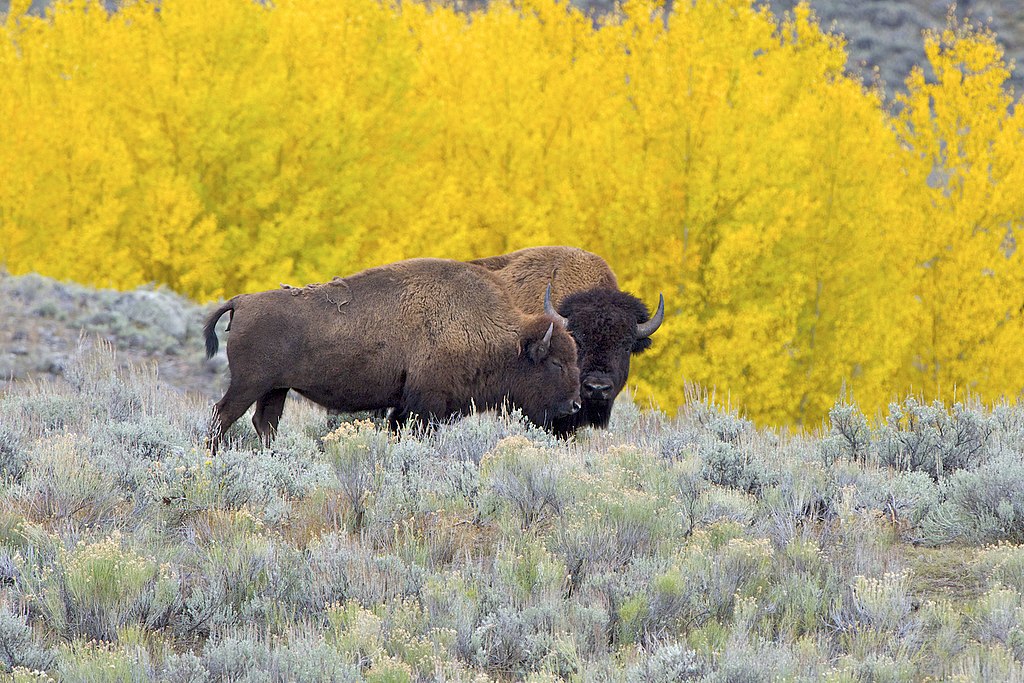
We think of this as being the range for Buffalo, a bovine relative of cattle.  But this rangeland, while perfectly suited, is just where vast herds of these feral creatures had been pushed by the 1840s when all of my ancestral lines headed into the Rockies.

But at one time the range of Plains Buffalo stretched to Durham, North Carolina where I concluded my career, and up to Anchorage where I had spent a decade in the 1980s prior to being drawn here.

Before he headed west to blaze a road over the Cumberland Gap into what is now Kentucky on behalf of the Transylvania Company, Daniel Boone worked for a month while being outfitted in what is now northern Durham County for its secretary William Johnston at his Little River store.

When Boone headed over the Blue Ridge Mountains, it was along trails previously blazed by Buffalo.  Other Americans also followed further north in the Appalachians into the Ohio River Valley and then all the way to the Pacific along routes my pioneer ancestors followed.

My great-great grandfather, one of three ancestors on the vanguard wagon train heading west in 1847, was one of ten men assigned to hunt Buffalo along the way being careful not to take more than needed.

At the time, Kansas, Nebraska, Wyoming and Montana didn’t exist even as territories, and their destination was still part of Mexico.  During the second month of that 1,100 mile trailblazing effort, they began to see seas of Buffalo in what is now west-central Nebraska.

Near what would become Gothenburg, one member wrote that “the prairie on both sides of the river is literally black with Buffalo.”  Another wrote that it was as if “the face of the earth was alive and moving like the waves of the sea.”

There were days when they passed herds of Buffalo stretching for 20 or more miles.

Twenty years later, naturalists, based on range carrying capacity, estimated there were 60 million buffalo on the Western Range, a number experts now believe was closer to 30 to 40 million.

But in the 1860s after the Civil War, Wall Street colluded with the railroads, cattlemen and the U.S. Army to exterminate the Buffalo from the Western Range, replacing them with hundreds of thousands of head of cattle and scores of Native American people with cowboys.

All that tells me that my ancestors thought differently; that several were interpreters with Shoshone, Bannock, Paiute and Hopi and their policy to feed them rather than fight them.  But by shifting more and more to cattle, they were obviously enablers.

Telling is that in 1864, Idaho’s territorial legislature became the first to pass laws protecting Buffalo, but it was already too late there.

By around 1880, 30-40 million Buffalo had been replaced on Western Rangeland by 600,000 cattle, and by 1879, Idaho ranchers alone had driven 100,000 head to railheads there for shipment.

But those same railroads brought settlers and the open range succumbed to barb-wire fencing by the 1880s.  Ranchers had also saved 100 Buffalo from extinction.

Today there are about half a million head on non-public lands including those served as a beef alternative in restaurants such as Ted’s Montana Grill here in Durham, one of 44 across 16 states.

Bison meat is naturally lean, tender, and protein and nutrient rich.  About 60,000 a year now make it to restaurants and stores, double since 2002.

Another 30,000 find sanctuary on public preserves including Yellowstone Park adjacent to our ancestral ranch.

This includes a herd of 350-500 on the National Bison Range set aside by President Theodore Roosevelt in 1908, and then populated with private funds.  It’s northwest of Missoula, Montana at the base of the Bitterroots where they form the line with Idaho.

There are still about 15,000 Buffalo that conservationists estimate roam wild.  There are 2,564 operations raising Buffalo commercially, bringing the number in the U.S. and Canada now to 340,000.

Nationwide, ranches like the one in Idaho where I was born and spent my early years now hold 87.99 million head of cattle, the fewest since I was a rising three year old in 1951.

Seventy-percent of the land area of the Intermountain West (Montana, Idaho, Wyoming, Colorado, New Mexico, Arizona, Nevada and Utah) is still rangeland used for grazing livestock even though today it is for only for six months instead of the years it did when I was growing up.

It was only 12 years ago that there were only 50 grassfed cattle operations in the U.S, now there are thousands.  Still, nearly all of our beef comes from cattle “finished,” a euphemism for fattened in feed lots.

While the feed-lot technique was pioneered in Chicago in 1876.

Before then fattening was done for only a week or two at the railhead to prepare them for the ardors of shipping.  But then came refrigerated railcars and gradually the fattening was done not to compensate for weight loss during shipping but to make them fatter faster.

This took off very slowly though until veterinary antibiotics converged with federal policies during the Nixon administration to fuel corn and grain production in the early 1970s.

There is a feedlot in Idaho, just southeast of Boise that fattens 150,000 head of cattle at a time, a third more than was driven to railheads by my ancestors and others in an entire year in that state in 1879.

That company has another closer to Boise that holds 250,000 head but they don’t hold a candle those two in Amarillo, Texas that fatten 800,000 or one between Denver and Fort Collins that handles more than that alone.

The number of head in my native Idaho as of last year was up slightly to 2.3 million, while the number of head in my adopted home of North Carolina increased to 820,000.

This due in part to a trend back toward local family stock growers supplying local residents as well as locally-owned restaurants in foodie counties such as Durham with grass-fed beef.

But as, author, food journalist and son of the founder of Baskin-Robins, John Robbins details in his book entitled No Happy Cows: Dispatches from the Frontlines of the Food Revolution, there are no easy solutions.