Showing posts with label Spokane. Show all posts

Friday, November 07, 2014

The Greening of Revitalization

Inertia may be the reason Durham, North Carolina, where I live, was able to dodge complete destruction during the two-decade era of so-called Urban Renewal following WWII.

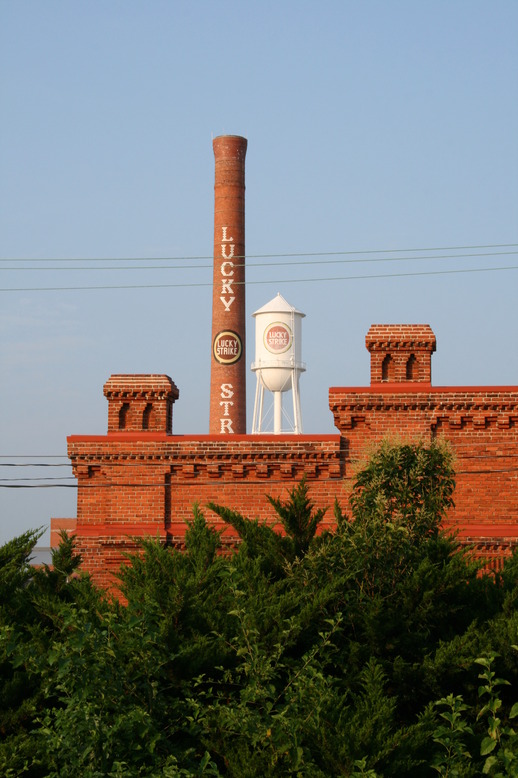
This occurred to me while viewing a screening of a short but impeccable new documentary about the adaptive reuse of the old Lucky Strike factory in Durham which began ten years ago.

In December, it will be aired on WRAL, a television station with the same owner and then hopefully it will be online as a must-see.

It wasn’t the first or even the largest of the complexes now emblematic of the commercial, “built” portion of Durham’s sense of place but it may be the most impeccable job ever done anywhere.

Brightleaf Square had been brought back to life as a template twenty years earlier, followed by an early phase of West Village, historic buildings part of an even larger complex nearby, though not under one roof.

But the fact that these wonderful buildings were able to survive the indiscriminate Urban Renewal movement at all is probably because they were still operational as factories and warehouses during the period between 1949 and 1979 which was so devastating across the country to sense of place.

The movement’s intended targets were “brownfields,” areas of abandoned industrial blight.  But instead it became a virtual “wrecking ball, in the hands of officials pushed by developers bent on destruction of landmarks including entire city blocks and priceless ethnic neighborhoods.

Even as a remarkable, overlapping 15 year span of renewed concern for preservation of “sense of place” kicked off in 1965 with the Highway Beautification Act, Urban Renewal had just begun to reach down and hollow out mid-sized communities such as Durham.

The HBA was intended for scenic preservation and restoration of trees including scenic views while limiting billboards to areas already blighted and zoned commercial at the time of passage.

This resurgence of sense of place preservation also included the National Historic Registry, protection of environmental assets such as pure water, clean air and endangered species and Supreme Court validation of preservation of place as a legitimate role of government.

The capstone was an incredible essay in the early 1980s anointing the overarching importance of sense of place.

By then there had been “sense of place revolts” in communities such as Durham, an uprising hastening the end of Urban Renewal and ushering in the era of adaptive reuse and gentrification.

Maybe not by coincidence, the term gentrification was first coined more than fifty years ago at the dawn of that renewed concern for sense of place by urban sociologist Ruth Glass in her book entitled London: Aspects of Change.

There are many different forms of gentrification, even tourism gentrification, but the term essentially refers to adaptive reuse or redevelopment of urban spaces including ripple effects such that it displaces working class people in exchange for middle and upper classes.

It is the two-edge sword of gentrification to sense of place.  On one hand it preserves some aspects while on the other hollowing it out, a consequence as destructive practices of Urban Renewal.  But It isn’t just people who get displaced.

In his study of two gentrified neighborhoods from the perspective of those displaced entitled There Goes The ‘Hood, Dr. Lance Freeman describes that it is also community values and cultural norms, even more temporal aspects of sense of place, that are at risk.

I arrived in Durham to jump start the community’s first official community marketing organization fewer than 24 months after American Tobacco shuttered its 14-16 acre factory in Durham after more than 110 years of operation.

The second of two failed attempts at its adaptive reuse was underway.

The documentary focuses on the third which succeeded in part because community marketing had lowered barriers to financing and tenancy by turning around negative perceptions fostered in neighboring communities.

But even the subsequent investment of more than $100 million dollars by local governments, as well as government historic tax credits and and new market tax credits which were invested would not have tipped it into success without Duke University relocating resources in Durham to serve as an anchor.

But the outcome is also the result of extraordinary developers who with grit and determination focused on resurrecting and creating sense of place.  Even documentaries can only tell part of a story.

Today, entrepreneurial spirit is noted as a result, a value that can be traced historically back through time here to Durham’s very roots.

But the idea of entrepreneurialism as an outcome from gentrification also traces back to 1989 and a paper published by Dr. David Harvey, the author of Spaces of Hope, during the year of that founding of Durham’s community marketing agency.

But an aspect that should have dawned on me decades before reading a newly published history is the relationship of adaptive reuse and gentrification with urban open and green space including green infrastructure.

Spokane, where I began my career took a very different approach to Urban Renewal than Durham where I finished up five years ago and still live.

And we are reminded by an incredibly insightful doctoral dissertation by a BYU alumnus of mine that it didn’t begin there during my tenure with Expo ‘74, an environmental World’s Fair.

A professor now at Weber State, Dr. Jeremy Bryson wrote his dissertation is entitled, The Nature of Gentrification, using a play on the word “nature.”

The transformation in heart of Spokane actually dates to a 1907 with a report by the Olmsted brothers which was then tabled until the 1950s when community leaders sensed Spokane’s downtown too was losing steam and fear had set in that a decline in downtown property values would follow.

In the 1960s, Spokane voters turned down bonds until business leaders caught on that what resonated was not rescuing downtown but cleaning up the riverfront and removing blight that obscured the 140’ falls and islands at the heart of the community.

But voters were skeptical of downtown property owners and a third bond fell 3 percentage points short of the 60% needed for approval.

Unlike Durham which looked to visiting taxpayers, who don’t get to vote, to subsidize the public sector investments in American Tobacco, Spokane businesses voluntarily shouldered a business and occupation tax on their profits.

Still, the effort ended up displacing not only the still-operational railroads blighting the waterfront but through a gentrification ripple effect, also hundreds of low income people in an area called Skid Road.

Researchers in the 1960s and 1970s began quantifying the value or green space to real estate.  By the 1980s and 1990s, the models showed an escalation in the value added by scenic views such as green infrastructure and savvy elected officials began taking notice of the return on investment in tax revenues.

As early as 1984, Durham officials banned billboards in part to increase values followed by placing a scenic overlay over Interstate 40.  By the early 1990s, officials in many cities began to quantify the contribution to tax revenues from scenery.

Evolving a community that is true to its values, sensitive to sense of place, including being affordable for a diverse spectrum of residents will continue to be worthy of love.

Residents and officials should be wary of new development that promises jobs, fuels the local business climate and broadens the local tax base at the expense of deteriorating its sense of place or by treating it merely as an amenity for formula development.

Never be afraid to say no.

Friday, October 31, 2014

Preceding Fingerprints On The Official Record

My narrative as a former community marketing exec began with the 1976 DMO startup in Spokane, Washington, one of three I helped shape during my four-decade career.

But “origin” stories never begin that abruptly, and to leave the impression they do is an injustice to those who left earlier finger prints.

That first opportunity started when I answered a 1973 job listing in the newspaper placed by a retired Shell Oil exec a week or two before my daughter and only child was born there and two months before I would enroll at Gonzaga School of Law.

So I could attend classes at night, I needed a full-time job during the day and my new boss needed someone who could call everyone in a huge, dusty library-type card catalogue to see if the people there were still alive and willing to bring a convention to Spokane.

At 56, Don Dagman had taken early retirement from Shell in 1971 and taken a job in response to a study the year before by Economic Research Associates.

Seven years older than my father, we were “Mutt and Jeff” when it came to the cultural divides at the time.  I wore my hair long, opposed the Viet Nam War and anticipated, based on new revelations by John Dean, how Watergate would play out.

Don was a company man who never questioned authority.

He was a baritone-voiced, deep-chested descendent of Swedish immigrant farmers who, “out on the edge of the prairie,” migrated up the western edge of eastern North Dakota’s Red River where he was born.

As a twenty-year-old he ventured to the Pacific Northwest and began his self-taught career with Shell in Portland, Oregon.  But Spokane was his home and remained so until he died at age 90, just a handful of years before I would conclude my career in community marketing.

That consultant’s report on behalf of the Spokane Centennial Commission was entitled the "Plan and Feasibility of Proposed Spokane Ecology Exposition,” and it called for formation of what is today called a community destination marketing organization to leverage follow-up.

Dagman, whose more than thirty year career had basically been public relations for Shell, was drawn to my resume because I had been involved from 1970-1972 in startup of a campus destination marketing effort while completing an undergraduate degree at BYU.

But for a little less than two years before he hired me, he had already been setting expectations in the news media, giving visitor-centric economic development a face there and making up for any lack of background or expertise in community marketing with hutzpah and bon vivant.

We made a good team.  I brought a knowledge of startup intensity and ramping up an organization from scratch, a penchant for data analytics and as an omnivert, just enough extroversion to be a good sales person.

I learned by watching Don Dagman the importance of earned media, also known as publicity, as a more powerful, more credible and far more cost effective part of marketing than advertising.

Looking back, this was also part way through an incredible “sense of place” span that began in 1965 with passage of the Highway Beautification Act, followed in 1966 with the creation of the National Historic Registry.

Then came the clean air and water act, which validated the importance of nature, followed by renewed interest in recycling waste and Spokane’s 1974 environmental World’s Fair.

Concerns about heritage, rootlessness and the unintended consequences of so-called urban renewal reached a tipping point during the 1976 American Bicentennial, followed by the 1978 landmark decision by the U.S. Supreme Court validating preservation of place as a government goal.

This twenty-year span culminated in the early 1980s with an essay by Wallace Stegner who anointed the overarching term “sense of place.”

Our offices during that two year transition, while embedded in the chamber of commerce, were in the 1930 Civic Building with spectacular views from our offices along a back wall down a deep gorge at the base of the Spokane Falls.

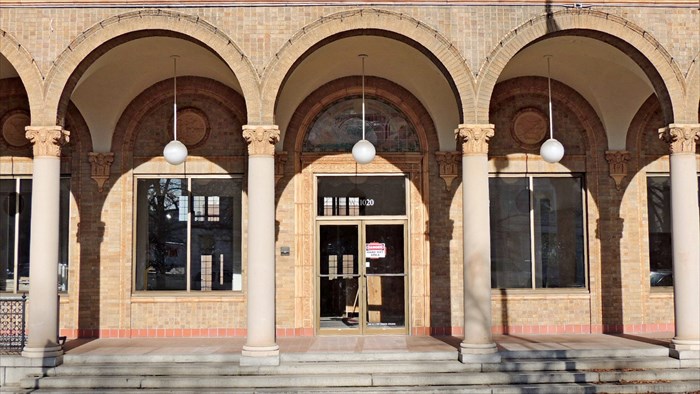
In front, this capstone “second renaissance revival” building, a sub-style of Beaux Arts had wonderful archways and a terra cotta roof.

Taken together with others it formed a sweeping contiguous arc of historic buildings begun in 1902 and identified a few years later by the Olmsted brothers as part of a grand square, war memorial statuary and all.

As we worked away inside, a successful nomination was being readied for creation of this area as the Riverside Avenue Historic District including a cathedral, a Carnegie library and a series of social and community buildings.

In a lower level one day, Don, always the consummate promoter in search of publicity, emptied out refuse collected by housekeepers from wastebaskets in a handful of local hotels during four days of a convention I had booked.

He had us sort the wrappers we found from 50 different stores and then invited a newspaper reporter to view them as an example of induced and indirect economic impact.

This was decades before the far more scientific input-output model, pioneered just the year before, would become a feasible alternative for visitor-centric economic development metrics at the level.

Neither Don Dagman nor I realized that a little more than two years after we teamed up, I would change career paths and be appointed to lead the transformation to Spokane’s stand-alone community marketing organization, when he was ensnared in a controversy.

But Don and I also happened to bridge another generational divide that Spokane stills struggles to cross today.

At the time, community marketing was transitioning from a minimized role primarily in response to erection of edifices in need of traffic such as convention centers to more holistically role viewed as the means to fuel overall visitor demand by leveraging sense of place and making all amenities, if market driven, feasible and sustainable.

I moved on a little more than three years after being named its exec first to Anchorage for a decade, to complete a startup just begun, then another from scratch in Durham where I worked for more than two decades before retiring.

But Spokane, despite the evidence of far broader visitor appeal during Expo ‘74, has in many ways remained at least partially trapped on the far side of that community marketing divide, as far too many communities have.

I not only read carefully that 1970 ERA report from which so many others merely quoted from the summary, but I rescued a series of old 1930s and 1940s newsletters along with some community brochures dating to 1907 that were being thrown out one day.

They showed that Spokane back then had seized on the idea of community marketing only two decades after the first spearhead had been formed, even participating in the See America First cooperative.

Those documents also permitted me to piece together metrics from those much earlier roots for community promotion that had somehow been long forgotten,

This including evidence of a publicity and news effort dating to when motor vehicle tourism first took root and convention metrics reported decades before those in the ERA report.

For example, by 1942 Spokane was hosting press tours and cranking out news releases and distributing photographs to 200 publications across the country.

City-wide, it was estimated that Spokane hosted 172 visitor-related conventions attended by 34,000 delegates spending $750,000 that year.

By 1947, convention attendance had increased to 37,000 delegates spending $1 million but Spokane was looking more holistically at overall visitor spending of $9.5 million.

But spending by just the fraction of visitors attending conventions had peaked in the early 1960s at $6 million annually and declined by 1970 to $4.2 million, along with any consciousness of visitors overall, when experts advised that a community marketing agency be created.

But no one had connected the dots of that decline to when Spokane had suddenly stopped promoting the community, something I was able to verify by those old index cards I was asked to sort through in 1973.

I also took time to verify convention-visitor impact.  Instead of beginning to climb again to the more than $6 million as Don had been led to report for 1971 when he was hired, by 1972, the year before I was brought on board, it had continued to fall to $3.5 million.

Through community marketing including harvesting exposure created by Expo ‘74, that impact had been nearly tripled to $10 million, all without a convention center.

By the time I left in 1978, we had pushed it to $17 million dwarfing the $1.8 million harvested by having a convention center, an adaptive reuse of one of the pavilions also recommended in that 1970 study.

But my eyes had been opened to the far greater potential of marketing holistically to visitors overall rather than limiting focus to conventions.

Projections of visitor spending overall for 1974 had been only $9.6 million but the 5.4 million to attended the six-month Expo ‘74 had generated $90 million in spending from visitors alone and studies showed that by leveraging overall sense of place including the new Riverfront Park it would generate even more going forward.

But In the early to mid 1970s, consultants were typically brought in to justify public facilities as real estate anchors to shore up private property values or as a barrier against advancing blight.

If they knew, they failed to explain to communities that facilities such as hotels and convention centers aren’t demand-generators but activity-centers created by harvesting visitor demand generated by marketing the community as a whole.

Failure to connect these dots until 1997 led to a quadrupling of convention center space across the nation over a period when conventions and meetings tipped into decline and the vast majority of events began to opt instead for meeting space in hotels.

But this hindsight wasn’t available with the 1970 report, which estimated that conversion of one of the World’s Fair buildings into a convention center by 1975 would result in an additional $1.8 million in convention visitor spending that year alone.

That turned out to be only 18% of what would be generated by aggressive community marketing alone and two-hundredths of one percent of overall visitor impact.

Today, Spokane generates $870 million from visitors annually (not counting closer in daytrip visitors.)  This includes the 28% generated from delegates attending conventions, a ratio inflated ten percentage points by the fact that Spokane has no major nearby population centers from which to draw leisure visitors.

But attendance at events using the Convention center has been flat to slightly down since 1999 with only a third counting as value added to the Spokane economy, about the same ratio of overall conventions as it represented in 1975 before two expansions.

While failing to look at market share or weighted proportions nationwide or warnings by other consultants beginning in 1997, many still use the same dated formulas from more than four decades ago to recommend expansion as a solution.

This fails to account that today convention centers compete not with other convention centers but with space within hotels in the same community, often giving them a net negative impact.

Nor do they take into account that this is a mature market in gradual decline or that groups broken down by size are getting smaller and smaller.

Though consultants never dispute one another, a far more strategic consultant report notes, just as that 1970 study did, that it is scenic beauty, outdoor recreation and a lively downtown that give Spokane its appeal and far greater overall visitor potential.

Just one of many communities with factions that continue to push aside “best practices” and data-driven decision-making to argue instead for “worst practices,” Spokane is extremely blessed to have a skilled data analyst who blogs there anonymously.

If he is looking down, Don with that characteristic twinkle in his eye, would probably give a wink, knowing that Spokane is still struggling to cross over that community marketing divide one of us leaped four decades ago.

He would also agree that while I may have been a startup/organizational innovator, it was always on the shoulders of those whose finger prints I found there stretching back decades.

I dedicate this background to making sure Don’s never fade away.

Wednesday, July 23, 2014

"Is This ‘The End Boom, Boom, Boom’? - Part 2 of 2

I wrote yesterday about lessons learned and a situation I faced running the destination marketing organization for Anchorage, Alaska.  This, as Paul Harvey would say, is “the rest of the story.”

They went to the press with a story, just not the real story.

Unfortunately, those attempting the coup chose a straw issue that was very easy to refute, but it was clear the conspirators all had one thing in common, reliance on and allegiance to tourism originating out of Seattle and heavily invested in Southeast Alaska.

This calculation relied on gridlocking a generations-long web of economic and personal relationships.  It also played to a deep insecurity, particularly in small towns in Southeast Alaska that Anchorage, with half the state’s population, wanted it all.

The board to which I answered unanimously held fast.  The complainants followed through and publicly dropped their membership, but they miscalculated the reaction.

News editorials saw through it as did our Anchorage membership along with nearly every elected official including those in high office.

While from opposing political parties and ideologies, both the mayor and the long-time former mayor who was an officer on our board at the time especially understood.

Even several CEOs of Seattle interests saw through the vendetta and backed away. Meanwhile, many of us worked tirelessly behind the scenes to help those involved save face, but to no avail.

Within a few months or so, those involved in the coup were being transferred or had faded behind the scenes. However, Alaska tourism relationships, stretched thin, would never quite be the same again.345882026_03d978c5ba_b

Nor would Alaska tourism.

I pressed on for another year after that, going on my ninth there and one of our most productive given the distraction.

But I also knew from experience that once again I had been unavoidably “splattered with blood.”

Completing startups is incredibly stressful, especially those that shift paradigms.  Not yet 40, I had already spent two-thirds of my adult life forging intense change.

I felt exhausted, teetering on burn out, but more than that I suddenly felt a flood of repressed anger.  Even after venting to friends, anger “colonizes the emotional life” and clouds one’s judgment.

As Dr. Robert Karen would pen a dozen years later in a small but powerful book entitled, The Forgiving Self, unresolved anger:

“…is like a cancer, sapping our vitality, aggravating our feelings of shame, weighing us down with depression, and secreting a steady stream of bitterness throughout our being.”

I needed a pause for reflection and rejuvenation.  I realize now I also needed to find a way to forgive and hope to be forgiven, especially forgiving myself.

The DMO board and Anchorage community were extremely disappointed when I told them I was moving on - first to help the mayor jumpstart the foundation of and a governing board for a traditional supply-side economic development corporation, then - to take a hiatus from DMO work.

At a farewell dinner thrown by several hundred community leaders, I encouraged them to think only of what we had achieved together by being strategic and data-driven.

I thanked them for forgiving me my mistakes and asked them to forgive others, but it would be another 16 months before I would truly forgive, especially myself.

For two decades after I left, Alaskans would write or call to check in.  A long-time newspaper editor there would regularly post updates on my whereabouts. It’s that kind of place.

A little over a year after I left Alaska and was fully rejuvenated, I landed in Durham, North Carolina to participate in my fifth DMO or economic development start up if you count the one I did in college at BYU.

This time, the challenge included reclaiming Durham’s story, assets and identity from Raleigh, a separate but then over-reaching metro on the other side of the co-owned airport.

Having by then just turned age 40, I knew full well what the drill would be.

That certainly didn’t make it any less intense.  Within a few years, Raleigh interests were repeatedly calling for me to be fired and openly lobbying for Durham’s DMO to be disbanded, often strapping a sycophant to the front bumper.

It only fueled resilience and hardened support, but I had also learned to look past such threats to try and see opposing points of view while still coming to admire those who couldn’t yet do that in return.

And, as so often happens in life, this story circles back around. Eventually one of the participants in the Alaska coup attempt relocated to North Carolina.

Friendship and mutual respect renewed once he let slip details as to who was behind it.

I wasn’t surprised to learn the ring leader was Seattle-based with long ties to Southeast Alaska but it didn’t matter.  I had long ago forgiven - as well as come to grips with the fact - that there was so much I could have done differently, too.

Soon another friend who had lived in Southeast Alaska during that time took charge of a DMO across the state, but we never spoke about what happened other than in coded references and jokes about the job hazards that came with our chosen profession.

Over my more than two decades on the job in Durham before concluding my four-decade career five years ago, I probably made just as many mistakes as I had elsewhere, some the same, just maybe not as stupid.

Whenever I clashed with interests not Durham’s it merely seemed to raise my stock.  It’s just that kind of place.

I had not only learned from Spokane and Anchorage, but found Durham even more gritty in my defense. Someone defending me once told someone complaining about me, “he may be an a**hole but he is our a**hole.”

I suspected a few for whom I had long been an irritant might have gloated when I retired but they didn’t.

That didn’t stop a Durham sycophant or two from taking a cheap shot but the only rumor I ever heard involved the ever worsening “essential tremor” in my hands, there from childhood.

Instead several people, thinking it was a degenerative cousin such as Parkinson’s, whispered to friends of mine, “Is this it?,” meaning The End and thus the title of this essay, a hit song by the The Doors when I was in college made even more memorable as the intro during my time in Anchorage for a movie classic.

It wasn’t, but it was time to move on toward an entirely new stage of life.

Looking back I have no regrets.  But I can more easily spot what I could have done differently or better.  This is human.

Due to the power of forgiveness as well my brain’s innate ability within a short time to shed rather than obsessing over bad experiences I can relay them to help someone learn from my mistakes.

As I hope any of my former antagonists are,  I am entirely at peace.

No longer a “hired gun,” but each day still pursuing change.

Tuesday, July 22, 2014

Finding Myself Still Alive At 30 - Part 1 of 2

When I landed in Anchorage, Alaska thirty-six years ago this summer, I knew what I was in for.  I also knew the reason I had been recruited to complete its fledgling DMO startup.

Still facing my 30th birthday, I had cut my teeth as a DMO exec in Spokane, where business executives had tasked me with separating that startup from the Chamber of Commerce then under a very powerful executive who took it personally and made it personal.

I jumped at the opportunity when Anchorage made the offer for many reasons.

As a good friend put it once regarding something similar that happened to him - once a struggle like that is concluded it is very complicated for anyone in the room who has “blood splattered all over them.”

Possibly this is also what led a later successor to apparently whitewash the history of that organization leaving himself at the center or possibly I failed to leave a folklorist in place (smile.)

But I had already exceeded the average tenure nationwide for DMO execs surprised to find myself still alive at 30 five years seemed like an eternity.

Anchorage found me appealing that due to my Expo ‘74 experience I had a grasp of the far greater potential of tourism beyond just conventions, rare at the time for peers in that profession.

The governing board in Anchorage also knew I had proven to have grit and they tasked me with something even more difficult.  They wanted me to pursue Anchorage’s full share of tourism economy.345897070_aabb0989de_b_thumb1

That meant gently weaning it out from under the control of then interlocking tourism interests in Seattle and Southeast Alaska but without taking anything away from what had long been the Alaska tourism “establishment.”

As we left the room after our first meeting, I remember telling a member of our governing board who happened to head a major Seattle-based Alaska-focused tour company (who became a good friend,) that to achieve that end, it would take between two and five years, but I might not survive that long.

The easy part was exceeding Anchorage’s fair market share for regional and national conventions.  But even adding in state meetings that segment would be but a small fraction of Anchorage’s visitor potential.

Even back then, the convention and meetings segment was showing some signs of losing steam, what we know today was in fact a long, slow decline as a proportion of overall travel.

The real potential for visitation to Anchorage would be doing something Alaska had never done.

We strategized that the real potential was going after travelers who, with only a few days to visit, wanted to experience the full breadth of what Alaska had to offer without spending two or three weeks jumping all over the state as had been customary.

This was an untapped segment focused on minimizing costs and logistics in what would be the equivalent of a long weekend’s stay but it meant breaking with the tradition.

Instead of the way each community had traditionally been identified for tourism with a particular feature to maximize tourist frequent movement and stay, we would reveal to this untapped segment that all of these could be done in day trips around Anchorage.

Analysis showed if carefully communicated to target markets, this new segment would be value-added to Alaska, and Anchorage could still serve its assigned role as an overnight stop for escorted tours or as a jump-off point for expensive fishing and hunting lodges.

The strategy also included tapping into visitation from Asia and Europe, working to develop stopover visits from air passengers refueling during flights over the pole and opening up winter tourism.

We also sought to persuade cruise companies to add itineraries that came all the way from Seattle and Vancouver into the Port of Anchorage without sacrificing their traditional itineraries limited to Southeast Alaska.

The reason I told our governing board I probably wouldn’t last very long is that back then Alaska tourism was very incestuous and heavily under the influence if not the thumb in some ways of a few Seattle-based businesses.

Alaska tourism had always been primarily about Southeast Alaska because this historically originated with cruise excursions to Glacier Bay organized by naturalist John Muir in the late 1800s.

We knew that when Anchorage ventured outside its designated role as an overnight, it might set off alarms in other parts of the state which would cause some to appeal for protection to powerful allies further south.

We had to try even more than Anchorage already had to simultaneously fulfill our role in traditional Alaska tourism promotion while repeatedly making the case that what we were doing differently was a win/win for Alaska.

Many understood, but suspicions of Anchorage motives ran deep, some with good reason, thus the pejorative at the time that its best attribute was that it was 10 minutes from Alaska (insinuating it wasn’t really Alaska.) 

To build good will, I spent a lot of time on projects that, while they didn’t benefit Anchorage that much, they did other parts of the state.

I tried to make friends and alliances all over Alaska and took time to call and meet with them frequently to allay any concerns burning up the grapevine.

But I also made more than my share of mistakes, many of them really stupid.

“Suffering fools gladly” is not my default, and I made a mortal enemy one day when I told a senior Alaska tourism operative in front of his friends that I didn’t appreciate his off-color jokes, especially those denigrating people of color.

Telling or listening to these jokes back then was a sign of fraternity, at least for the “good ‘ole boys.”  Regardless of how offensive it was, I could have handled that much more smoothly and without humiliating him.

Twice the age I was then, I know now that people can often read what I’m thinking on my face anyway.

But it also didn’t take long for us to begin tapping into Anchorage’s fair share of tourism which we confirmed with research.  The findings contradicted long established “conventional wisdom,” unavoidably stepping on some toes.

The more we tapped into a fuller share of visitor-centric economic and cultural development, the more the Anchorage community wanted us to do even more.

It was difficult not to cross the line, even in a state as gracious and accepting as Alaska.

So sure enough, in my fifth year, right on schedule, cabals of Alaska and Seattle interests began cornering me in private to press for us to step back.  Way back.

Often they would drop the name of a local constituent intimating it was someone over which they felt they had influence or insinuating the threat of losing lucrative contracts.

In hindsight, I should have raised an alarm more vigorously with my board as a whole, but instead, my low key summaries were designed to reassure them I had it under control.

That was a mistake.  Never underestimated the power of gridlock on personal relationships as a trump logic and metrics.

I went to great lengths each time one of these sessions took place, to review the data and how what we were doing was both/and, and not a threat to Alaska’s traditional tourism infrastructure.

But it was compliance not reassurance they wanted.  It only further alienated me from them.  Fueled by success and feeling threatened, looking back I’m sure my intensity and frustration came across with more than a little hubris.

Within little more than a year, a handful formally threatened my board with resignations of membership support (a small part of our funding) if I wasn’t fired and a course change made.

If not they would smear us in the news media.

To be continued…

Thursday, July 10, 2014

Differentiation Requires Continuity

For reasons other than rain, it was gloomy when I made the 15-hour drive from BYU up to east of Seattle where my family had been living for more than a year.

In 1970, my dad was just finishing the liquidation of Philips Petroleum holdings as the company prepared to abandon the west coast following an antitrust ruling.

Adding to its gloom, Phillips also detected it was under investigation for illegal campaign contributions to 65 congressional candidates and two two Presidents.

Even more depressing, Seattle, less than eight years after opening its futuristic World’s Fair, was in deep in recession with Boeing alone shedding what would be nearly 60,000 jobs.

Nearly 1-in-5 residents were unemployed.

In April 1971, two realtors rented a roadside billboard alongside Sea-Tac Airport for $160 and tried to lighten the mood with a now famous message  reading, “Will the last person leaving SEATTLE – Turn out the lights.”

Amusing now, it wasn’t at all funny to the tens of thousands unemployed and tens of thousands more relying on their paychecks, along with thousands of reliant businesses.

As surly Seattleites scoffed at plans underway for his cross-state hometown to host a World’s Fair of its own, Danny O’Keefe was laying down an ode to Seattle, a decidedly downbeat version of his soon-to-be hit Goodtime Charlie’s Got the Blues.

…Find the sunshine, leave the rain…got my pills to ease the pain, can’t find a thing to ease the rain…

Everybody’s Leaving Town.”

It would be seven years before Microsoft, with just 13 employees, would relocate across Lake Washington in Bellevue.

Even the notoriety brought that fall by the mysterious disappearance of D.B. Cooper after hijacking a Northwest Orient Airlines flight bound for Seattle didn’t relieve its blues.

But hidden under that fog of doom and gloom, Seattle was also rediscovering its authenticity, the precursor to cool.

A year after that infamous billboard, three Bay area teachers (history, writing and English) would open the first Starbucks.

They adapted roasting techniques they had learned working in the late 1960s summers from artisanal pioneer Alfred Peet, in the historic building across from the 1930s mission-revival Mormon chapel in the “Ghetto Gourmet” neighborhood of Berkeley.

The first Starbucks was actually on Western Avenue about 400 feet northwest of Pike Place Market, which had been doing business since 1907, before moving directly across the street from the historic market, the site now celebrated as the original Starbucks.

The year after it opened, Mr. Coffee, the first automatic drip home coffee maker was introduced and ten years later drip coffee maker salesman, Howard Schultz lobbied Starbuck’s owners for a marketing job.

Schultz bought Starbucks in 1987, and more importantly, its roasting formula and its authenticity.  Now a proven genius at marketing a brand, Schultz grasped that “it is authenticity that makes them last.”

Even 20,000 stores later, Starbucks zealously guards its “authenticity” going back to its roots including that historic store across the street from Pike Place Market, where lines of pilgrims run for blocks.

While they also took in the Space Needle on their first visit, it is Pike Place Market still perched on a steep bluff above Puget Sound these 100+ years, that my grandsons insist we revisit during frequent returns for family holidays.

During the 1920s, due to parking issues, city leaders flirted with relocating the Market but didn’t after protests.  In 1963, the year after the World’s Fair, the City considered the idea of tearing it down for a hotel/apartment/office building and hockey arena.

Again, Seattle residents rose up in defense, but this time they also pushed for a protective historic preservation zone.  By 1970, all of the Pike Place Market historic buildings were undergoing restoration, using  original plans, blueprints and building materials.

Traveling to or through Seattle during the first half of my now concluded four-decade career in community-destination marketing, I stayed occasionally with friends living on Magnolia and Queen Ann hills.

As do the handful of other hills hemming Seattle’s downtown, not only does each feature an organic neighborhood district but views of the skyline evoke the caution in Wallace Stegner’s essay Sense of Place that:

“the West has been raided more often than settled… raiders moved on when they got what they came for…”

He laments that some communities changed so fast that memories could not “cling to them.”  He further cautions that they lose their character when they lose their memory.

Twenty-eight hundred miles southeast, Durham, North Carolina, where I live, is still “raided” from time to time.  Monuments to “franchised architecture” earn nicknames such as the “green weenie.”

Penn’s esteemed Emeritus Professor of Urbanism and architect, Witold Rybczynski (Vee-told Rib-chin-ski) terms these placeless monuments a failure to see that architecture “is a social art, rather than a personal one…”

He continues that architecture is “…meant to be a reflection” of a locality “and its values rather than a medium of individualized expression…”

Admitting that “it’s exciting to bring high-powered architects in from outside.  It flatters a city’s sense of self-importance…”

“But in the long run,” Dr. Rybczynski concludes, “it’s wiser to nurture local talent: instead of starchitects, localtects.”

So often, high-rise building architects dismiss that design should reflect a community’s distinct values and sense of place.  Like many of Seattle’s, some strive to be generic.

Unlike Pike Place or Magnolia or Queen Ann, they aren’t what makes that city cool.

As Rybczynski notes in his recent book How Architecture Works, new buildings should seek coherence with place not personality cult.  It’s a must read for community officials signing off on plans for new buildings.

Change is inevitable to communities but as Stegner warns in his essay, too often “it means stereotype.”  Sense of place endures where communities manage change in a way that preserves character.

Preserving community character as a strategy for growth while pursuing continuous improvement is “absolutely consistent” according to Harvard’s Dr. Michael Porter, “in fact, they’re mutually reinforcing.”

In the words of sense of place land use expert Edward T. McMahon:

“We sometimes forget that every building has a site, every site has a neighborhood, and every neighborhood is part of a community.”

To often officials worry about preservation of a few facades at street level only to surrender the skyline to incongruity.  Straddling, such as this is called, is a sure fire formula for sense of place mediocrity.

As Microsoft’s first dozen employees settled across the lake from Seattle, across the state I had just earned a “degree” in organizational differentiation, helping business leaders spin off an independent community-destination marketing startup.

But it didn’t sink in that community differentiation from competitors was pivotal until I was nine months into another startup in Anchorage, Alaska.

Coincidentally, that was one of the places my parents had turned down in 1970 when my dad’s Seattle assignment was complete.

Phillips that year had signed onto a consortium to build the Trans Alaska Pipeline, which was completed in 1977, the year before my arrival.

Likewise, my parents rejected reassignment to Norway, where in 1969 Phillips had discovered a huge North Sea oil field.

Instead they elected to return to our family’s Rocky Mountains roots.

While dispensing a briefcase of “airplane” reading on an early 1979 flight back home to Anchorage, I came across a paper on strategy and differentiation by Dr. Porter, a Harvard business professor my age.

I was still doing some “this equals that” to apply the paper to my work with communities when my plane stopped in Juneau and disembarking, my seatmate Jack Musiel (Muse-elle,) asked to borrow it.

At a meeting a year later, Jack, a friend who was then head of Westours (Holland America,) returned the favor when he handed me Professor Porter’s newly published book expanding on the topic - Competitive Strategy: Techniques for Analyzing Industries and Competitors.

In the mid-1980s, I did Jack a little “menting” in return during a stint when he ran the DMO for Miami Beach.  Fearing revitalization might never come, officials planned to surrender its identity to the “greater.”

I quickly forwarded a copy of Stegner’s then just-published essay on Sense of Place as a means to illustrate what could be lost in the mix.  Ironically, revitalization undetected was already taking effect.

Jack, who passed away in 2001, and I enjoyed ticking off “Porter quotes” such as those below like they were on cue cards.  I wish I had paid even closer attention:

“Strategy…is about deliberately choosing to be different.”

“The essence of strategy is choosing what not to do.”

“A strategy delineates a territory in which a company [or community] seeks to be unique.”

“The ability to change constantly and effectively is made easier by high level continuity.”

“…strategy must have continuity.  It can’t be constantly reinvented.”

Friday, June 27, 2014

The Greatest Legacy of All

It has been barely more than 40 years since I stood on a bridge over the Spokane River as a newly-minted community marketing executive watching President Nixon officially open the six month “environmental” World’s Fair.

America then was at the nexus of three global crises, the Cold War, the Watergate Scandal and the Energy Crisis.

My boss suggested I steer clear of the floating stage due to my “way below the ears” hairstyle and the outrage I had expressed as the Watergate cover-up dissolved.

In observance, I recently replayed an incredible 58-minute documentary produced twenty years later by KSPS public television for the Expo ‘74 anniversary.

It includes rare footage of that opening ceremony (if you look you can see me on the bridge – not.)

It also captures interviews with many of the primary movers, many of whom have passed on, using exclusive footage by an amateur historian of what the 100-acre site looked like before, during and after demolition.

This included 15-acres of marshaling yards for what had been six transcontinental railroads, by then four, using Spokane as a hub.

Behind me in that footage is the symbolic Great Northern clock tower, shown in this link a year before counting down to the opening.  It remains an artifact in the incredible park created when the fair’s structures were sold off and repurposed.

For Spokane, the smallest city (170,000 at the time) to ever host a World’s Fair, that had been the objective anyway.

In 1974 I had finished my first year of law school across the river at Gonzaga University, taking classes at night and using the experience I had gleaned from a part time job at BYU during the days to help organize a destination marketing organization to carry on after the Expo.

Already I had begun to sense that I was backing into another career, one that stretched until I retired at the end of 2009.

I had supported Nixon in 1968, although too young to vote, but not because all of my extended family except my great-grandfather were conservative (for that time) Republicans.

When anti-war Republican hopeful Governor George Romney dropped out and Democratic hopeful Senator Robert F. Kennedy was assassinated, Nixon just seemed the best option for ending the futile Viet Nam War.

When he didn’t come through, I turned to Senator George McGovern in 1972, a South Dakota liberal and WWII hero.

I’m a native of Idaho, where before it was even a territory my ancestors helped establish the first permanent settlement in 1860.  They thought they were in the upper Cache Valley in Utah, until more than a decade later when surveyors marked the 42nd parallel.

My Mormon ancestors took time away from their ranching to mill railroad ties, haul gravel and lay tracks up through southeastern Idaho Territory.

From what they saw, and encouraged by railroad promotions, my paternal great-grandparents and grandparents eventually homesteaded ranchland up in the nook that points into the Tetons and Yellowstone Park.

But back then Mormons were Democrats, and that was a problem.

Idaho has always had three “state capitals,” and still does today.  For the north, it is Spokane  just across the Washington line.  For the southwest, settled by Midwest Republicans, it is Boise.  For Southeastern Idaho, it is Salt Lake City in neighboring Utah.

At its narrowest, Idaho’s panhandle is only 50 miles wide because the mountainous third of what is now Montana conspired with Congress to lop it off on the pretense that it would be too difficult for Idaho officials such as circuit judges to travel through the Bitterroots.

Miffed when the territorial capital was soon “stolen” away by Boise in the years before Idaho became a state, Northern Idaho lobbied Congress to annex it to Washington instead, a move that made it through one house of Congress, but stalled in the other.

To appease northern interests, the territorial legislature relocated the University of Idaho from what is now Idaho Falls in the southeast up to Moscow, Idaho in the north.

Had it stayed it Idaho Falls, I’m certain that is where I would have attended college.

But there was a much bigger hurdle to statehood:  the Mormons.  Back then Congress took a partisan approach to granting statehood.  Let’s call it macro-gerrymandering.

Republicans didn’t want to lose control by granting statehood where divided political affiliations might shift the balance of power.

So threatened with disenfranchisement as subterfuge,  Mormons converted to Republicans in Idaho (page 419.)

That “reddest” of states today belies a much more diverse political and ideological heritage.

Spokane always identified more with the Northern Rockies than the much further west Cascades, and eventually this “Inland Empire” came to describe its market area including parts of three states and a slice of Canadian province.

During my time there, I created a winter ski promotion called “Ski The 51st State,” incorporating four nearby ski areas including two in Idaho.

Today, “Inland Empire” in Spokane has given way to “Inland Northwest,” a nod to a region in California, although with later claim.

But for Spokane, that moniker probably came from an interurban railway by that name, one of many running in the years before about six Transcontinental's made Spokane a hub.

People rightfully feared the transcontinental railroads would become monopolies. The Spokane, Portland & Seattle Railway was largely created as a Great Northern and Northern Pacific joint venture to work around President Teddy Roosevelt’s trust-busting.

By the time Spokane leaders hatched Expo ‘74, these smaller railroads, if even in name only, had merged into their parents, collapsing the remaining four Transcontinental's whose blight had alienated its river from downtown.

Today all four, including two more Transcontinental's further south, are all part of BNSF (Burlington Northern Santa Fe.)  Only the old logos remain.

To their credit, the railroads agreed to donate land, reroute tracks, construct new bridges, and clear what is now Spokane Riverfront Park.

The year these mergers commenced, Congress created Amtrak, or the National Railroad Passenger Corporation, in 1970 which relieved private railroads to focus on freight.

It wasn’t to save passenger rail travel, it was to save the railroads.

Amtrak began service in 1971 as passenger rail miles bottomed from their high in 1944.  By the time I started grade school in 1955, passenger train travel was lower than the pre-war 1920s peak (page 18.)

In 1974, not only did nearly a fifth of the Expo’s 5.2 million attendees go through the Amtrak exhibit, but greeting the arrival of its uber-scenic Empire Builder is how I first connected with two career mentors.

Still its most popular long-haul route today, back then the nation’s tourism leaders took the Empire Builder (the founders nickname) to simultaneously promote both Spokane’s World’s Fair and Amtrak.

First to step down from the train was Charlie Gillette, a WWII hero who had worked for the New York City DMO since when I was born, becoming CEO the year before the World’s Fair there a decade earlier.

Four years before I met him in Spokane, Charlie had begun handing out small lapel pins, then stickers, using its old Jazz nickname for NYC, The Big Apple.

Having retired the year before I arrived in Durham, I treasure his last letter congratulating me.

I’ll always be grateful for that Spokane start to my career.  My daughter was born there and I still hear from friends from those days.

Occasionally, I drive past Riverfront Park as I shuttle to and from the airport during annual family rendezvous' at lakes along the Idaho border near there.

Ironically, in 1908, the famed Olmsted Brothers identified that part of of the river as a prime site for a city park while creating an overall plan for green infrastructure.

No one listened then, but 50 years later civic leaders began thinking of ways to reclaim the area from blight.

Looking back today, I am particularly impressed that conservative business leaders had the sense to embrace the environmental movement as a means.

Unheard of, not only did the private sector volunteer a temporary business and occupation tax (B&O) to help pay for the World’s Fair, but the private organizers were among the very first in the nation to conduct an environmental impact statement.

This preceded studies by the EPA.

As the city editor for the local newspaper there noted a few weeks ago, the 1974 event “brought new ways of thinking to that area,” maybe the greatest legacy of all.

Wednesday, April 16, 2014

My Second Choice – Still Sense of Place

Growing up, my ambitions were tied to sense of place, first as a cowboy on our ancestral ranch in the Yellowstone nook of Idaho, then in grade school as either a uniformed Forest Ranger or a Fish and Wildlife Officer.

Both were easy to spot in Ashton, the small, nearby town where I started school and provided an inspiration to attend college (as though my parents ever gave me a choice (smile.)

I have always loved wildlife, so running up Ashton-Flag Ranch Road and veering off into the remote Idaho corner of Yellowstone Park was always a spectacular option.

In the early 1900s, my paternal grandfather, Mel Bowman, then 22 years old, helped pioneer the 40-mile route that slices between Yellowstone and the north end of the Tetons.

During the dead of winter between 1910 and 1911, while my grandparent’s ranch lay buried in snow drifts, my grandfather and his brother ran wagon loads of cement along the dirt and gravel road using teams of four draught horses each.

Each trip took four days over and two days back in below freezing weather.  In return they received $80 each not including provisions, horse feed or overnight stays in tepees along the way.

The objective was construction of a concrete dam in order to raise Jackson Lake by thirty feet for the purposes of supplying irrigation water, and eventually along with six other dams along both sides of the Tetons, a source of hydroelectric power.

A view down the Tetons from a ridgeline at the beginning of the road is one of my favorite views of the 40-mile Teton Range.  But this was only one option for viewing wildlife during my early years.

Two other favorite trips including going a mile or two across the Henry’s Fork to the hatchery to see native Cutthroat trout fingerlings and riding horseback into the Sand Creek Elk Refuge that ran down the west side of the ranch including Moose in the wetlands down near Chester.

Less than fifty miles due west of the ranch, the 10,000-acre historic Camas National Wildlife Refuge (shown in this image) is one of nearly 600 nationwide.

Filled each spring and fall with tens of thousands of migratory waterfowl including Trumpeter Swans, the Camas NWR is now at risk.

Center-pivot irrigation technology (the circular farm land you see from an airplane) not only pushed farming out that way in the 1960s and 1970s but it soon began to deplete ground water that kept the refuge’s wetlands wet.

So ironically, the refuge has had to also pump water from the aquifer in order to sustain places for the big birds to stop for rest flying south and returning north.

Probably gone are the days when we could see more than 50,000 ducks and geese in flight all at the same time.  Now the Refuge must be selective about what habitat it can keep viable.

Thinking I might want to be a lawyer, I didn’t turn back to my love of sense of place until part way through law school in Spokane, Washington.

In the 1970s, when I was helping to start the community-destination marketing organization there, we included the huge Turnbull National Wildlife Refuge which was 25 miles southwest in our inventory of nearby things to see and do.

Spectacular flights of huge Trumpeter Swans is what I remember there.  The largest of North American native waterfowl, Trumpeters (for the sound they make) stand about four feet tall but stretched out in flight they measure 6 feet from bill to feet and another 6 to 8 feet in wingspan.

They had become almost extinct before I turned six years old in the 1950s.

When I was recruited to Anchorage to complete another start up, I lived on a steep bluff along the southern edge of the city between Kincaid Park and Discovery Bay overlooking Turnagain Arm, with a spectacular view down Cook Inlet.

The glass wall and front door of my ground floor condo was less than a dozen steps from the bluff’s mid-point along the 33,000-acre Anchorage Coastal Wildlife Refuge that runs along the south side of the municipality from the airport to Potter Marsh, a wildlife area created in 1917 when construction of the Alaska Railroad isolated a wetland.

Our organization lobbied successfully for the bird refuge at Potter Marsh to be interpreted for visitors along a 1,500 foot boardwalk, now one of Alaska’s most popular wildlife viewing areas.

Potter Marsh isn’t just for the birds, including an occasional Trumpeter.  When I lived there in the 1980s, more than 1,100 Moose in Anchorage used the mountain to sea greenways as their highways.

In the spring, the Marsh is where they calved just a few miles from where I lived and worked.

Just around a corner, while still in the municipality of Anchorage you can see Dall sheep (which look similar to mountain goats) climbing a rocky slope just above the roadway, and a bit further, a lookout to see Beluga whales.

There are ten wildlife refuges in North Carolina including Roanoke River which was created the year I moved here, but most are a good ride east from Durham where I finished my career after building yet another community start up with natural place based assets included.

A friend and I may visit one refuge in particular the next time we take the Harley Crossbones to visit friends in Charlotte.  As we cut down across the “heart” of North Carolina and under Uwharrie National Forest this time, the Pee Dee National Wildlife Refuge is on our way just outside Wadesboro.

We forget how much tourism overall relies on infrastructure, including green infrastructure such as the National Wildlife Refuges.  They weren’t created for the sake of tourism, but like much of the nation’s green infrastructure, that is a huge economic byproduct.

Even in cities, natural assets are among the most productive of place-based assets essential to both quality of life and quality of place.

Friday, March 21, 2014

Stickers, Boomers and Enablers

My first encounter with the term, “sense of place” was in 1985 or 1986 while reading an incredible essay by that name.

The author was Dr. Wallace Stegner, who had retired from Stanford in 1971 just after I took my first assignment, while still in college, in a field that would become known as Destination Marketing.

Until I read Stegner’s essay I had fumbled with how to describe the approach to community destination marketing taught to me by my first two destinations, Spokane, and at the time, Anchorage.

It was usually easier to describe my approach to community marketing by what it wasn’t; the “generic” approach still all too prevalent, or as we call it today, “plug and play.”

Little did I realize back then that reading “A Sense of Place” triggered in me that any grasp of sense of place I might obtain would likely come from “the knowing that poets specialize in.”

It was a knowing for me that was translated into community marketing.  That was bookended two decades later when hearing “The Geography of Somewhere” by Dr. Scott Russell Sanders, a few years before retiring.

Stegner began his essay entitled “A Sense of Place,” which has been republished many times since, with a quote by Wendell Berry, with which he has been misattributed many times:

“If you don’t know where you are, you don’t know who you are.”

Don’t worry, the statement is meant to make you stop and think, and Stegner goes on to explain what his former pupil meant.

Berry returned the favor in a wonderful speech about sense of place in a lecture entitled, “It All Turns On Affection,” which was delivered the year before last to the National Endowment for the Humanities, which also happens to have a research center in Durham where I concluded my career and still live.

The speech disturbed some conservatives who obviously hadn’t read Stegner’s essay, when Berry used the words “stickers” and “boomers” to describe two kinds of inclination Stegner assigns to Americans.

Stegner uses the terms “placed” and “displaced” but Berry’s terminology is less subtle, something needed in today’s America.  The difference really does turn on “affection.”

“Boomers” are transient, often motivated by greed.  “Stickers” are motivated by affection for places and the desire to shape and preserve their distinct personalities.  “Boomers” by nature push to make them the same.

There are people in the area where the two intersect.  Some people, such as me, are transient but respect and advocate on behalf of sense of place.  Others in this intersection are “boomer” enablers, chipping away at the distinctiveness of the places they love.

The latter are often the most dangerous to sense of place because they are more afraid of losing a project than they are sense of place.  They often cave to pressure from “boomers.”

However well intended, boomer enablers fail to grasp what Robert J. Gibbs, a retail consultant and author of the book entitled, Principles of Urban Retail Planning and Development, calls Plan A, B, or C.

Gibbs says that developers who come to town generally have three designs ranging from Anywhere USA to Unique (sensitive to local character.)

He cautions that “which one gets built depends heavily on how much push back the company gets from local residents and officials about design and its importance.”

I traveled recently to Salisbury, North Carolina to hear a presentation by Ed McMahon, a friend, fellow-scenic preservationist and a senior fellow at the Urban Land Institute.

He cautioned – “Do you want the character of your community to shape new development – OR – Do you want new development to shape the character of your community?”

Ed’s presentation included several examples of chain stores, fast food restaurants and big-box retailers building or adaptively reusing building in keeping with the community character where they are being built.

McDonald’s, failing after it sued one community, then used the store eventually built as an example of its company’s sustainability initiatives.  Robert W. Stocker, a Wal-Mart vice president noted before the chain built a new store to suit the character of urban Washington, D.C. while also facilitating local, independent businesses that:

“We no longer have to build a gray-blue battleship box.”

Of course the built environment is only one characteristic of sense of place, alongside cultural and natural place-based assets, but it is the one where strongly inclined “boomers” and their enablers can do the most irreparable damage to all three.

Communities such as Durham are known for sense of place.  It is a pillar of their visitor-centric economic and cultural development spearheaded by community destination marketing.

But it seems for every two steps forward there is always one step back, usually brought about by a failure to think strategically or consider unintended consequences, such as the closing of Charlie’s, a mainstay on Ninth Street, brought about by increased rents spurred by chain store development across the street.

A few who fail to understand that the motorcycles parked outside cost $30,000 to $40,000 and more, will fail to grasp that the organic nature represented by Charlie’s is far more appealing than chains to the Creative Class, according to research by Dr. Richard Florida.

Communities with a sense of place to retain need to seek a new breed of developers who cater to brands who according to MIT cultural-economics anthropologist Dr. Grant McCracken:

“…don’t come in and colonize the space, [but] sort of occupy it and honor what was there before and…draw cultural meanings out of it into [the] brand….which is richer, more interesting for the connection.”

Paraphrasing McCracken in relationship to community marketing, this is “making meaning as a means of marketing.” Sense of place is the “artisan…triumph over industrial [mass appeal],” a “created scarcity…time travel out of the here and now and into a different place.”

To finish with one of my favorite lines in Stegner’s essay, “A Sense of Place:”

“No place is a place until things that have happened in it are remembered in history.”

Change can either enhance or “stereotype.”

“It All Turns On Affection.”

Wednesday, September 18, 2013

Losing Even When You Win

The recent news about the host city selection for a distant Olympic Games reminded me of my time marketing Anchorage, Alaska and two Olympians with whom I would cross paths after I arriving in Durham a quarter-century ago.

While up there, we twice earned the right to represent America in a bid to be the host city for the Olympic Winter Games.  We narrowly lost, but I took away an understanding that when it comes to hosting mega-sports events, host communities nearly always lose, even when they win a bid.

There are often ancillary reasons for hosting sports events but research has repeatedly shown, that due to hidden costs and the diversion of resources from more important needs, most of the time hosting huge sports events doesn’t pay, unless that is, you own a media outlet

Media owners are often behind efforts that lead otherwise P & L-conscious business leaders to pursue events by seeking to subsidize them from the “public trough” even when the tax revenue expected doesn’t cover the subsidy.

Often seduced elected officials swoon even when the subsidy is in-kind through such costs as trash collection and public safety etc.

Bob Uchitel was behind the idea for Anchorage to bid to host the Winter Games.  Bob’s family had mob connections in New York, Miami and Las Vegas including famed mobster, Meyer Lansky.  Both families had Ukrainian roots.

A year after I was recruited to complete the start-up of Anchorage’s community destination marketing organization, Bob arrived there too.  He intended to start a construction company but ended up founding Multivisions, Alaska’s first cable-TV service, the year ESPN was launched.

Spokane, my previous post, had awarded its first cable franchise in September 1974 as the world’s exposition there was winding down.  A friend of mine worked for the affiliate Cox Cable TV, a Georgia-based media conglomerate that got into cable in the 1960s.

For years I kept a promotional golf ball she gave me with the slogan, “get some balls, try cable TV” printed on it.  Polls this month show Americans now prefer original cable shows to network television but cable is also hearing a death knell of its own, created by cable-cutters and award-winning streaming content.

In Anchorage, Uchitel was always brimming with big ideas for big events and threw even bigger parties.  He was the consummate promoter, often bullying people if they questioned his vision, as was part of my job description whenever called out to his office.

He was well-intended and I learned shortly after departing Alaska that Bob’s lifestyle had tragically caught up with him at only age 44.

Today, having forgotten that it dodged a bullet by just two IOC votes, old warriors are trying to rally a new generation in Anchorage to bid to host the 2026 Winter Games.

The reason hosting the Olympics comes closer to making any sense compared to hosting most other sports events is that the huge television revenues associated with hosting the Games can fund some of the facility construction.

Without the construction impact, the visitor impact of hosting an Olympics is minimal when adjusted for the business it displaces.  And the "old saw” that the facilities can be leveraged to host subsequent events to offset ongoing operating costs is just another round of the medieval “feast of fools.”

Some interesting and memorable people came to visit me soon after we set up temporary shop in Durham’s historic Brightleaf Square.

The first to do so was an elected official from Raleigh suggesting that all I had to do was contract Durham’s marketing out to his community.  No thanks!

But he did introduce me to an illusion I would soon discover was held by many in Wake County; that the region was centered around Raleigh.  I would spend two decades helping folks understand that the super region surrounding these two airport-linked regions and communities is “polycentric” with no dominant center.

This means they have far more visitor potential than centric regions because they can get several bites from the “tourism” apple.

Next to visit was Jim Goodmon, a powerful, wealthy and charismatic Raleigh media executive and today the owner of the Durham Bull, three-time winners of The Governors Cup and the runner up in last night’s national championship playoff, and a successful downtown Durham real estate developer.

Leveraging a hundred million dollars or so in local tax dollars, not to mention federal and state tax credits and including related sports and entertainment facilities, his company has taken the “Brightleaf” model to soaring new heights by creating the award-winning American Tobacco Campus out of an old Lucky Strike factory.

Back then Jim was shopping an intriguing proposal to host preliminary games in Durham for the 1994 World Cup by burying the field and then-surrounding track of Duke’s Wallace Wade Stadium under seven feet of dirt.

The plan was to then somehow within weeks convert it back in time for football season.  Duke and therefore Durham passed.

But folks over in Raleigh came away understanding that benefiting from my experience in Alaska, our organization understood a thing or two about vetting mega-sports events including a policy to first vet any proposals involving facilities or underwriting with stakeholders with those who would be expected to provide them.

In general, there are just too many other far less costly and far more sustainable ways with which to generate visitor-centric economic and cultural development.

That didn’t stop Raleigh sports enthusiasts over the years from periodically trying to put Durham in a corner or calling for my head when Durham, after careful vetting, elected to pass on various schemes.

Communities can be in close proximity but culturally as far away as distant planets when it comes to the idea of subsidizing large events.

The next two people who dropped in to see me were Durham coaches, known for producing sports events here.  To me they epitomized Durham in many ways, including one being black and the other white.

In the days preceding desegregation, one at Duke and the other at North Carolina Central, an historically black college, they had defied Jim Crow by having their track teams practice together, travel together (refusing to stay where both weren’t welcome) and compete together.

Eventually, Al Buehler and LeRoy Walker became Olympic team coaches and officials and created and hosted a series of famous track meets in Durham, without asking for public underwriting other than in-kind services.

Both were stunned as they took seats in my tiny, temporary digs to see a poster hanging behind my desk advertising a basketball game in Spokane, earlier in my career starring North Carolina’s All-American, David Thompson, and the USA team vs. the Russians during Expo ‘74.

Earlier in 1974, Thompson had led North Carolina State University to victory over Bill Walton and UCLA, breaking that team’s unbelievable streak of seven consecutive national championships under legendary coach John Wooden stretching back to my senior year in high school.

Thompson is credited with taking college basketball above the rim, helping to invent the alley-oop, serving as Michael Jordan’s role model growing up and being named one of the five best players of all time.  Seeing him play in the old Spokane Coliseum was the first time North Carolina as a state ever crossed my mind.

His trip to Spokane came less than two years after the USA team had lost for the first time ever in the Olympics to Russia due to an extremely controversial call with three seconds remaining that nullified a successful foul shot.

Of course, this was also the Games where the Olympic spirit was nearly snuffed out when eight Palestinian terrorists took nine Israeli athletes hostage and murdered them.

In my office, the two coaches noted that while I was watching “Skywalker” Thompson pay back the Russians in basketball out in Spokane that summer, USA Track & Field, led by the Pacific Northwest’s legendary Steve Prefontaine, was running down the Russians in a dual meet the two coaches put on in Durham.

It was one of many events created and hosted locally over the years by these two friends. 

Within less than a year of his victory here, Prefontaine was killed when his MGB sports car flipped.  We reminisced about Gerry Lindgren who was one of only two people to ever beat Prefontaine in an NCAA Championship.

Two years ahead of me, Lindgren was a running wunderkind in high school who ran one of the five top performances ever. In the early to mid-1960s, kids my age would actually listen late on the radio as the diminutive Lindgren would run down the world’s top distance runners.

Walker and Buehler then updated me that a few years before our visit, Lindgren developed debilitating schizophrenia and for a while disappeared.

They guessed correctly that before leaving Spokane for Anchorage I must have also witnessed 1972 Olympic Gold Medal-winner Frank Shorter win the first Lilac Bloomsday Race in Spokane in 1977, the year before I would leave for Anchorage.

By the time we were visiting in my office in Durham, that unique 12 K event had grown from 1,000 runners to more than 60,000 each year, proving that some of the most lucrative sports events are homegrown.

Within a few months of that first visit Dr. Walker was elected president of the United States Olympic Committee and would continue to drop by my office regularly throughout the rest of my career.  He passed away last year at age 93, a member of 14 halls of fame, 15 counting my own.

The year after I retired, a touching documentary was produced about Al Buehler’s life and traced their time together.  Produced by Duke and NBA legend Grant Hill and former NBC reporter Ann Rubenstein Tisch, it was directed by another NBC alum, Amy Unell of Durham’s StoryTales Productions.

The script was written by John Larson.  He was an Emmy Award Winning Dateline reporter during my time in Durham but I knew John back when he was the award-winning anchor during my time in Anchorage for local KTUU-TV, an NBC affiliate.

Seeing the documentary at the historic Carolina Theatre following the Duke-NCCU football game earlier this month inspired this post.  The documentary is available for streaming on on Netflix and for purchase on iTunes.

Al is now a very spry age 85.  He was always the detail guy, LeRoy the promoter.  Together they made an extraordinary team.  About nine years before I was recruited to Durham, Al also learned to play the century-old carillon atop Duke Memorial United Methodist Church not far from my house.

Hearing it regularly waft through the urban forest of Durham is reassuring.

Thursday, August 29, 2013

A 10-Year-Old’s Lesson in Community Branding

During July 1958, I received a new baseball glove and a blue Schwinn Jaguar Mark II bicycle for my birthday but that summer is particularly memorable for another reason.

Just before returning to grade school that year is when I first learned about Unlimited Hydroplanes and possibly gleaned some of my first tidbits of awareness about community branding.

It was the inaugural Diamond Cup on Lake Coeur d'Alene in my native Idaho.  The event will be held again this weekend after a forty-five year absence.  I recall listening the first year by radio, and watching it in a TV rebroadcast the next year.

The commentator may have been Dave Page, a friend of my parents who was a radio deejay and newscaster who also hosted the “Captain Cy” TV show after school.

The show was a favorite for our trio of friends when it was re-broadcast where we lived, always beginning with Popeye cartoons.

Back then, the huge unlimited Hydros were open cockpit and featured big aircraft engines that had been developed for WWII fighter planes.  Today, they use engines developed for helicopters used during the war in Vietnam.

The host boat that first year was the “Miss Spokane” shown in the image above.  That Rocky Mountain city is in Washington State but only twenty-two miles from the border with Northern Idaho and about thirty miles from where the Diamond Cup is run.

Fifteen years following that first Diamond Cup race, I first cut my teeth on community marketing on behalf of Spokane.  It has long been the largest city between Seattle and Minneapolis, and to many in Idaho it was our state’s “big city,” even more so than Boise.

“Miss Spokane” was originally a duplicate of Bill Boeing Jr.’s Miss Wahoo.  The boat was community-owned with financial shares bought by Spokane residents and businesses to finance its purchase and outfit and race it for the three or four years it ran.

Incredibly, she placed third in that first Diamond Cup, averaging just under 100-miles-per-hour over three heats.

Boeing is the son of the founder of the Boeing Airplane Company, now the world’s largest.  He was responsible for preserving his father’s first factory, the Red Barn, now the centerpiece for the phenomenal Museum of Flight in Seattle.

While visiting there I recognized by the tail insignia and number in family photos that the F-4 Phantom on exhibit is one of the aircraft flown in Vietnam by my uncle, “Ferd” White.

Boeing was also responsible for bringing Unlimited Hydro racing west and particularly to the Pacific Northwest.

One year, the “Miss Spokane” raced with the tagline, “The Lilac Lady.” It was painted in that pale shade of violet of a Lilac bloom, which has been Spokane’s community color and flower since 1938. Side note – one year my youngest sister was a Lilac Princess.

“Miss Spokane” was competitive, but in 1961 she flipped and was nearly destroyed.  During its run it probably formed my first thoughts about community branding, which became my now-concluded career stretched over three cities and four decades.

I probably learned a bit about branding from my favorite Hydro race driver of those early years, Mira Slovak, too.  In 1953, he defected by flying his Czech Airlines passenger plane very low under both radar and Mig 15s to asylum in West Germany.

Slovack was Bill Boeing’s private pilot.  Not only did he race Hydros in the 1950s and 1960s - twice as national champion – but he often flew his own biplane to promote the races.

After flipping his race boat in a spectacular crash, but before retiring from Hydros, Slovak went on to win airplane races flying souped-up WWII fighters.  For his day job, he flew for Continental Airlines.

His personal brand was unmistakable as was the influence of the Diamond Cup on my eventual career.