Showing posts with label Subsidies. Show all posts

Thursday, March 26, 2015

The Price for Being Quiet

I could smell Spring as it sprung a few days ago.  It is an early morning smell I recall from my job as a morning delivery paper boy fifty six years ago.

It is the quietness I also remember from my youth.  This map of the quietest and noisiest places across the contiguous United States shows that my native Yellowstone-Teton nook of Idaho is still very quiet.

In fact, it is amazing how quiet the West is compared to the Midwest, Northeast and South, as shown on the map in this blog.  I’ve been intrigued since first spotting it in a blog posted last month on Discover and now in High Country News.

Durham, North Carolina where I have now lived for 39% of my life --longer than any other place -- is relatively noisy, but you wouldn’t know it on our early morning walks down through a city park and then up the steep slopes of what we affectionately call Mt. Rockwood.

About a mile and half from downtown Durham, Mt. Rockwood is a ridgeline that appears to be the highest elevation between Chapel Hill and the even higher Red Mountain in northern Durham.  Where I live now is not only noisier, it is also 4,789 feet lower than the ancestral ranch where I was born.

Durham County is the 17th smallest land area in North Carolina but created for a city of the same name that is now the fourth largest in population.  It has been the epicenter now for two different manifestations of the New South.

Initially, proponents lobbied to name it Mangum County in honor of a Willie P. Mangum, a U.S. Senator from here who had stood firm against hardliners in the state legislature, in favor of a national compromise regarding slavery.

In his day, it was Democrats who had been the regressives in control.

Durham was selected as the name making it synchronous for the city for which it was created, the only place in the state where a county and city by the same name are both found in one location.

While much of the state was overrun by marauding gangs of the KKK, Durham had emerged after the Civil War as a center for the progressive South and an accepting sanctuary for people fleeing the violence in rural areas.

In the 1950s, northern Durham spawned another U.S. Senator William Umstead, this time elected as governor of North Carolina who before he died in office set in motion the development of Research Triangle Park here.

Building on a long history here for innovation, RTP marked Durham’s emergence as the center for creativity it is today, and a magnet for talent and relocating businesses and corporations from around the world.

Today, another wave of regressives, Republicans this time, are devoted to dragging Durham in reverse along with other urban areas by pitting rural against urban as a metaphor for when those of this mindset in another political party, pitted white against black.

Regressives also tried this approach in the 1920s, pitting rural against urban, rolling back voting rights and openly being hostile to women and immigrants.

Public opinion polls show that only about 18% of Americans today think this way but is it coincidence this is also the percentage of Americans who deny climate change and worry “not at all” about the environment?

They sure make a lot of noise.

Probably also not a coincidence, this happens to be the same percentage of the American workforce in general as well as in North Carolina specifically, shown to be “actively disengaged,” meaning they are:

“employees not just unhappy at work; these employees undermine the accomplishments of their engaged coworkers.”

Maybe a quick follow up or cross-tab would confirm that all of this noise comes from the same 18% of Americans.

Protected by clever redistricting, those in elected office here are doing everything possible to deconstruct cities such as Durham by overriding popular ordinances to curb blight such as billboards as well as design guidelines to protect neighborhood property values and sense of place.

Now they have their sights on tourism, also known as visitor-centric economic and cultural development. Cities such as Durham work hard to be appealing including to the millions of North Carolinians who visit here annually on daytrips.

The purpose is twofold: fuel the local business climate and expand the local tax base, something the state’s largest cities forget when they provide subsidies to draw events in excess of the tax revenues they will generate.

People live in rural areas instead for many reasons, the quiet, being closer to nature but also to avoid paying taxes for services urban dwellers seek.

Now regressive want to redistribute the wealth cities generate by letting rural North Carolinians “have their cake and eat it too” - enjoy the benefits of trips into cities without helping to provide for that environment and then take their sales taxes back home.

So how does 18% of a population pull down the other 82%?  Clever redistricting for sure.  And a lot of voters who fail to hold their elected officials accountable for harm they do to others including fostering warfare between lifestyles.

But even more enabling are other elected officials who fall for clever introductions written for bills but fail to read for legislative intent and consequences, settling instead for horse trades.

In the end, tyranny and regression in this country never work for long.  But it always takes decades to repair the damage.

We need a little more noise in North Carolina.

Monday, October 20, 2014

Payment Forward With a Far Better Way to Outperform

Rarely do I run into people in my former profession but recently at an awards dinner in Winston-Salem recently, a young exec asked a question that gave me pause for reflection:

“How are some communities able to outperform others without succumbing to the slippery practice of - “buying business?”

This is a euphemism for paying out-of-town group meeting planners to select your community as the host for events such as conventions, now just 10% of overall visitation.

It’s funny how in later years it is easier to trace the origins of ideas, concepts and influences of wisdom you had forgotten weren’t always your own.

For me, the answer goes back to when I was “greener” than anyone at dinner that night and a chance 1975 meeting with Marty Splain, a legendary national meeting planner who was by then already in his early 60s.

As World War II ended, Splain, then in his 30s had served as executive assistant to U.S. Senator Francis J. Meyers who was majority whip.  He then helped Marty at a very young age rise to the chairmanship of the Pennsylvania Democratic Party.

During the 1950s, Splain had also worked himself up to a stint as Grand Worthy President of the International Fraternal Order of Eagles (F.O.E) followed by a long career as the group’s membership director and national meeting planner.

The F.O.E. had originally been founded in 1898 by a half dozen managers of performing arts theaters in Seattle, then spread via inclusion of troupes of touring performers before also accepting patrons and finally, I guess, anyone who could be a patron.

There was one condition, to join:  Members had to be Caucasian, something Splain had worked internally to change.

The huge organization peaked in the early 1970s at around 900,000 members, but it wasn’t until 1979, the year after the national convention was held in Spokane, that the requirement to be “white” was finally dropped in response to a lawsuit.

This group, which had pushed for the creation of Mothers Day, finally surrendered its Jim Crow past a quarter of century after the U.S Supreme Court had struck it down as unconstitutional.

Spokane was a tight fit for this big convention but Marty was intrigued because that is where the second ever “aerie” or club had been created.  By the time of our introduction it had grown to about 1600.

On a first name basis with Presidents Roosevelt, Truman, Kennedy and Johnson, Marty had great stories and could have easily been one of those Borscht-belt comedians the Catskill resorts made famous, one of whom, Joan Rivers, just passed away.

He also wasn’t afraid to dial down and answer questions from a kid from Idaho who was in over his head but eager to ask as well as soak up every answer.  This included some I didn’t even know I should ask.

Several pieces of advice that were graciously passed to me by this sage would help me help the three communities I served during a now-concluded four decade career in community marketing including leapfrogging those so desperate they began handing out of town groups cash to hold events there.

Two years before my DMO career launched in 1973, the counterpart representing Portland, Oregon along with two major hotel chains had entered into consent decrees as a result of anti-trust litigation, which were not lifted until two years before I retired.

Backed by legal counsel, Marty carefully explained to me what I could and could not do under the ruling as well as what Portland had been doing with the practice which was to raise essentially a slush fund to help lure conventions.

The Eagles had been one of those groups that required upfront subsides from cities but Marty shared not only how it could be handled but that he feared that as an unintended result of the ruling, two things would begin to happen.

Prophetically, he predicted that instead of building the financing required into participating hotel rates as was then and is still now legal, over-reaction to the Portland ruling would mean that:

1) cities would be pressured into distributing tax dollars directly to groups such as his and,

2) the smell of money would bring a torrent of “snake oil salesmen” out of the woodwork, making it hard to ferret out good folks who just didn’t know the way this should work.

He explained to this then-naïve rookie the dangers of cash subsidies as well as how these “snake oil salesmen” would use them to line their own pockets.

Marty warned me never to fall into that trap because there were far more transparent ways for a host city to fold these costs into the prices charged by private sector businesses that would ultimately benefit.

I remember asking him why city officials would tolerate - let alone enable - distributing cash from tax funds to out of town groups.  To paraphrase his reply 40 years ago:

“Easy – Remember, at one time I worked for politicians.  Many, who were otherwise honorable and deeply concerned about fraud, would fall for border-line extortion such as this simply because they fear blame more than they do failure.”

Blame for what I remember asking? 

“Blame for letting it seem they had been outfoxed by another community.  Blame for building facilities that didn’t make sense.”  “Even blame from peers pandering to small groups of constituents eager to cash in,” he patiently responded.

He taught me instead how to set up local organizing committees and special accounts to show how the costs to a host city were assessed and then used including all “in-kind” requirements which were especially vulnerable to corruption (as we’ve since learned with the Olympics.)

He taught me how to build any assessment required into hotel rates and that groups using a low ratio of hotel rooms weren’t going to be worth the trouble anyway.

He also taught me how to spot that a planner might be shady because they would have already sealed in rates with kickbacks for themselves before explaining the need for fees from the host city.

I think he was using the Pareto principle when he told me that in his experience only 20% of the events in which a community might be interested will make sense for that community and only 20% of those will require subsidies of some kind such as free facilities or extra municipal services such as police and solid waste removal.

And that only 20% of the 20% of those 20% will be legitimate and worth the risk.

I was never very good at math until taking business statistics but even to a rookie community marketing exec back then, given that 92% of these groups refrain from the subsidy model, it made obvious sense to go after those groups and leave the 8% for communities desperate enough to get involved with groups that do.

Ironically, the hardest part throughout the years was explaining to local officials that a group only made sense if tax coffers would be held harmless for any subsidy required through local tax revenue that would be generated.

In other words, groups need to generate more tax revenue than they are asking for in public subsidies and services.

This can’t be just wishful thinking either, but using economic impact models calibrated to local variables and after netting out the costs of in-kind services such as police and solid waste pick up.

For instance, in Durham where I retired from DMO work, a typical out-of-town group with 1000 attendees, should have a ratio of overnight to daytrip attendance of 550 to 450 (lower than communities are led to expect but typical.)

Given average duration, hosting it would return about $9,000 to local governments in general sales tax revenue and another $10,836 in special sales occupancy tax revenues.  This doesn’t include any taxes that are returned to the state, just those gained locally.

This includes tax revenues from induced and indirect spending calibrated to Durham County but hasn’t yet netted out leakage.

This return, meant to broaden the tax burden on residents and local businesses, is one of the primary reasons that fueling community visitor-centric economic development will come close to just covering the local services required.

Ironically, I know state associations for local officials in both the public and private sectors that now demand far more than this amount to be considered as a host city, reinforcing that they don’t have a clue about economic development.

But often in communities chasing after “worst practices,” officials will shell out subsidies far greater than any return just to avoid being blamed for a facility’s poor performance that didn’t make sense in the first place.

Even those officials with good business sense often seem to leave that hat hanging outside the room when they make decisions on elected or appointed governing boards.

Scary but true.  We, their constituents, far too often hold them accountable only for making us happy and for far too many that means a doling out a different kind of welfare to non-residents.

Marty was tight with a nickel, even someone else’s nickel.  But he wasn’t one of those “screw them before they screw you” folks.  He was an Oil City native in that no nonsense stretch of Allegheny between Buffalo and Youngstown.

He loved sports including boxing and baseball,  and even, I think, promoting a few events when he was younger.  We talked about the recent Thrilla in Manila match that first day we met in my office.

Marty had been a delegate to more than a decade of national party conventions leading up to the buildup in Vietnam.  He didn’t seem as accepting of Muhammad Ali’s (aka Cassius Clay) stand on the war as my generation was.

I continued to get reality checks from him on a few long distance calls after I transitioned to Anchorage, but then heard he had retired when I called one year to get him to emcee an annual event there.

The month I was selected in 1989 to start the DMO in Durham, I learned he had passed away.

Maybe I would have figured all on my own not to “step in the bucket” of worms that subsidizing groups represents.  It was so easy to avoid them and still outperform cities that slid down that slippery slope that it was always puzzling to me when so many did.

Almost monthly throughout my career, those “snake oil salesmen” Marty warned me about would darken my door.  I would treat them with respect, hoping they just didn’t understand how we could help them while shielding taxpayers.

Many would storm out and then get officials to pressure us into giving them cash.  Fortunately, enabling legislation prohibited that.

But that never seemed to stop counterparts in other communities who became enablers, often using state of national figures to inflate projected local impact or applying overnight expenditure levels to residents and daytrippers.

As one former colleague quipped when I noted that cash subsidies to groups violates legislative guidelines defining community marketing, “the legislature and local government commission are never going to check.”

Not a part of the job I should ever miss but I write this memoir to help communities that want to outperform these guys and avoid chasing after “worst practices” while protecting local taxpayers.

Consider it just a payment forward for Marty.

Monday, October 07, 2013

Rural Character & Destination Farmland Heritage

Fall in Durham is heavenly on a Harley.  Much of this single-city county (fourth largest) is still rural and being re-populated now with small “farm-to-table” farms that Durham’s marketing organization leverages to fuel its nationally-renowned foodie reputation.

This scenic farmland was recently used as a “hook” for a publication that recently capitulated Durham to one of the five great US destinations to visit.

One of my all-time favorite routes is southeast along South Lowell Road, which I played a role working in partnership with the legendary Bill Johnson to qualify as one of North Carolina’s Scenic By-ways, one of the few located in an otherwise urban county.

From there, I jog down past Green Button Farm, then east again across Lake Michie and up past Bull City Farm and Elodie Farms.  The roads are winding and forested recalling a time when engineers really knew how to make a road contour to its surrounding landscape.

Bull City Farm would be called a ranch in my native Idaho, as they are livestock growers including lamb and “grass-fed Jersey beef cattle.  Where I was born and spent my early years on an ancestral ranch, we didn’t know any other means to raise cattle than “grass fed.”

Where I turn south again toward the part of Durham where I live is a stone’s throw from North Carolina State University’s “Beef Cattle Field Laboratory.”

Many folks over in Raleigh where NCSU is located have always seemed a bit geographically challenged.  Even though many at that noted university have Phd.’s they misidentified the facility’s location as “Butner,” a town in the next county over, although it is in Durham.

When the mistake was brought to their attention, they changed the description as being on the Durham line but not the name.  Lost on whoever made the mistake was the very cool “alignment” of having the “bull testing” facility in the same county with the “Bull City.”

Mislabeling like this has consequences.  Raleigh was recently named the third best city in which to start a business, an accolade I think well deserved.  But all the announcement in Forbes could find noteworthy is what Raleigh is near:

“This North Carolina city is close to Durham and Chapel Hill, which are both home to major research universities… (and) Research Triangle Park” [which by the way is also in Durham.]

Truth in labeling then would be that greatness is nearby but thanks to the diligence over the years of Durham’s marketing agency, at least Forbes and the researchers conducting the analysis mention the locations as non-Raleigh assets rather than just attributing Durham features to Raleigh as they once did.

In far too many communities this problem can usually be traced back to a self-centeredness that can contaminate news articles and confuse researchers as well as undermine the ROI from “buy local.” 

Bull City Farms is one of 700,000 family-owned cattle-growing operations in the United States representing 35% of all farms.  But this operation is part of only a third that raise their calves after weaning and continue to graze them such as we did in the 1950s along the Henry’s Fork in the Idaho shadow of the Tetons.

By 2008 as the great recession reached crisis level, cattle production accounted for only 40% of average farm product value on best cow-calf farms in the U.S., much of which is in the Southeast.  By then more than a third of the people operating these operations worked off-farm.

About 6 million head of America’s beef cattle are raised in the Southeast but the operations are much smaller in size.  Here they average 453 acres including 200 acres of pasture and about 59 head.  Nationwide, ninety percent of cattle growers use private pasture for grazing.

As an article reported recently on Mother Jones, the perception of corporate farming fueled by the news media is a bit more complicated.  It exists, but “barely.”

According to a new report entitled Apples to Twinkies, authored by healthcare policy analysts, 75% of those farm subsidies the House of Representatives left in place when it moved instead to deprive millions of working families from food stamps, goes to just 3.8% of farms nationwide.

The tiny minority who finagled the House into this move to ostensibly cut government spending is the same group that a few weeks later shut government down entirely, costing taxpayers $300 million per day.  But I digress.

Between 1995 and 2011, this included $18.2 billion in tax subsidy for junk food additives while very little went to healthier agricultural products.  In other words, about $7.58 per tax payer was spent to subsidize junk food vs. 27 cents on apples.  North Carolinians alone subsidizes 89.8 million Twinkies but only 2.4 million apples.

Rates of obesity are an outcome.

Federal policy to guide food production is hijacked by huge special interests rather than incentivizing healthy eating and small slow-food operations such as Bull City Farms.

The good news, according to Nielsen, is that we are going about shopping differently than we did before the recession.  Globally, the average shopping trips per person was 158 back then and it has fallen to 144 today, although we spend much more per trip.

Underlying this trend is that while 80% of global consumers cite spending more time with friends and family as a priority, 49% of online consumers make purchases online.

Even though Durham is now the fourth largest city in North Carolina and shoehorned into the 17th smallest county by land area, setting aside so much of its land in watershed is also paying other dividends.

Not only does it safeguard the rural part of Durham’s personality, but coupled with Durham’s dramatic emergence as a visitor destination since 1989, its foodie reputation is fueling a resurgence of small, sustainable farms.

The number of farms in Durham fell from 1,600 in 1910 to fewer than 200 two years after I was born in 1948, where it hovered for many decades.  Today, the number has rapidly increasing, probably past the 300 mark.

In no small part this resurgence is due to Durham’s farmland preservation program established in 1996.  But it can also be traced to Durham’s launch of community marketing a few years earlier.

Farmland is not only about scenic preservation, it is about preserving sense-of-place and heritage which is so central to visitor-centric cultural and economic development. 

But the nature of farms in Durham has changed.  According to a Durham friend of mine who blogs at Science Time, all but gone are those that raised tobacco, which thanks to the 1998 tobacco settlement has fallen to half of what it was in 1910 and a fraction of what it was in 1992.

Today, 50% is devoted to raising hay or forage which is better for the soil and the environment as well, as public health.

Growing is the percentage devoted to food crops and livestock and most of this resurgent farming is supported by Durham’s foodie culture which in turn has grown in tandem with its reputation with visitors.

FYI, for information on Durham farms you can visit, click here.  For farms in other nearby communities, click hereTriangle Grown, by the way, is one of many ways destination marketing organizations in this “family of communities cooperate as a means to facilitate intra regional day-trip visitors.

Friday, September 20, 2013

An $11 Trillion Diet Deficit Hawks Can Munch On

A friend and I have recently started walking an additional 12-15 miles a week up and down the many hills in my neighborhood in Durham, North Carolina.  Coupled with eating out half as much, it not only feels great but researchers note it should be expanding my hippocampus.

This is the part of the brain thought to be the central processing area for memory and learning which gets a workout during the 6 or so hours a day I spend researching and writing essays to post on this blog.

At the risk of offending my Tea Party friends who still can’t seem to come to grips with the fact that health insurance is not only for their benefit but to prevent uninsured costs from being shifted on to other people, I recommend a report published last month entitled The $11 Trillion Reward.

That is how much would be saved each year if Americans just increased their consumption of fruits and vegetables and yes, it would ultimately lower the deficit.  No, I don’t just mean those living in Red States which tend toward higher rates of obesity.

I was only saved from the genetic tendency toward being overweight by the fact that doctors discovered in my early 20s that I can’t metabolize sugar very well, including refined carbohydrates.

If they didn’t make me sick, I’d still be binging on my mom’s homemade cinnamon rolls and a big bag of glazed Spudnuts.

But all my life I’ve eaten way too much red meat, not just because I grew up on a cattle ranch, but because a high-protein diet suits me.  But recently I began to substitute poultry or fish four or more times a week.  I know, not very Idahoan.

The report is not only about quantifying savings if Americans increased our individual fruit and vegetable daily intake on average by 1/12 cups of fruit and a mere cup of vegetable, although just that change would save 127,261 lives a year and public savings of $54 billion a year in medical costs.

The scientists and public policy experts who authored the report include proposals for overhauling our entire public farm and food assistance policies by things like:

  • Recalibrating programs to increase R & D and production of fruits and vegetables by shifting incentives to help diversify growers and gearing them to local markets.


  • Grants to spur greater availability of farmers markets and grocery stores in low-income neighborhoods including moving “helping hand” food programs to more healthy choices.

Don’t go all “nanny state.”

This is simply about protecting innocent Americans from the hidden costs related to the actions of others.

Edmund Burke, considered the father of modern conservatism and a mentor to our founding fathers wrote that “whatever each man can separately do, without trespassing upon others, he has a right to do…”

I agree, and I suppose that means that anyone should be free to binge on whatever foods they wish, and businesses should be free to cater to those binges with junk.

But other Americans should not have to shoulder the costs of healthcare consequences of these binges or their binge enablers nor should my tax dollars be used to subsidize either the binging or the creating of the foods that are binged upon.

According to Joseph Thorndike, head of the Tax History Project and author of a book published this year entitled Their Fair Share: Taxing the Rich in the Age of FDR:

The original Tea Party “was a protest not against taxes but against tax loopholes.”

Shifting costs onto innocent Americans because you are too stubborn to have health insurance or to eat what is good for you, is a huge tax loophole.

Wednesday, September 18, 2013

Losing Even When You Win

The recent news about the host city selection for a distant Olympic Games reminded me of my time marketing Anchorage, Alaska and two Olympians with whom I would cross paths after I arriving in Durham a quarter-century ago.

While up there, we twice earned the right to represent America in a bid to be the host city for the Olympic Winter Games.  We narrowly lost, but I took away an understanding that when it comes to hosting mega-sports events, host communities nearly always lose, even when they win a bid.

There are often ancillary reasons for hosting sports events but research has repeatedly shown, that due to hidden costs and the diversion of resources from more important needs, most of the time hosting huge sports events doesn’t pay, unless that is, you own a media outlet

Media owners are often behind efforts that lead otherwise P & L-conscious business leaders to pursue events by seeking to subsidize them from the “public trough” even when the tax revenue expected doesn’t cover the subsidy.

Often seduced elected officials swoon even when the subsidy is in-kind through such costs as trash collection and public safety etc.

Bob Uchitel was behind the idea for Anchorage to bid to host the Winter Games.  Bob’s family had mob connections in New York, Miami and Las Vegas including famed mobster, Meyer Lansky.  Both families had Ukrainian roots.

A year after I was recruited to complete the start-up of Anchorage’s community destination marketing organization, Bob arrived there too.  He intended to start a construction company but ended up founding Multivisions, Alaska’s first cable-TV service, the year ESPN was launched.

Spokane, my previous post, had awarded its first cable franchise in September 1974 as the world’s exposition there was winding down.  A friend of mine worked for the affiliate Cox Cable TV, a Georgia-based media conglomerate that got into cable in the 1960s.

For years I kept a promotional golf ball she gave me with the slogan, “get some balls, try cable TV” printed on it.  Polls this month show Americans now prefer original cable shows to network television but cable is also hearing a death knell of its own, created by cable-cutters and award-winning streaming content.

In Anchorage, Uchitel was always brimming with big ideas for big events and threw even bigger parties.  He was the consummate promoter, often bullying people if they questioned his vision, as was part of my job description whenever called out to his office.

He was well-intended and I learned shortly after departing Alaska that Bob’s lifestyle had tragically caught up with him at only age 44.

Today, having forgotten that it dodged a bullet by just two IOC votes, old warriors are trying to rally a new generation in Anchorage to bid to host the 2026 Winter Games.

The reason hosting the Olympics comes closer to making any sense compared to hosting most other sports events is that the huge television revenues associated with hosting the Games can fund some of the facility construction.

Without the construction impact, the visitor impact of hosting an Olympics is minimal when adjusted for the business it displaces.  And the "old saw” that the facilities can be leveraged to host subsequent events to offset ongoing operating costs is just another round of the medieval “feast of fools.”

Some interesting and memorable people came to visit me soon after we set up temporary shop in Durham’s historic Brightleaf Square.

The first to do so was an elected official from Raleigh suggesting that all I had to do was contract Durham’s marketing out to his community.  No thanks!

But he did introduce me to an illusion I would soon discover was held by many in Wake County; that the region was centered around Raleigh.  I would spend two decades helping folks understand that the super region surrounding these two airport-linked regions and communities is “polycentric” with no dominant center.

This means they have far more visitor potential than centric regions because they can get several bites from the “tourism” apple.

Next to visit was Jim Goodmon, a powerful, wealthy and charismatic Raleigh media executive and today the owner of the Durham Bull, three-time winners of The Governors Cup and the runner up in last night’s national championship playoff, and a successful downtown Durham real estate developer.

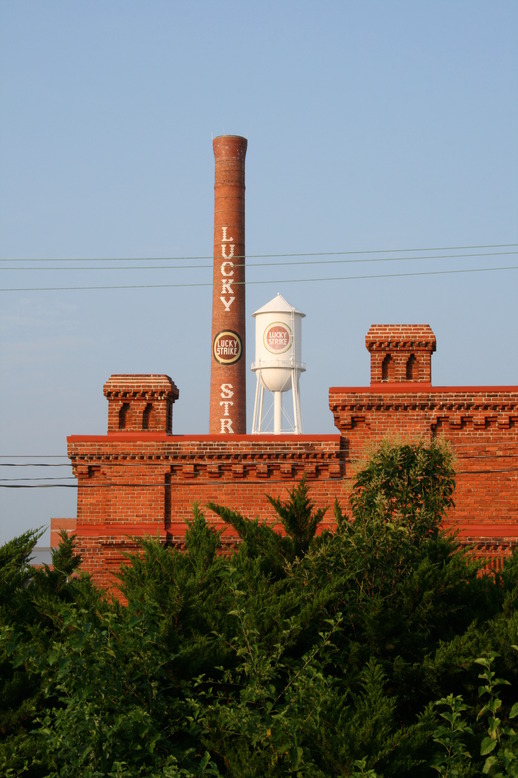
Leveraging a hundred million dollars or so in local tax dollars, not to mention federal and state tax credits and including related sports and entertainment facilities, his company has taken the “Brightleaf” model to soaring new heights by creating the award-winning American Tobacco Campus out of an old Lucky Strike factory.

Back then Jim was shopping an intriguing proposal to host preliminary games in Durham for the 1994 World Cup by burying the field and then-surrounding track of Duke’s Wallace Wade Stadium under seven feet of dirt.

The plan was to then somehow within weeks convert it back in time for football season.  Duke and therefore Durham passed.

But folks over in Raleigh came away understanding that benefiting from my experience in Alaska, our organization understood a thing or two about vetting mega-sports events including a policy to first vet any proposals involving facilities or underwriting with stakeholders with those who would be expected to provide them.

In general, there are just too many other far less costly and far more sustainable ways with which to generate visitor-centric economic and cultural development.

That didn’t stop Raleigh sports enthusiasts over the years from periodically trying to put Durham in a corner or calling for my head when Durham, after careful vetting, elected to pass on various schemes.

Communities can be in close proximity but culturally as far away as distant planets when it comes to the idea of subsidizing large events.

The next two people who dropped in to see me were Durham coaches, known for producing sports events here.  To me they epitomized Durham in many ways, including one being black and the other white.

In the days preceding desegregation, one at Duke and the other at North Carolina Central, an historically black college, they had defied Jim Crow by having their track teams practice together, travel together (refusing to stay where both weren’t welcome) and compete together.

Eventually, Al Buehler and LeRoy Walker became Olympic team coaches and officials and created and hosted a series of famous track meets in Durham, without asking for public underwriting other than in-kind services.

Both were stunned as they took seats in my tiny, temporary digs to see a poster hanging behind my desk advertising a basketball game in Spokane, earlier in my career starring North Carolina’s All-American, David Thompson, and the USA team vs. the Russians during Expo ‘74.

Earlier in 1974, Thompson had led North Carolina State University to victory over Bill Walton and UCLA, breaking that team’s unbelievable streak of seven consecutive national championships under legendary coach John Wooden stretching back to my senior year in high school.

Thompson is credited with taking college basketball above the rim, helping to invent the alley-oop, serving as Michael Jordan’s role model growing up and being named one of the five best players of all time.  Seeing him play in the old Spokane Coliseum was the first time North Carolina as a state ever crossed my mind.

His trip to Spokane came less than two years after the USA team had lost for the first time ever in the Olympics to Russia due to an extremely controversial call with three seconds remaining that nullified a successful foul shot.

Of course, this was also the Games where the Olympic spirit was nearly snuffed out when eight Palestinian terrorists took nine Israeli athletes hostage and murdered them.

In my office, the two coaches noted that while I was watching “Skywalker” Thompson pay back the Russians in basketball out in Spokane that summer, USA Track & Field, led by the Pacific Northwest’s legendary Steve Prefontaine, was running down the Russians in a dual meet the two coaches put on in Durham.

It was one of many events created and hosted locally over the years by these two friends. 

Within less than a year of his victory here, Prefontaine was killed when his MGB sports car flipped.  We reminisced about Gerry Lindgren who was one of only two people to ever beat Prefontaine in an NCAA Championship.

Two years ahead of me, Lindgren was a running wunderkind in high school who ran one of the five top performances ever. In the early to mid-1960s, kids my age would actually listen late on the radio as the diminutive Lindgren would run down the world’s top distance runners.

Walker and Buehler then updated me that a few years before our visit, Lindgren developed debilitating schizophrenia and for a while disappeared.

They guessed correctly that before leaving Spokane for Anchorage I must have also witnessed 1972 Olympic Gold Medal-winner Frank Shorter win the first Lilac Bloomsday Race in Spokane in 1977, the year before I would leave for Anchorage.

By the time we were visiting in my office in Durham, that unique 12 K event had grown from 1,000 runners to more than 60,000 each year, proving that some of the most lucrative sports events are homegrown.

Within a few months of that first visit Dr. Walker was elected president of the United States Olympic Committee and would continue to drop by my office regularly throughout the rest of my career.  He passed away last year at age 93, a member of 14 halls of fame, 15 counting my own.

The year after I retired, a touching documentary was produced about Al Buehler’s life and traced their time together.  Produced by Duke and NBA legend Grant Hill and former NBC reporter Ann Rubenstein Tisch, it was directed by another NBC alum, Amy Unell of Durham’s StoryTales Productions.

The script was written by John Larson.  He was an Emmy Award Winning Dateline reporter during my time in Durham but I knew John back when he was the award-winning anchor during my time in Anchorage for local KTUU-TV, an NBC affiliate.

Seeing the documentary at the historic Carolina Theatre following the Duke-NCCU football game earlier this month inspired this post.  The documentary is available for streaming on on Netflix and for purchase on iTunes.

Al is now a very spry age 85.  He was always the detail guy, LeRoy the promoter.  Together they made an extraordinary team.  About nine years before I was recruited to Durham, Al also learned to play the century-old carillon atop Duke Memorial United Methodist Church not far from my house.

Hearing it regularly waft through the urban forest of Durham is reassuring.

Tuesday, August 23, 2011

Painful Lessons At Charlotte’s Expense

It’s been painful and sad but not very surprising to witness the tragedy that has unfolded in Charlotte, North Carolina over the last year.

Community/destination marketing organization (DMO) executives there should have known better but the full story is merely masked by scapegoating an individual, throwing him “under the bus” or reassigning him and then adding another layer of management, probably along with a good amount of micro-managing.

The Charlotte Regional Visitor Authority (CRVA) is the umbrella organization created to essentially strap Charlotte’s DMO, Visit Charlotte, down with the operation of several mega-facilities there.

Some well-intended executives fell down an extremely slippery slope; but as one blogger notes, it is only symptomatic of a broader community culture that includes other downtown and business-related organizations.

Hopefully that community’s newspaper will keep digging and revealing until it makes fully transparent the entire toxic cocktail of hubris, envy, and special interest pressure at the root of this problem which has become embedded in the nature of so many communities and which ensnared CRVA.

This should also be a warning to many other communities including several others in this state that are similarly addicted to a blend of mega-facilities, mega-events and the so-called business development funds or subsidies and kickbacks required to sustain them. Those where local news media are complicit or complacent and choosing to sit back and relish in Charlotte’s drama, would be better served by real scrutiny such as that exhibited by the Charlotte paper.

Obsession by many cities with mega-facilities and mega-groups all begins, when in the immortal words of Charles Dickens, a city’s “nosiest authorities insist on being received, for good or for evil, in the superlative degree of comparison only.”

A Raleigh scribe once coined the term Charlotte-envy to describe that condition in his community. It was noted in turn that Charlotte has Atlanta-envy, and Atlanta…well you see the drill and the condition certainly isn’t limited to just these three communities.

Even communities such as my adopted hometown of Durham aren’t immune just because it has a stronger and more outspoken commitment to being genuine and authentic and focus on building on a strong sense of place and the evolution of place-based assets rather than worrying about replicating other communities.

During my now-concluded four-decade career and especially during the two as Durham’s DMO exec, I was fortunate to be insulated by a prudent legislated directive to market the community as a whole: a policy stating that facilities and events should be market-driven not ego-driven, and another prohibiting a focus on the thin slice of external events where subsides or underwriting are required to “buy the business.”

That didn’t prevent special interests and even a few public officials from attempting to corner me from time to time. At first the pressure was only from nearby Raleigh interests or sycophants when, from time tome, that community would go “big game hunting” and then try to guilt-trip or corner Durham into betraying its well publicized policies.

But the pressure later came from a handful of Durham-related interests including government or development officials who would frequently try to corner me into underwriting a pet event or to make decisions based only on “who’s asking” or to redirect marketing to favor one facility over the community-at-large or on more than one occasion to “enhance” economic impact estimates to be more impressive just as it appears to have happened in Charlotte.

They were never successful but the pressure was unrelenting and “but for the grace of God,” I too could have fallen into or been drug into the same trap as my counterparts in many other communities.

From statements in the news media and in an internal audit it appears Charlotte may have felt pressured to exaggerate projected attendance at the NASCAR Hall of Fame which may in reality only be half of what was projected. The shortfall appears to be in the anticipated one-third from resident attendance within 50 miles of the facility.

From personal observations during many visits to Charlotte, on many Saturday’s one can shoot a cannon through the community’s museums and sports venues and not hit anyone, not to mention find a restaurant that is open at lunchtime. It is a classic case of supply has outstripping demand and as a New York Times headline once read, “Build It And They Will Come - but Not For Long.”

Ironically, that NASCAR facility is one of the mega-facilities in Charlotte to be truly place-based. While Charlotte isn’t home to a NASCAR race or a speedway, it is very close to several other communities where race teams are based as well as to the town of Concord, North Carolina which is the true physical location of a NASCAR raceway and several race events including those at the so-called Charlotte Motor Speedway.

Charlotte is also the largest city in the state where much of NASCAR’s storied past is anchored.

I suspect it was while investigating the dramatic attendance shortfall at the Hall of Fame that reporters were able to spot that part of the public underwriting (state and local) provided to land and produce the CIAA basketball tournament had been kicked back to the DMO as a bonus for the event’s planner who also worked there.

The pressure to do something like that can be very subtle and veiled and entitled but nonetheless intense.

I don’t know anything firsthand about the Charlotte situation, but over several decades I’ve witnessed how a downfall like this has all too often come to occurred in other communities. Here is a scenario.

  • Individuals with power or money or both, typically business leaders, are able to drown out the voices of people who truly love and value community for its inherent and distinct sense of place by persuading elected officials and community organizations that, in order to be “major-league,” the community needs to build facilities that make it like other communities.

  • Instead of waiting until it can organically warrant facilities, a community falls under the spell of “build it and they will come” and begins to lure major sports teams, major museums and other cultural interests by promoting facilities.

  • Soon the facilities are cannibalizing one another and so often community and business leaders begin to pressure the DMO to table or downsize its community-wide mission and begin focusing on filling only the mega-facilities that have been built.

  • Ultimately, as happened in Charlotte, officials may strap the DMO with responsibilities for operating several of the facilities to further restrict its focus in selected mega-facilities and away from its true mission on behalf of the community as a whole.

  • Still unable to fill the facilities because projections have been over-stated, the DMO then begins to lobby for a “business development fund,” aka “a slush fund” to lure mega-events that nearly always require far more in underwriting than the events generate as a return in local tax dollars needed as a return on investment.

  • Boosters suppress or “neglect to inform” proposals to pursue mega-events with third-party event analysis especially when it is negative and economic impact estimates are careful to direct attention to gross vs. net figures, guaranteed to delight some local businesses, enthusiasts and special interests while primarily blinding local officials and news media to the true return on investment and displacement.

  • As individuals, some officials and special interests begin to “lean” on the DMO to direct business their way or to hire certain people or to contract with certain companies and when or if they refuse, the same or more energy and often money is used to try to get the executive fired.

  • Eventually a suction is created because the “build it and they will come” theory rarely, if ever, works and the slice of mega-events that can be bought dries up or the churn of facilities begins to create a suction as the supply of facilities outpaces any possible demand from visitors or residents.

  • As stress increases or elected and other government officials turn-over, someone protests or posters for the public to distance themselves. A search for a scapegoat begins while others complicit hope the community and the news media will tire of the “story” after a few months or become sated by the sacrifice of a few reputations or or organization so that the co-dependence and dysfunction can resume.

Of course, the answer is for communities to stay focused on leveraging what makes them indigenous and unique vs. carbon copies; and for economic and cultural development interests to stay focused on their job and sober their communities to the lure of so-called “major-league.”

DMOs need to have incredibly strong codes of ethics that that apply to boards of directors, management and staffs alike and insulate them from special interest pressure and discourage ego-marketing. Any focus on events, where they make sense, is best restricted to those that will complement and not displace other visitor segments and that don’t require subsidies.

But the real problem as it is in so much of society is the money in politics that can so easily compromise local interests and surrender community interest to special interests.

Hopefully Charlotte, a great community, learns a lesson and returns to fostering the things that make it distinct and the individuals involved will be redeemed. Hopefully other communities will also take heed and turn more intently to protecting and defending and organically fostering a distinct sense of place.

Monday, March 28, 2011

Here, Subsidize This!

Okay, I’ve heard a little too much from my neocon friends and lothers who constantly bash subsidies for alternative forms of energy designed to wean us off our dependence on fossil fuels, while at the same time, whining “drill baby drill.”


The folks at GOOD (for people who give a damn) have created a great infographic (click here or on the image below to see in full) showing each type of energy and the amount of subsidy for each both in terms of tax breaks and direct public funding.


One thing is clear: regardless of where we use energy, either at home or from the pump, renewable or fossil fuel, we aren’t paying the price the market would set for that energy.


Capture