Showing posts with label Scenic Byways. Show all posts

Monday, March 21, 2016

Origins of a Divide That Still Haunts Tourism Today

Once you turn off the country road toward our place on Mayo Lake there is a mile of gravel road before you reach the last stretch of pavement leading to our lakeside retreat.

It is what was called “macadam” when road surfaces in America first started to be improved in the 1820s (as depicted in the image below.) 

Many so-called paved roads in the countryside today are macadam bound together with a little asphalt tar.

By 1909, just as what is now called North Carolina Central University was founded, Durham, where we alternatively live a part of each week, was being heralded for already having laid 82 miles of macadam road.

Nationwide at the time, only 700 miles of road, about 10% of the total were as good or better than those in Durham.

By that year there were almost 306,000 cars and a few more than 6,000 trucks registered in America, up from 8,000 overall in less than a decade. 

Those known as “highway progressives” were already shifting the economic impact rationale for good roads from “farm to market” to “tourism.”

But ironically, roads had long been politically, as well as ideologically, controversial.

Other than military roads, Founding Father progressives on both sides of the isle, such as Washington and Jefferson, had only been able to push through the first “national road” along what is now I-40 as a means to open up western settlements for Revolutionary War veterans.

Conservatives argued that roads were too expensive and that they should be a state issue.

Then at the state level, such as in North Carolina, they were often able to pigeonhole roads as a county-by-county issue clear up until the eve of the Civil War.

It was about this time that pleasure driving/riding in carriages took hold, usually limited to grand city parks such as those created by Fredrick Law Olmsted or in cemeteries.

But in 1888 the re-invention of the pneumatic tire, which had been unsuccessfully introduced in 1846, galvanized a grass-roots coalition of activists to push for good roads.

The coalition was spearheaded by bicycle riders who teamed with “farmers, nature-lovers, conservationists and tourists” to spawn a national movement not only better roads but a national network of “hard-surfaced, all-weather roads.”

Soon they were joined by nascent automobile manufacturers.

The roads envisioned were a means to an end such as farm to market or home to resort but all roads were intended to be scenic along the way.

Then as the movement gained steam between 1911 and 1926 “highway progressives” were overwhelmed by commercial interests who coopted the movement.

It created a schizo-polarization of tourism that persists today.

At one end are those with a deep respect for sense of place, authenticity and scenic preservation. 

On the other is a hawker-huckster form frenetically enabling billboards, developer churn, mainstream mega-facilities and other forms of cookie-cutter architecture.

To overcome conservative opposition to a system of national roadways, “highway progressives” had begun to tout tourism as a rationale.

To enlist communities along proposed roadways they encouraged them to “manufacture” reasons for tourists to stop along these routes.

Rather than look to innate qualities, community boosters egged on by a chamber-of-commerce mentality fell instead for hyperbole, thus the manufacture of roadside amusements along with monikers such as the “Grand Canyon of the East” or the “Paris of the South.”

By 1930, many states, including North Carolina had begun to fight back against blight but the forces of blight this has fueled including a faction of tourism that had found political cover among a wing of conservatives.

This wing of conservatives, which cut across party lines, has consistently and inexplicably argued that blight is good for economic development, something still being repeated by a candidate running for governor in the last election.

Tourism, if it was more open to introspection as well as critical and strategic thinking would align in such a way that it could shift this paradigm.

But don’t hold your breath. 

It isn’t just that one side of the schizo-divide is somewhat superficial.  More problematic is that the other side lacks the moral courage and passion of those early “highway progressives.”

Friday, April 24, 2015

Symbols of Intergenerational Compact

In an essay a week ago, I suggested that North Carolina’s annual Interagency Report on Litter Cleanup, Education/Prevention and Enforcement was missing some information.

But I was mistaken; so maybe with this post, I can fill in some of the blanks.

Litter clean-up has many purposes including public health, achieved by reducing contaminants in storm water, but it is also to safeguard scenic character, which is a core trait in the state’s appeal for economic development.

So I questioned why programs to proactively beautify roadsides were omitted.  It turns out these are beyond the legislative scope of the report and I sense that over-delivering may not be well received.

It is too bad because North Carolinians are largely unaware of how much the NC Department of Transportation does to protect and enhance the state’s overall appeal along its roadsides.

Roadsides are the first and last impression that more than 90% of the state’s visitors receive, as well as tens of millions of potential visitors who are just passing through.

When I arrived in Durham twenty-six years ago to complete the last half of a four-decade career in visitor-centric economic and cultural development, Bill Johnson, a now retired NCDOT roadside engineer was deep into two, now award-winning, beautifications projects.

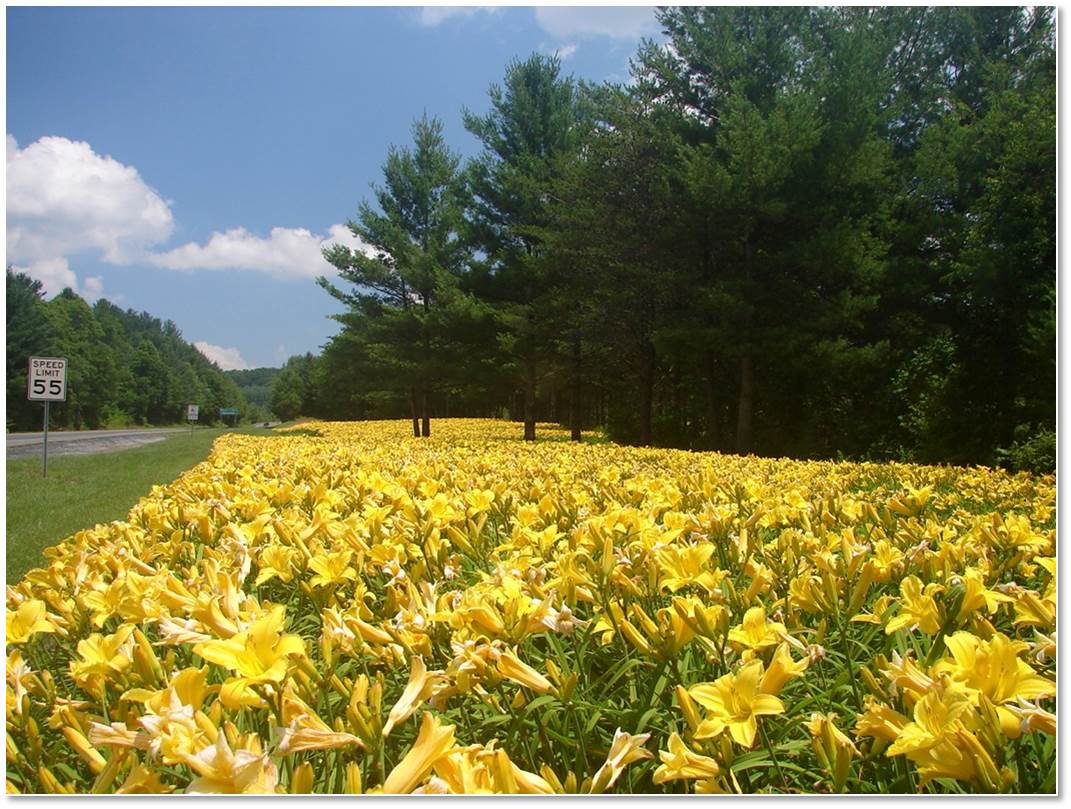
Today, North Carolinians and visitors to the state are greeted with 1,500 acres of wildflowers across the state as they drive along Interstates here.

Bill also started a program to recognize and preserve scenic byways along secondary roads across the state.

Soon the number will be increased to 58 covering more than 2,300 roadway miles showcasing every part of North Carolina including Durham, one of the few urban counties to set one aside, a favorite of mine astride a trusty Harley-Davidson Crossbones.

It is also a stated goal of NCDOT to “have well established and aesthetically pleasing forest along the highways in North Carolina.”  I haven’t seen a report for this decade but from the 1960s through the 2000s, NCDOT planted about 5 million trees along roadsides here.

A good share were planted in league with the America Treeways Program, a partnership of many agencies and volunteer organizations with the National Tree Trust established in the early 1990s by the first President Bush, a Republican.

Back then, it was also a bipartisan national policy to have well established and aesthetically pleasing forests along highways.

I will never forget a sentiment expressed by Bush I during my first few months in Durham, “Every tree is a compact between generations.”

Add that to the list of intergenerational compacts that have been shattered over the past decade.

Today, in North Carolina, many legislators inexplicably work overtime to sacrifice trees along the 14% of roadways that are part of the National Highway System here where they still remain, even though protected in the state constitution.

As a result, except whenever the Governor intervenes, Carolina’s once vaunted appeal for scenic character is rapidly falling into tatters.

Monday, April 15, 2013

Mapping Why North Carolina Could Use Some Gridlock

Earlier this month, Republican Governor Pat McCrory helped distribute awards in honor of North Carolina’s popular roadside wildflower program, including one named for a friend  of mine, Bill Johnson, the 30-year roadside veteran who helped  establish it.

The Governor also inducted former Governor and Mrs. Martin into the Wildflower Hall of Fame, in which Bill was one of the first inductees two years ago.  The former First Lady inspired the wildflower program shortly before I made Durham, NC my adopted home in 1989.  I first met the legendary Mr. Johnson as he was launching the state’s Scenic Byways as a follow-up.

At the luncheon the Governor vowed to do what he can to enhance scenic programs such as this.  He has his work cut out for him.

Powerful members of his party in the General Assembly still hold views of the natural world that date to the late 1700s and 1800s.  This was a time when nature was viewed primarily as something God placed on earth for us to exploit.

More on the source of my view on this and other worldviews of the natural world later.

While less than a third of North Carolina voters are Republicans, they now control nearly 65% of the overall seats in the NC General Assembly. Regardless of whether it is due to careful gerrymandering or the resulting over-amplification of swing voters it brought about, it is interpreted by these powerful interests as a mandate to “deform.”

Prior to McCrory’s election, these powerful and unchecked legislators had brow-beaten the executive branch into enabling the sacrifice of tens of thousands of flowering dogwood and redbud trees that the state had planted along roadsides stretching between the wildflower beds the Governor honored.

For instance, over the objections of 8 out of 10 North Carolinas including by 19 to 1 members of their own party, these legislators also pushed through authorization for out-of-state billboard companies to desecrate roadside trees across the state and over ride local ordinances in communities with higher standards.

It may very well be that anything the Governor does to fulfill his vision of being transformative will be similarly over ridden by these and many other similar deformations underway in my state.

North Carolina could desperately use a little grid-lock.

Helping me understand how otherwise reasonable people would seek to deform North Carolina is an incredible article published last year in the Harvard Law Review.  It was written by Professor Jed Purdy who teaches constitutional, property and environmental law here in Durham at Duke University Law School.

He is also the author of the 2010 book entitled The Meaning of Property: Freedom, Community, and the Legal Imagination but you may want to start with one of my favorites, a book he wrote in his mid-20s and published more than a decade ago entitled For Common Things: Irony, Trust and Commitment in America.

It takes an appreciation of irony to stay engaged with what’s being perpetrated now by those in high office in North Carolina.  By stuck in the 1700s, I was implying that powerful interests who seem intent on deforming our state appear to have the perspectives Purdy describes as more relevant between 100 and 200 years ago.

This was a time dominated by a view of the natural world as “waste.”  Dismissing restraint or regulation as a “threat to liberty,” this mentality pillaged much of the country until the late 1800s. Purdy cites an 1883 debate over administration and funding of Yellowstone Park adjacent to where I was raised and spent my years on an ancestral homestead cattle and horse ranch.

Some senators at the time, according to Purdy, argued that Yellowstone should be divided up and sold, or in my opinion to use a word euphemistically used by those with the same view today about lands set aside in the public interest, “privatized.”

Just the last sixty years of that era saw two-thirds of the deforestation that has taken place in the United State during the last 400 years and by the 1890s the desecration began to shock the nation and its leaders into what Purdy describes as a new ideal of the human-nature relationship, what he calls “progressive management” or conservation.

It is  epitomized by Republican President Theodore Roosevelt and legislation such as the creation of national forests which was inspired by immense desecration right here in North Carolina.

In recent polls, more than one in five Americans still consider themselves conservationists today, more than any other label used by the more than one in three Americans overall who are deeply concerned about the state of natural environment being left for future generations.

As a moderate independent voter, it is the description with which I feel comfortable.  Three times as many people who fish and hunt in this country consider themselves conservationists than those who belong to the NRA.  Many are Conservatives and relate to the group formerly named Republicans for Environmental Protection.

Renamed ConservAmerica, the group is represented in Washington by a native North Carolinian and last fall formed a ground-breaking partnership with Audubon called the American Eagle Compact under the slogan “Because Conservation Doesn’t Have A Party.”

The early 1900s also saw the emergence of an ideal toward the natural world that Purdy calls “romantic epiphany.”  This ideal has been at the center of a key part of North Carolina’s tourism appeal since the 1930s including the inspiration for the first efforts to roll back roadside billboards in the state.

Today, this ideal is carried forward by groups such as Scenic North Carolina, an affiliate of Scenic America.

Judging by their actions, the ideals of conservation and “romantic epiphany” are despised by those Republicans in powerful positions in the NC General Assembly today. They seem determined only to roll our state back to the era of despoliation, back to the view of nature as only indicative of waste, back to the 1800s.

Tourism is a visitor-centric form of economic and cultural development.  Trees are a signature element of the natural aspect of North Carolina’s appeal to tourists which include more than 80% of relocating business executives prior to announcing their interest.

Trees along roadsides are the state’s first impression of its natural assets.  Butchering them for billboards or even just the convenience of maintenance engineers is obviously a good way of dampening tourism interest and eroding the North Carolina brand overall.

I suspect though, that anyone with a worldview of nature that has been in disrepute since since the late 1800s has little concern for tourism or relocating businesses or thousands of small businesses.

Their latest maneuver to prohibit the high standards of North Carolina’s towns and cities is further evidence of wanting to deform the state back more than a century and with it the state’s hard-won brand.

Purdy continues by describing a view of the natural world that emerged  in the early 1960s called “ecological interdependence.”  It spawned American’s deep concern for clean air and water anchored in the interdependence of nature and the moral sanctity of life.

Those bent on deforming North Carolina back into the 1700s and 1800s are even more disdainful of this ideal, even as we begin as a society to re-imagine a future ideal around the natural world spurred by scientific evidence of catastrophic climate change.

It is ironic that even scientists who were climate change skeptics now agree that this current environmental threat is nearly all the result of from human interaction with nature dating back to the 1700s and the dawn of that view of nature as wasted unless fully exploited.

Purdy is careful to note that none of these human-nature ideals have ever been monolithic even in the 1700s.  He provides evidence that often they were defined by something society was trying to avoid.

This blog is certainly not a substitute for reading and re-reading Professor Purdy’s salient overview of these various eras of the relationship between humans and nature, which I highly recommend.

His mapping of our views of nature over time has helped me not only better understand the realities and worldviews driving those so intent on deforming North Carolina, but made me even more concerned.

As valid as parts of that reality may seem, it is imperative that it once again be with other even more valid and relevant views.

When the pendulum begins to swing back from such extremism - and it surely will - hopefully we will not only seek rectify the damage, which will take generations, but re-imagine the next era of human-nature ideals in a pragmatic, moderate and less ideological sense.

Governor McCrory can get a head start on this process by following through on his comments at the Wildflower luncheon this month.  He’ll need all the support he can get from North Carolinians and courage within his party’s caucus to bring some sense to the General Assembly.

If not, instead of being transformative, the legacy of his administration will be one of deformity.

Friday, February 17, 2012

Behind North Carolina's Scenic Byways

People may be surprised to learn that Durham County where I live, is the only one of North Carolina’s urban counties that is home to one of the state’s Scenic Byways.

This is because Durham is not only home to the state’s fifth largest city, which is also the core anchor for a four-county metropolitan area, but it is the 17th smallest land area of the state's 100 counties. Durham even rivals the county where the town of Asheville is located in North Carolina’s mountain region for scenic byways.

Little did I know when I was first recruited to Durham in 1989 to jumpstart the community’s official marketing agency that within days I would be sitting next to then-Governor Jim Martin behind plate at a Durham Bulls baseball game in the Historic Durham Athletic Park.

Nor did I realize at the time that this Republican governor, only the second since Reconstruction, had just set in motion the development of what would become the state’s award-winning Scenic Byways program.  

People such as Martin with a PhD in Chemistry have become increasingly rare in the Republican Party, an affiliation claimed by only 6% of today's scientists, 12% counting the portion of political Independents who lean that way.  Blinded by the lack of empirical voice and research-based decision-making, members of that party are now trying to eliminate the National Scenic Byways program as well as grants to enhance roadsides.

It was a few years after that evening with Governor Martin that I first  became acquainted with the name Bill Johnson, who was the State Roadside Environmental Engineer and one of the driving forces in developing and evolving the byways program.  As the head of the Durham Convention & Visitors Bureau I had been asked by the then-chair and vice-chair of the Durham County Board of Commissioners  to identify and help qualify potential byway routes here.

The state accepted two of several potential routes we identified including a spectacular 27 mile loop through the northern part of  Durham County including rural parts of the City.  We identified another through Duke Forest which was accepted as the terminal segment for the 92-mile Colonial Heritage Byway that begins near the border between Guilford and Rockingham counties, cutting across and up through Caswell County to within view of Hyco Lake along the Person County line before dropping down through Orange County and then over into Durham and through Duke Forest before terminating very near where I live.

During his tenure as the state’s roadside executive Bill also had a hand in implementing the beautification of North Carolina's roadways with spectacular beds of wildflowers, an idea spurred by Governor Martin’s wife Dottie.

Bill understood research showing that when it comes to maintaining roadsides, removing litter is a short-term inhibitor to littering behavior but coupling it with beautification creates a shared sense of responsibility and a longer term and more sustainable fix.

A good friend now, Bill’s retired and lives “down east”, as we call it, where he has a business and does some farming but his passion remains the overall scenic beauty of North Carolina, especially as viewed from the state’s roadways, that is, except where easements to block that scenery as well as clear-cut football-field sized swaths of trees and vegetation on each side have been gratuitously granted to more than 8,000 huge, stationary outdoor billboards.

Now also in retirement, it is my honor and privilege to continue to work with Bill in a renewed statewide grassroots effort to preserve, protect and restore the state’s scenic character including what is evident along its roads and highways.

Bill and his wife have driven every one of North Carolina's Scenic Byways and on my Harley Crossbones I'm trying to do the same.  Anyone wishing to join us can:


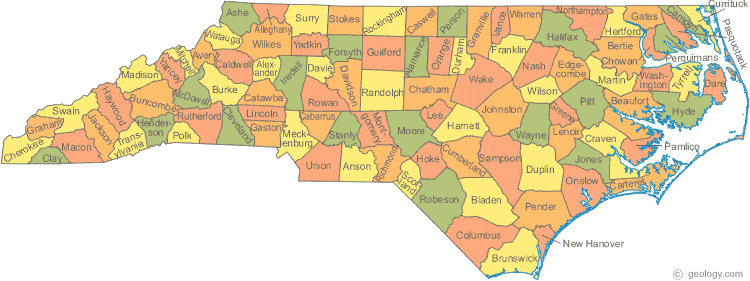
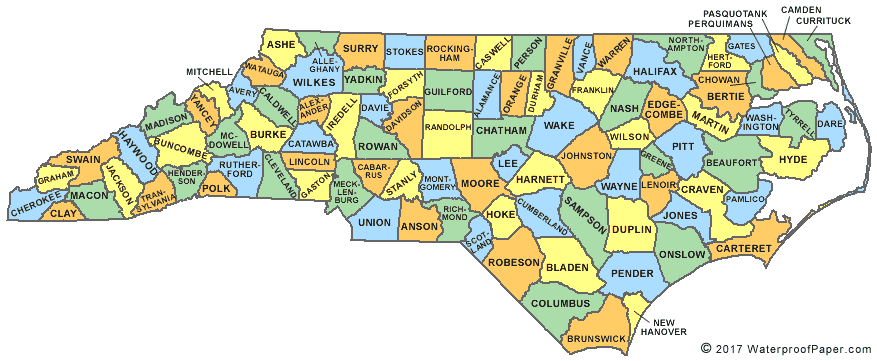
  • Using the interactive map shown, select one of the three regions of the state to view the Byways then click on the icon next to a Byway of interest for a pop-up with a brief description and a link for more information.


  • Download a PDF of all of the Byways by clicking this link or use the information on the website to request the booklet.