Showing posts with label Durham Convention And Visitors Bureau. Show all posts

Wednesday, September 17, 2014

If A Statue Should Be Erected One Day

With all due respect to a long-time friend and contemporary of mine who led the final charge, I have a suggestion should a statue ever be erected to honor the individual most responsible for the resurgence of Downtown Durham, North Carolina.

Besides, we’ve already been memorialized (although I’m 25 pounds lighter now).  But we clearly stood on the shoulders of many others, including some with ties to Durham’s founding generation.

Having passed away earlier this year, this person was tiny and unassuming and yet a powerhouse of community activism.  She probably began in areas such as pioneering child-care for families with both parents who work.

When I arrived in Durham on a mission to jumpstart this community’s first official destination marketing organization in 1989, having helped start several others, I was under no illusion that I was coming to the rescue.

For any new DMO exec, the first order of business is research into what has been done to shape any sense of place that may remain.

Dating to its first, it was obvious generations here had shaped a community worth loving and worth visiting, but it was not without battle scares.

Asking around about who had been most passionate about Durham in the decades before my arrival led to audiences with a number of individuals.  It is a good way to learn what had worked and what hadn’t over the years.

None was more dynamic than Margaret Davis Haywood, then in her 70s.  Standing about 5’4” or so, she was unpretentious and humble but incredibly helpful and supportive.

She gave me clues on where I should start, which were echoed in meetings with George Watts Hill, Josephine Clement, Southgate Jones Jr., Mary Duke Biddle Trent Semans and Elna Spaulding, all contemporaries of Mrs. Haywood who have also now passed on.

I wasn’t so brave as to expect an interview with these people but often the people I would contact for referral's would insist on paving the way.  Each not only knew first hand several generations of Durham natives back to the very first but had been an activist for Durham.

Margaret Haywood, I would learn from others, fed up with the failed policies of urban renewal, had helped instigate what I call a “sense of place revolt” while in her 50s.

It was an insurrection sparked in defense of the 1920s-era Carolina Theater, which in the early to mid-1970s had been targeted for demolition to create a parking lot by local officials.

The “sense of place revolt” she and cohorts inspired not only saved the cultural landmark, but forged an organization as guardian of other landmarks as well as an inventory of historic treasures by state officials throughout what we call the City Center District today.

As a result, this commercial district was placed on the National Register of Historic Places, the first in North Carolina so recognized.

Often it is those who raise the funds who get the credit—as they should—while co-conspirators in “sense of place revolts” such as Mrs. Haywood, are overlooked because they take a more strategic role.

The “sense of place revolt” led by Haywood and others raged for a decade, inspiring efforts by others to safeguard other ingredients and assets that make up Durham’s sense of place.

It inspired Duke student to rally in support of a historic black neighborhood and commercial district in the path of the Durham Freeway and formation of an alliance of neighborhoods and the banning billboards.

Others simultaneously worked with landowners and developers to establish a scenic overlay along Durham’s stretch of I-40 and push for signature landscaping around the co-owned airport.

It is through the unsung grit, determination and valor symbolized by Haywood that also a new breed of developer was inspired to begin adaptation of historic structures.

Two decades before their now idolized successors, they initiated the trend of converting these sense of place assets into restaurants, residences, stores and offices rather than just grumble about them being in the way.

A decade before Margaret’s “sense of place revolt” sparked what would become a complete renaissance of Downtown Durham over the next three decades, the New York Times had, in the wake of the tragic implosion of Old Penn Station in that community to make way for an nondescript office tower, penned:

“We will probably be judged not by the monuments we build but by those we have destroyed.”

That, too, spawned a “sense of place revolt” to preserve and adaptively use other landmarks there.

Margaret Haywood is proof that the self-less determination of just a few individuals can save a community’s distinct sense of place from forces that would otherwise homogenize it.

To use a phrase coined by one of my co-workers at the time I first met Mrs. Haywood, communities really can “fast forward without saying goodbye to yesterday.”

Today, Durham’s sense of place is at risk again, but this time from a another breed of developer, who was drawn to this sense of place, but now seems eager to pollute it with “franchise architecture,” and “formula developments” that drive up rents and hollow out the authenticity of its tenants.

All Margaret Haywood could focus on that day we first talked was the failure to save the historic Washington Duke Hotel from implosion a year or so after the revolt.

Opening in 1925 within a year of the Carolina Theater, the hotel had cost $1.8 million, seven times the cost of the theater and nearly $25 million in today’s dollars.

It was the finest hotel in the South at the time.

A mid-century annex is being restored today as one of several hotels around the CCB Plaza where the old Washington Duke once stood, including a 21c Museum Hotel and a boutique hotel called The Durham.

More than a decade later, people in Durham that December would recall to me its implosion with descriptions of clouds of debris flooding downtown streets similar to what we saw when terrorists brought down the Twin Towers in New York, but without the horrific human tragedy.

The implosion, even more than the demolition of Union Station here a few years earlier, galvanized some—but not all—Durham residents around sense of place.

And we would see on the heels of those initiatives I mentioned earlier incredible design incongruity of public facilities such as the Civic Center, Detention Center, Performing Arts Center, Transportation Center and Human Services Building.

I’m reminded by a friend that in the early 1970s, after a Southern business and development magazine labeled Durham a “hot dog” town, Haywood and some friends formed Pride Builders of Durham.

It was a precursor to a grass-roots successor we would forge two decades later as Durham Image Watch involving hundreds of resident volunteers who rallied to help Durham’s community destination marketing fulfill its role as guardian of image, identity and sense of place.

Business and university executives, as well as most politicians and executives of other types of economic development organizations are wary of standing up so overtly on behalf of a community, although most were very supportive when DCVB did.

There were always a few exceptions during my career.  Some would join with us when asked, balancing out a far bigger number who would duck for cover, and a few more trying to pull us back for fear of rocking the boat.

But residents of Durham both in public opinion polls and through personal involvement always wanted us to do more, especially those I mentioned above and none more than Margaret Haywood and her Pride Builders.

The implosion of the old hotel in 1975 spurred local officials a few months later to launch a consultant-led study of the feasibility of a new civic/convention center for the old hotel’s site.

But its location, when erected a little more than a decade later, would be hijacked when officials tore down another full block of historic buildings across the street instead to appease the developer of an office tower.

This island of incoherence remains an inspiration for those who today seem more pursuant instead of “franchise architecture” and corrosion of of sense of place, aided by some sworn or elected to defend it.

Today, thanks in part to the community marketing that gave it oxygen and awareness beginning in 1989, Durham is now recognized as one of the country’s “foodiest” towns, including perhaps even hot dogs.

But unless repeatedly called to task by citizen activists like Margaret Haywood, Durham often seems to take two steps forward only to inexplicably take one or two back when fostering the sense of place.

In her 80s by then and more than two decades after that “sense of place revolt,” Margaret was still rallying others to step forward, this time for a Museum of Durham History to memorialize Durham’s sense of place.

The struggle continues to keep Durham distinct, both in the economic importance of being different and its worthiness of love.

It may even require another “sense of place” revolt.

Wednesday, July 02, 2014

Differentiating a Community’s Marketing

I mentioned in yesterday’s essay that part of a start up community marketing organization’s (DMO’s) work should be finding ways to differentiate both the community and the way it conducts marketing.

To this end, in Durham, twenty-five years ago we tried to do as much as possible different from the status quo at the time including:

A magazine size far more comprehensive visitors guide, thorough pre-qualification of leads prior to distribution, in-house graphics for consistency and nimbleness, metrics on everything, earned media over paid advertising, technology, and research to mine data to drive decision and strategy making.

And because we had a much smaller budget, this included reliance on extensive content marketing including the weaving of data into narratives that, in turn, were widely distributed to inform and activate core prospects by differentiating Durham from more established competitors.

Seth Godwin, the foremost wizard of the school of differentiation marketing, wrote recently while pointing out the mistakes Broadway promoters make:

“Just about every organization doesn’t have enough cash to run enough ads to do what ads are best at…so that means…find an arena where you can reach fewer people, more often.”

A t-shirt available in Durham’s organic Ninth Street District reads, “Durham – It’s Not for Everyone.”

Nothing is, so the goal even back then, and even more so now that ubiquity has pushed the effectiveness of advertising into negative territory, is how to identify and communicate directly to the “tribe” for whom it is.

Being different means adapting to change and perpetually recalibrating without losing authenticity.

But it isn’t necessarily about being original as much as what Where Good Ideas Come From author, Steven Johnson, calls the reshuffling, repurposing, and reimaging of things that have worked into a different context.

Many of the differences we deployed in that Durham DMO start up were only meant to give us what I used to call a “20-minute head start,” but I am always amazed to find many that are only now becoming mainstream.

A trend beginning in the mid-1990s and full-blown today is that buyers using “self-education,” are able to go deeper and deeper into the purchasing process before revealing themselves as documented in a benchmark study by Demand Metric.

This is why “content marketing,” a competitive advantage used by community destination marking innovators/early-adopters 25 to 30 years ago, is now clearly mainstream.

It is an efficient, cost-effective and unobtrusive way to draw interest, engage, and inform a purchase decision by members of the external audience for which a community is likely to be most appealing.

Three out of four buyers now wait to reveal themselves until at least midway through the journey when options have already been narrowed.

Nearly 1-in-4 wait until very late in the purchase decision.

As it has been since at least the late 1990s when marketing to leisure travelers, now even site selection decisions by meeting planners, known as business to business marketing, are as much 90% and no less than 66% concluded before any personal contact is made.

This means that people involved in “sales” can no longer be a silo within marketing.  Integrated marketing is now the imperative because the trend of going deeper into the purchasing journey is a trend that will only accelerate.

Content has long ago replaced advertising, (a form of yelling) public relations, (earned media is publicity) and now direct sales, as the most effective way to influence decision-making early in the process.

Long gone are the days when content was something you staged after inquiry or after interest gained while prospecting, when today two-thirds would be ineffective.

Unfortunately for extroverts needing an energy-fix, it is now content first, second and third, with personal contact—if needed at all—is on the tail end.

Marketing software company Marketo, in its “Definitive Guide to Lead Nurturing,” helps map out content strategy to create awareness and deepen understanding and knowledge in early stages before sorting out preference and finally inspiring engagement.

Think of marketing not as a fish net but as selective self-study program that tells the story that matches your community’s “worldview” appealing to those visitors including newcomers and relocating executives who share it.

To paraphrase Godwin’s advice to Broadway promoters, shift to building relationships between and among the core audience, expressing your community’s inherit appeal to its tribe, rather than finding audience for your appeal.

Using content as an overarching strategy to integrate marketing and differentiate communities as visitor destinations relies more on re-thinking, re-organizing and re-allocating existing resources.

This will also mean that not only must every piece of marketing be as deep and comprehensive and useful as possible but they must all be integrated, mutually supportive and objective.

Nearly 6-in-10 marketing organizations devote 15% or less to content marketing, many trying only to stick their toe in the water (oh yeah, that too) or attempting to straddle strategies while appeasing old-schoolers.

Transition to content marketing should be easier for destination marketing organizations than generalist marketers because they should already be an “inch wide and a mile deep” vs. a “mile wide and an inch deep.”

This observation was first made to me nearly 40 years ago by a young F. Richard “Dick” Geist, the then-creative director for Wessels and Associates when it was based in Spokane, just as I was getting my feet wet as a DMO exec there.

But when integrated, content-driven marketing also means previously siloed non-sales marketers in DMOs need today to become intimate with and effective at each stage of the purchasing journey.

They must to learn to rely less on schmoozing and become more savvy as marketers overall, especially the utilization of analytics.

Analysis by Demand Metrics concludes that interactive content is perceived as more interesting and better at generating attention.  It also produces better engagement and is perceived to be better quality.

A predictor of internal or external stakeholders who will respond “who cares” is whether or not they are among the 6-in-10 who think of marketing as an expense compared to the third who see it as a revenue center.

The quickest way to predict which mindset someone has is their resistance to analytics.  Nearly 9-in-10 of those who see marketing as a revenue center aggressively use analytics for decision and strategy-making.

Thursday, May 29, 2014

Two Best Practices at Changing Misperceptions

Two things ran through my mind earlier this month as I took in a quarterly graduation event, this time for 34 residents of TROSA, a two-year substance abuse recovery program with aftercare in Durham, North Carolina.

One was that I had been sitting on an unpadded folding chair for nearly three hours without noticing it because the personal stories delivered to the audience by each graduate were so incredibly touching and compelling.

The other thought was of a paper by a researcher at Dartmouth, Dr. Brendan Nylan who had earned his Masters and Ph.D. here at Duke University in the years before I retired from a career in community marketing.

His research is about why people continue to embrace misinformation even after learning it is false.  This is particularly salient in light of a U.S. Supreme Court ruling that deliberate lies to voters by or on behalf of candidates for high office are protected free speech.

But first a few words about TROSA.

It was founded in 1994 by a former addict, Kevin McDonald, who lives four doors down from me.  A few years after it opened, Kevin turned his life around at Delancey Street where he stayed on for 12 years to help others.

He came to North Carolina about the same time I did to open a much smaller 30-resident Delancey Center in Greensboro.  Then five years later accepted an invitation to build on the model by founding TROSA, which has nearly 480 residents now from around the country.

It has grown from 8 residents to a $13 million annual operation, nearly half of which is earned income from businesses such as moving, tractor-trailer driver training, framing, vintage product recycling, landscape care, stonework, catering and foodservice, sales and construction and facility maintenance, to name a few.

The program relies, in part, on donations or in-kind contributions from individuals and businesses for the rest.   There is no charge for the program; residents ear their keep through working.

In its on-going well-being index, Gallup has found that people in communities with higher well-being are more likely to give back to their communities.

Foretelling that North Carolina ranks only 43rd in charitable giving (7th  from the bottom) is that it ranks only 32nd for well-being overall.  But the metro area centered around Durham ranks second in the state and 31st nationwide, in the top quintile.

In books such as last year’s, Clean: Overcoming Addiction and Ending America’s Greatest Tragedy, the case is made that drug and alcohol addiction is a “preventable, treatable disease, not a moral failing.”

A few years earlier a book called, Addiction: A Disorder of Choice, made the highly controversial case that the condition is merely a matter of self-destructive choices and free will, but the author also repeatedly made the point that this does not exclude neurophysical influences.

In fact, both authors essentially agree that it is both a disease and a matter of choice.  As Seth Godwin blogged recently, disease doesn’t trump choice, it just makes bad choices much harder to overcome.

This is something TROSA understands and addresses with a heavy mix of vocational training and therapeutic, educational and aftercare programs.  It builds character while addressing disease.

It is clear when looking at the effectiveness of TROSA over most rehab programs lasting anywhere from a week to a month and from listening to TROSA graduates bare testimony including a friend of mine who is a resident, that it takes two to three years for those addicted to reclaim their lives.

But it isn’t just lack of funds or in-kind donations that prevents this program from being scalable from thousands to the tens of millions who need it. Misinformation and Fact-Checking

One obstacle is the number of people who still buy into barrages of misinformation that addiction is purely a failure of will power, a moral shortcoming.  For others, this merely reinforces a world view that no amount of scientific information or testimony can change.

Dr. Nyhan and other researchers delve into the best ways to correct misperceptions or misinformation as overviewed this month in a blog on The New Yorker by Maria Konnikova, author of the new book Mastermind.  She is a former producer for “Charlie Rose” who also writes for Scientific American.

One of my first challenges when jumpstarting the community destination marketing organization for Durham was not only correcting misinformation but turning around the negative image of Durham held by the vast majority of residents in nearby communities.

Research plus trial and error helped us achieve this goal by the end of the 1990s, although crucial follow-up will be never-ending.

In the early days, many friends were too nervous to be of much help while others were fearful that trying to correct these misimpressions would only reinforce them.  Fortunately, we could rely on a grassroots army of residents.

Much has been learned about reputational management since then but no one has done more research over the years to identify what works than Dr. Brendon Nylan.  I wonder if he was aware of what we were doing when he was at Duke?

In a paper last year entitled “Misinformation and Fact-Checking,” Nylan and a co-author from George State identified some techniques similar to those that had made us successful in Durham, e.g.

  1. Get the story right the first time.
  2. Early corrections are better.
  3. Beware of making the problem worse.
  4. Avoid Negations. (just saying it isn’t so)
  5. Minimize repetition of false claims.
  6. Reduce partisan and ideological cues.
  7. Use credible sources.
  8. Use graphics where appropriate.
  9. Beware of selective exposure. (confirmation bias)

The paper is an overview of studies supporting each of these and a good read for anyone who is trying to overcome misinformation or misperception.

It would have been helpful if Nylan had done this work two decades earlier.  Our success was by trial and error to find the right messaging, as well as recruiting allies in other communities along with other Durham residents (Durham Image Watch) who would also help make our point.

We were also strategically focused.

We weren’t trying to change anyone’s world view, just get the facts right and in context.  We didn’t worry about the negatives among the 10% who were rabid.  We focused on the vast majority who were “soft negatives,” mostly just uninformed.

We successfully isolated those who were the source.

We also appealed to the honor of journalists, editors and news directors by showing them that our objective wasn’t to influence the content of the news, just the accuracy and balance.

No amount of promotion would have overcome the “moat of negativity” surrounding Durham.  It had infiltrated the news media, airport/airline workers and even around local “water coolers” from the 2-in-3 people working in Durham but not living here.

We knew that the negativity had not statistically harmed Durham’s image elsewhere which was always high, but research showed that if we didn’t address it aggressively, it soon would.

Anecdotally, we knew it had already significantly contaminated loan applications and appraisals as well as diverted visitors including relocating executives and newcomers.

We turned it around in the nick of time.  What amazes me is how many communities don’t even know they have an image problem, let alone address it.  The home communities of some of those trashing Durham have even greater image problems across the state.

When they get around to it, research such done by Dr. Nylan will be a good resources.

Tuesday, May 13, 2014

The Difference Between Being Treated and Feeling That Way

Durham, North Carolina’s community marketing agency pulls census numbers each year to help community and business leaders understand how unique it is that 2-out-of-3 people working here are non-residents.

This is largely because for decades now Durham has been the job engine for not only its own metro area but also another one much bigger nearby.

On average, each of these commuters spends $131.54 per week work side, not nearly as much as if they lived here, but helpful.

I remember in the 1990s, as head of Durham’s newly formed community marketing agency, having to call a candidate running for mayor of a nearby community to ask him to retrieve his campaigns signs which had been planted throughout Durham.

It was a dismissive affront to Durham’s identity but it was also confusing voters in our own elections.

He was a jerk about it.  But after I firmly, but respectfully, refuted his hegemonic misperception that Durham was somehow “his” suburb anyway, he finally had the signs retrieved.

All too often, I found myself also having to disavow non-residents who owned businesses here of this arrogant notion.

The story is often repeated that before Durham formed an organization to advocate for its identity, assets, virtues and sense of place, it was considered the “red-headed step child of the region.”

Hearing this old saw, many, including members of the local media, often mistake that Durham considered itself that way.

But community pride levels here even back then were off the charts, many times higher than this metric in other communities, especially those nearby, pretention to the contrary not withstanding.

There is a huge difference between “feeling” like a red-headed step-child and being “treated like one.”  Residents of Durham were always mystified when a news editorial or non-resident speaker would lecture Durham to feel better about itself.

Any here holding that misperception tended to be non-residents working in Durham, upon whom the distinction was lost.

Many of these commuters love Durham and treat it as they do their homes located elsewhere.  But many don’t which leads to several downsides.  Here are several:

  • Those who don’t like Durham perpetuate myths to visitors, especially the vast majority of relocating executives and newcomers who mystery shop the community as visitors first.


  • They also have a lot to say, often giving local news media and even local officials a distorted impression of how Durham residents feel about issues.


  • They often dominate boards of advocacy organizations which weigh in on Durham issues without revealing that their perceptions are contaminated.


  • As respectful as these commuters may be, just as visitors can be, they are more prone to litter, especially if pretentious or condescending toward Durham.


  • They also can’t help but be less passionate about Durham’s sense of place, often among the first to complain about developments needing to respect Durham’s culture by preserving groves or meeting historic preservation reviews.


  • Those who own businesses here seem dismissive of the importance of hiring locally, respecting Durham values and using Durham vendors and populating developments with locally-owned independent stores.


  • If not persuaded that when addressing questions from visitors or potential newcomers about Durham, the question is about Durham, not where they happen to live, non-residents working but not living here can wreak immense economic harm.

All of this is to say that local officials and news media must be extremely careful when addressing concerns raised by potential developments, even when fronted or given voices by so-called Durham organizations or businesses.

For a community to retain its sense of identity and place, it is important for local officials and the news media to give special weight to those who are Durham through and through.

As a friend of mine who is a researcher and author for the Urban Land Institute is fond of saying during presentations he gives across the country -

“Place is more than just a location or a spot on a map. A sense of place is a unique collection of qualities and characteristics – visual, cultural, social, and environmental – that provides meaning to a location.

Sense of place is what makes one location (e.g., your hometown) different from another location (e.g., my hometown), but sense of place is also that which makes our physical surroundings worth caring about.”

He ends each presentation by asking a question:

“Do you want new development to shape the character of your community?”

Or

“Do you want the character of your community to shape new development?”

As Wendell Berry once wrote, “It all turns on affection.”

Affection for Durham is not a requirement for running for elected office in Durham.  In my time here, I’ve known a couple who had self-loathing instead.

But most love this community deeply.  They should just be very careful who they listen to and take their lead from those whom Berry calls “stickers,” especially when being overrun by “boomers.”

As cultural anthropologist Dr. Grant McCracken advises brands across the globe (emphasis mine):

“…don’t come in and colonize the space, sort of occupy it and honor what was there before and…draw cultural meanings out of it into your brand….which will be richer, and more interesting for the connection.”

Thursday, April 10, 2014

No Time for Lag at the Speed of Culture

There are two things that few, if any, business schools teach college students about advertising in courses on marketing.  One is that it has a down side, what I call whenever I guest lecture, a “turnoff ratio.”

Roadside billboards are the obvious example of this with an 8-to-1 turnoff ratio which grows to 9-to-1 if passerbys spot nearby trees have been cut. Surprisingly, surveys show that ads running during the Super Bowl have a 5-to-1 turn off ratio.

Turnoff ratio is easy to compute from public opinion surveys when you dig down through the obfuscation the advertising industrial complex creates by slicing turnoff results into very thin slices.

The other thing that is sometimes ignored, although more and more business schools are teaching, is that traditional advertising is dead, if not on life support, partly due to negligible return on investment, partly due to massive over exposure and partly because, well, it is just so slow.

In a chapter he penned for the intriguing new book entitled, The Disruption Revolution, Terry Young notes that change is so rapid now, it requires that marketers move at the “speed of culture.”

He divides culture into fast and slow culture, one “bursting in the here- and-now” and the other, those trends that are expected to have impact in 36-48 months.  Marketing must be “fast, lean, and about making decisions in real time.”

Young compares marketing today as more like a CNN newsroom.  He confirms what the community marketing agency in Durham, North Carolina anticipated in 1997.  While still a start up, it formed the Durham New Service (DNS.)

The move was an extension of the organization’s pioneering success years earlier with what we now call content marketing, before most other community marketing organizations had even established marketing divisions.

Five years later, ad veteran Al Reis and his daughter Laura penned The Fall of Advertising and the Rise of PR, the tipping point of which researchers have now pegged as 1984. But now even PR has been supplanted by marketing as publishing.

Young’s background in everything from start ups to McKinsey & Company to volunteering in Kazakhstan in support of micro credit initiatives to founding trend-spotter “sparks & honey” give him a unique perspective on marketing at the “speed of culture.”

Marketing today, according to Young, requires the urgency and pace of a CNN newsroom.  In fact, marketing is now a form of publishing, something Durham’s marketing organization anticipated five years ago when it gave its Durham News Service its own real time dashboard.

Initiatives such as that rely on whether marketers can learn to have zero tolerance for lag time.  Lag time—even more than disruption—has spelled the doom of traditional advertising.  For those unwilling to shift gears, it will do the same for PR as well.

Lag time is the marker that signals the obsolescence of so many marketers today, including a great many institutions that teach marketing.  Even gleaning marketing intelligence is moving closer to real time.

But marketing, like a newsroom, also relies on the ability to be accurate, authentic and able to create value, context and depth in real time.  Especially for anyone in community destination marketing, it is becoming more intense and demanding than ever, which is why so many have fallen into irrelevance.

Those who can keep pace are already recognizing a wave of change that Young believes is transforming PR as we know it.  Just as successful marketing is now publishing, media companies, including the newspaper in Durham, have begun to evolve a model that in part will amplify that content.

Marketing now is about creating relevant, genuine and valuable content in real time.  There is little or no room anymore for those stuck in first or second gear or those so attention deficit that they fail to fully leverage content.

Some marketing organizations such as Durham’s have what it takes going forward in their DNA, and still, they will only be as effective as the people they hire who must continue to be relentless about continuous and never-ending change and improvement.

Key today is a team intolerant of lag time.  As author and disruption analyst Brian Solis wrote a few months ago, marketers today are “at the forefront of a new era and marketing communications and its future is in your hands.”

“The future of marketing has little to do with marketing.”

Wednesday, March 12, 2014

Short-selling Community Destination Marketing Returns

The City Council in Durham, North Carolina where I live has been wrestling with the idea of a 1% set-aside of property tax revenues to fund parks, something another council briefly tried to do to fund the arts back in the 1990s.

I had a front-row view of the struggle elected officials have with ear-marking during my now-concluded, four-decade, three-city career in community visitor-centric economic development, a function which is funded by earmarking a special tax assessed on visitors.

I find it interesting that most local officials seem to have mastered the idea of providing incentives for supply-driven economic development projects, even if only on the back end when the project is assured and increases in property taxes likely.

But when it comes to funding meant to fuel demand-driven, visitor-centric economic development, they seemingly try to siphon as much as possible away on the front end, essentially robbing their communities of 4 to 6 times the revenue they would generated if used as intended.

Like many, at first I thought the resistance to earmarking was about power based on the rhetoric of a few.  But more and more I came to realize that it is more often due more to a failure to think strategically.

Not because local elected officials can’t think strategically.  Most actually do.

But they are trapped in organizations where strategy-making is “inside-out.”  By that, I mean it is focused almost entirely on dividing up how resources are spent, with only the most general understanding of what drives revenues beyond merely voting to raise the tax rate from time to time.

Many businesses are similarly trapped in “bean-counting” cultures.  A great book that explains this and a much more effective alternative is entitled, Strategy from the Outside In.

Coincidentally, it happens to have been co-authored by Dr. Christine Moorman of The Fuqua School of Business here at Duke University, one of the very best.

The way visitor-centric economic development is supposed to work is revenue-based strategy-making.  A special tax on visitors is assessed and earmarked for the purpose of community marketing to attract and serve visitors. 

Local government then reaps a return of 6-to-1 in revenues from these visitors, mostly in the form of the portion of sales tax revenues that are returned to the City and County for general use.

Even if the return is restricted to only the ratio reaped from specific marketing efforts specifically and not from what it is able to spearhead overall, the return is 4.5-to-1, using Durham as an example because it is driven by analytics.

Yet even here, officials have always siphoned half of the funds up front before they could be put to work, effectively, in today’s dollars, trading $20 to $26 million for only $4.4 million up front.

This is the result of being resource rather than revenue focused as nearly all local governments are, more adept at dividing up the pie vs. growing the pie.

At Fuqua, Professor Moorman also directs the insight-laden CMO Survey, in partnership with the American Marketing Association and McKinsey & Company.  Click here to view the results of this year’s survey in slideshare.

There are always some interesting findings to glean from the survey, such as the portion of a marketing budget devoted to research is now benchmarked at 12%, about double what even data-driven community destination marketing organizations (DMO) such as Durham’s devote.

There is also some good information that could be used to help calibrate community destination marketing to a achieve a fuller share of visitor-related community tax revenues from the tourism sector, the way an individual business or corporation would.

From the survey, the percentage of overall revenues invested back into marketing to fuel more, varies depending on business to business or business to consumer activities (5.8% to 11%,) both of which are integral to community marketing to achieve demand-driven economic development.

Using this approach, the amount a community such as Durham would reinvest in community destination marketing should be 6.6%.

The percentage of marketing if Durham was a business with $842.4 million in sales from visitors varies depending on whether the markets are business to business or business to consumer, Durham marketing is a mix.

Using the formula of 6.6% the amount reinvested in community destination marketing to optimize the growth of local tax revenues back to Durham should be between $18 and $55 million, compared to the $2.9 million it does now.

The smaller amount is calibrated to a percentage of sales restricted to only what its marketing agency drives directly.  The larger amount is expanded to take into account the amount of sales it spearheads (spending by Durham visitors only in Durham, not coming to and from.)

Instead of $40 million, local governments here would reap $81 and $330 million to help fund not only tourism-related improvements but many other local government services.

This is what can happen when local government strategy-making is as much about optimizing revenues as how to divide them up.  It is also reliant on having a metrics-based, data-driven, best practice, highly accredited, leading-edge and sense-of-place driven community destination marketing agency as Durham does.

If your community doesn’t or you’re not sure, that is where to start.  A good indication there is a problem is if your local community marketing agency is hooked on subsidizing events or facilities or both rather than fueling revenues from which such needs can be addressed.

A preliminary analysis from a report that will be jointly published later this year by the IBM Institute for Business Value and the Economist Intelligence Unit asks the question whether marketers are leading and innovating or following.

Only 20% of the CMO’s surveyed were focused on “ROI accountability” as Durham's marketing agency is so the problem of being resource vs. revenue focused is not unique to local governments.

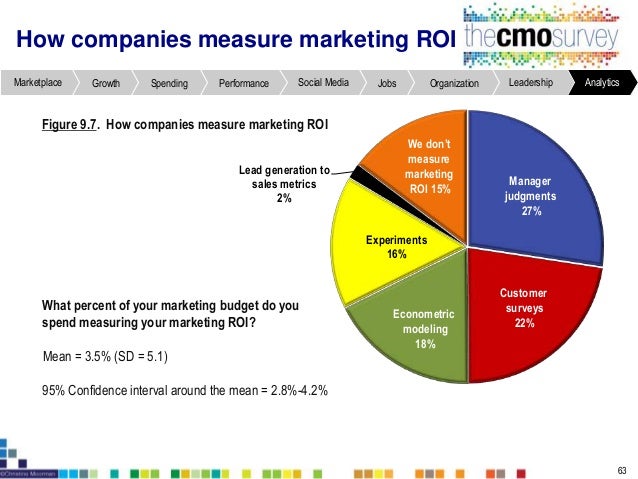
The more frequent Duke survey of CMOs finds that astonishingly 15% don’t measure marketing ROI at all and 27% go by “manager judgments” (another word for flying by the seat of the pants.)

It isn’t just local governments that can be trapped in “inside-out” strategy-making.

Thursday, March 06, 2014

Seems Like Yesterday

My first visit to Durham, North Carolina was twenty-five years ago this month for my final interview before being selected to head the formation of the community’s first community destination marketing agency as a means of fueling visitor-centric economic and cultural development.

I retired going on five years ago, but Durham is still my home.

This month is also the 25th anniversary of the launch of the Internet for general use, something that a new Pew study, released a week ago, shows is considered a good thing personally by 90% of Americans and by 76%, a good thing for society.

Eighty-seven percent of American adults now use the Internet.  Sixty-eight percent connect to it with mobile devices such as smartphones and tablets.  But a stubborn 17% of Americans still insist that old fashioned, tethered land lines will be very hard or impossible to give up.

More telling is that only a third of Americans now say the same thing about television.

The timing of my arrival in Durham and the availability of the Internet for commercial use was fortuitous.  As a co-worker once said, “we hit fast-forward without saying goodbye to yesterday.”

I took that to refer to the fact that we adopted the latest office productivity technology including a local area network of desktops and inter-office emails.  Yes, that was in 1989 when less than 4-in-10 Americans used computers.

Within a few years, we began using the Internet for marketing Durham, when more than two-thirds of the population had still never heard of the Internet or were only vaguely aware (21%.)

Back then, with only 14% of Americans using the Internet, it was considered a strategic risk, as any good strategy-making is.

At the same time, we made Durham’s unique sense of place and what we would later call place-based assets, including Durham’s inherent nature of “genuine, authentic and diverse,” our keystone strategy.

By the time our more established competitors caught on to the former we had leapfrogged nearly all of them but what really made that edge sustainable for Durham was that only one other would ever seize on the latter.

Of course, there were other decisions that proved fortuitous as well, such as spearheading a grass-roots effort to reclaim Durham’s story and reverse a negative image stubbornly embedded among residents of nearby communities.

Marketing a community is 1/3rd hurdling barriers and 2/3rds lowering barriers, reversing image was part of the latter.  No amount of investment in the promotional third (hurdling barriers,) can overcome the other two-thirds (lowering barriers) alone.

I often get asked how we made those decisions.  The easy answer is that I had already cut my teeth on various aspects in a previous communities including one that was data driven.

There are several other more complicated variables, but one important one is that I answered to an unusually diverse governing board made up of movers and shakers not only in business but in community and neighborhood-making.

They enabled and entrusted us to take those approaches that then seemed novel and now seem so safe.

Of course, I continued to evolve and even with nearly two decades of management experience by then, including a decade and a half as CEO, I still had a lot of evolving to do.

A lot of it was timing, much of it was luck and a good deal of it was a forgiving community that allowed me to make and recover from mistakes.  A place that believed in me, stood up for me and taught me the importance of place.

Anything we accomplished has been greatly transcended by those still spearheading the marketing of Durham because they grasp Durham’s story and because they benefit from that uniquely balanced governing board.

Twenty-five years ago seems like yesterday, hell, 60 years ago seems like yesterday.

Tuesday, June 11, 2013

Before It’s Too Late

The write-up in the local newspaper on May 24th did a nice job of putting Durham, North Carolina’s growth rate into perspective.

However, growth has never been a challenge for Durham.  According to the millennial census, the city was even the fastest growing of all major cities in North Carolina during the decade of the 1990s.

That was also a decade during which Durham’s community-destination marketing organization spearheaded a dramatic image turnaround among residents of neighboring Raleigh and Chapel Hill, clearing the way for transformation in some of Durham’s districts during the last decade.

For the nearly 25 years I’ve lived here, the clock has been ticking on what are Durham’s real growth-related challenges.

The state’s fourth largest city is shoehorned into a county of the same name with the state’s 17th smallest land area.  Approximately 30% of the city is covered by impervious surface and tree canopy here has shrunk to 40%.

A third or more of Durham County has been set aside in watershed, much of it without recompense so that nearby (and three-times-larger) Wake County could populate.  Durham County is already the fourth most-densely populated in the state and on track to become third over the next decade or two.

Durham’s challenge remains not to keep pace with its growth rate but instead to take long-ago delinquent actions to preserve its sense of place.

However, rather than becoming more strategic, Durham appears to becoming even more siloed and anecdotal.  Critical areas such as urban forest, historic preservation and open space are not being pursued holistically or with a sense of urgency.

Each should be indexed by now based on what is needed to offset growth factors such as sustainability, optimum density and impervious surface.   Instead there is evidence of denial.  These and other strategic needs are becoming even more trapped into anecdotal decisions.

It is good that local governments here are conscious of shifting from over-reliance on property taxes to fees and other funding tactics that could address growth.  However, their application seems siloed as well.

Good arguments were made for social justice when a $1.80 monthly trash fee was assessed on households but not on apartment complexes and businesses.  Winning the day was the argument that those excluded make other arrangements for pick up.

However, a strategic argument for assessing the fee across the board is that these dumpsters are also tremendous sources for litter that blows out into the community at large.  They are also in areas where recycling needs to be amplified.

The whole argument for selective fees brought to mind the myopic causes for the problems with deferred street resurfacing from which Durham just emerged at great cost.

Well-run cities and counties are not just about transactional leadership and day-to-day operations.  We also need these organizations to worry about tomorrow.

With glaring exceptions for general upkeep and appearance, Durham local governments are exceptionally well-managed.  But in my opinion, they aren’t worried nearly enough about “tomorrow.”

Monday, April 29, 2013

The Rapid Shift to Digital and Hybrid Events

Across the nation, many communities are concerned because bookings for conventions and meetings are down from what they were last year.  Others feel the pace of bookings is off or that they definitely aren’t growing as fast as people thought they would.

Although conventions and meetings represent only 10% of overall visitation nationwide, this must be particularly alarming for communities still over reliant on this segment.

People are tempted to look at short term causes such as the uncertainty created by the election or sequestration.  One short-term cause is certain to be the uptick in other types of more lucrative business travel.  When this occurs, hotels are often reluctant to pre-sell to groups at discounted rates.

A closer look at bookings at communities with which I am familiar gives a more complicated picture at this point in the year.  The number of groups booked may be down or flat in the case of bookings facilitated directly rather than just spearheaded by the community’s destination marketing organization (DMO.)  Related lodging room-nights are off much less but overall attendance, which includes day-trip visitors more so.

Of course there are longer-term, structural shifts at work.  Conventions and meetings have been in gradual decline now for decades.  And a new new benchmark report illustrates why it is now important not only to measure traditional in-person conventions and meetings but also online and hybrid events.

The report shows that while in-person attendance is flat or down for nearly six out of ten meetings, it is up for nearly seven out of ten where the event is online or an online hybrid of an in-person event.

Any trend analysis of conventions and meetings is incomplete now without measuring digital alternatives or hybrids as well and that may be why so many communities are in the dark.

The new benchmark report indicates that while 80% of the survey participants produce physical events, 70% of these also produce online events.  The survey included a broad cross-section of meeting types including 23% associations, 17% corporations, 7% trade shows as well as a large number of business to business and commercial conference producers.

Online events are no longer at the margins.  Six out of 10 draw more than 250 participants with nearly a third drawing 1,000 or more.  More than just webinars, eight out of ten last more than an hour and 36% last five hours or more.

Judging by the amount of time typically wasted during in-person events, online or hybrid events are obviously more cost-effective too.

None of this is good news for communities that continue to sink tens and hundreds of millions of dollars into huge facilities reliant on an ever shrinking number of in-person conventions and meetings, often shelling out more to “buy” the events than they are ever likely to generate in impact.

Even where the community’s DMO has responded by diversifying into more lucrative visitor segments and promoting more realistic expectations and facilities, they are often subverted by an outdated cocktail of community ego and hubris.

Only when ratings agencies and bond markets finally rebel will many finally release their hostage communities.  In time, behemoths will be replaced by much smaller facilities capable of facilitating or staging hybrid and online only events and occasionally much smaller in-person components.

Those looking into the future of conventions and meetings such as Jessie States with Meeting Planners International share predictions that this new generation of smaller, more nimble facilities will also be more local – local materials, local foods, local artists, local icons and local talent – they will embrace “place.”

There will always be a role for face-to-face conferences as illustrated in the results of a new joint survey released this month by the Chief Marketing Officer Council and the E2MA.

But even as 73% of the respondents rated conferences, conventions and trade shows as “still very valuable” or “essential to doing business, 45% have a challenge making a business case for attendance, 38% are slimming down participation and 31% are moving to webinars and virtual presentations.

Hopefully, Empowermint, the DMO subscription database of histories on 40,000 meetings and 20,000 producing organizations is already being updated by Destination Marketing Association International to track online and hybrid as well as in-person meetings.

As recommended last week by my friend and DMOpro consultant Bill Geist, many savvier destination communities must begin to recalibrate analysis for why they lose a convention and meeting and in my opinion that must include tracking ongoing shifts to digital and hybrid alternatives.

A friend at the City of Durham mentioned to me in passing at an event last week that under new contract management by Global Spectrum the Durham Convention Center (DCC) has cut the building’s operating deficit by $1 million compared to the hotel company that previously managed the facility.

For decades, hotel companies contracted to operate it had been treating the DCC as their own ballroom and as hotels often do with their own facilities, subordinating the needs of the Center’s meeting space whenever more lucrative transient business was available.

Fortunately though these conventions and meetings were rarely lost to Durham, just to that particular facility.  Even so, local governments still reaped but failed to attribute tax revenues related to this segment of visitors.

Even though, it will be a few years before several new hotels near the DCC all become operational and make the facility even more marketable, Global Spectrum is ensuring that it competes to harvest its full share of conventions and meetings spearheaded by the community’s DMO.

Durham has long reaped its fair share of conventions and meeting-related visitation but Durham’s DMO has been very wise over the last decade and a half to make sure that the community has been in a position successfully pursue the 9 out of every 10 visitors nationwide for other purposes.

Long-term, the writing is on the wall about conventions and meetings and it isn’t good.

Thursday, April 25, 2013

Why Two Recent Events Will Spawn Social Good

On two occasions over the past five days, I’ve attended community functions where networking flourished.  Both reminded me of an essay I read a year ago by James Fowler entitled 10 Points on the Science of Spreading the Word.

One was  Faces of Change a Duke Medicine event honoring the 50th anniversary of admitting its first minority students and faculty, part of the rapid transformation spurred by the late Governor, U.S. Senator and Duke President Terry Sanford.

The second occurred yesterday at Durham’s Annual Tribute Luncheon, produced each year by the Durham Convention & Visitors Bureau in lieu of the customary annual meeting.

Always paying tribute to those who have fostered and promoted Durham’s sense of place, this year’s event honored Gospel Singer and Pastor Shirley Caesar.

Dr. Fowler is a University of California – San Diego professor of medical genetics and political science whose “work lies at the intersection of natural and social science, with a focus on social networks…”

The two Durham events each involved a mix of community, civic, business, neighborhood and university leaders.  Most attendees including “hangers on” such as me, knew the purpose was to pay respect to the honorees, but there were still a few individuals flitting around the room trying to score points or press personal agendas.

From my reading and adaptation of Fowler’s “10 Points” the altruism of the two events should be contagious.  In fact, events such as these can act much like a “matching grant.”

The two events are organic and unpretentious, so their messages are more likely to get amplified more than traditional annual events that turn into proselytizing advertisements for the sponsoring organizations.

The studies Fowler cites also suggest that these two events, by shining a light on good behavior, are more likely to spur others to perform good deeds.

Attendees are also more likely to be bellwethers for social good who in turn, carry the message from these events to hundreds of people who were unable to attend.

Thursday, April 18, 2013

A New Era of Purpose

There are many reasons when visiting Durham, North Carolina, where I live, to take in Duke Homestead, a state historic site four and one-half miles north and east of downtown.

One series of nostalgic displays and dioramas documents how tobacco and all other products were marketed in this country from the mid-1600s to the mid-1960s.  As Bob Garfield and Doug Levy quip in their new book Can’t Buy Me Like, this era “took America from Plymouth Rock to the Vietnam War.”

It is what Dr. Philip Kotler and Hermawan Kartajaya called Marketing 1.0 in their 2010 white paper.  Most people who think they know a lot about marketing (but really don’t have a clue) remain stuck in that pre-1965 mind-set.  They mistake marketing for advertising which has rapidly reached extinction.

Into the 1960s as that era began to peter out, school kids in Raleigh were still being bused to Durham on field trips to take tours of the historic Lucky Strike Factory in Downtown.  Tobacco wasn’t the only addictive product to benefit from that era.  So was soda “pop” as we called it in Idaho where I grew up, as well as snack food.

The mid-1960s saw the emergence of a brief 45-year “consumer era” of marketing because emphasis switched from the product to the consumer.  This consciousness also also helped mark the beginning of the end for tobacco.  The Lucky Strike Factory in Durham closed in the late 1980s.

One of those kids from Raleigh who may have been on one of those field trips, eventually resurrected the old Durham factory in 2004.  By leveraging parts of a family fortune built on “product era” advertising along with historic tax credits and more than a hundred million dollars from local governments in surrounding infrastructure and facilities, he was able to turn it into a showcase for adaptive reuse.

That was the same year that Mark Zuckerberg launched Facebook, kick-starting a new era of marketing that Kotler and Kartajaya  call Marketing 3.0, or values-driven marketing and that Garfield and Levy call the “relationship era” based on “marketing with purpose,” a concept coined by Mark McKinney.

In my opinion, the “marketing-with-purpose era” will soon spell the end of other addiction-driven products laden with sugar, salt and fat because their purpose is as flawed as tobacco.  Some say their tactics of denial, obstruction and insensitivity to public health are based on the same playbook.

When I agreed to make Durham, North Carolina my adopted home in 1989 to practice what would be the last half of a 40-year career in community-destination marketing, only between 10% and 14% of residents in this state had become obese.

Eight years later, as tobacco advertising was further being banned on outdoor billboards, that percentage was nudging 19% and today it is over 29%.  Nationwide, one our of every three Americans is obese.

“Birthers” still claim the bans on tobacco are a conspiracy.  A more thoughtful objection to bans on products that fuel obesity such as sodas, argue in op-eds such as this one last month that government should not intervene because “true character growth can only occur when someone chooses freely.”

Others would argue based on ethical dilemmas as this op-ed by a former police officer does in questioning the use of traffic cameras to inhibit those who deliberately run red lights.

Good points but I am much more persuaded by an op-ed a few weeks ago by Dr. Robert Frank, an economist at Cornell.  In his 1859 essay On Liberty, John Stuart Mill argued that - "The only purpose for which power can be rightfully exercised over any member of a civilized community, against his will, is to prevent harm to others."

It was calculated that in 2008, the medical costs associated with obesity were $147 billion a year alone.  These costs are born by each and every individual using the health system in America.  Someone’s right to chug as much soda as they can drink ends with the harm their actions bring to others.

My rights should not be dependent on how long it may take someone to develop character enough to cut back on soda and Cheetos or on how much they let their children imbibe.

In her new book Gulp: Adventures on the Alimentary Canal, Mary Roach notes that “our earliest forbears evolved a taste for important but scarce nutrients: salt and high-energy fats and sugars.”

No longer scarce, businesses today are making billions of dollars marketing products made only of these nutrients and appealing to our primal instincts surrounding these tastes, and it shows in rates of obesity.

I suspect these companies are fully aware of the addictive properties of sugar as documented in Michael Moss’s new book.  Brain chemistry research has proven though that addiction is not due to a lack of character or willpower.

As chronicled in the new book Clean by David Sheff, addiction to substances is a far more serious threat to society than was dismissed in that recent op-ed as an opportunity to develop character and the companies pushing it are or should be fully aware by now.

These companies aren’t the only ones out of step.  Many see evidence that gun manufacturers are even more overt in using the stalling tactics that tobacco used for decades as does the outdoor billboard industry, an all-but-obsolete enabler of desecration marketing.

The authors of Can’t Buy Me Like quote Andy Kessler as calling the 2010 invention of the “Like” button by Facebook as “one of the most valuable innovations in technology over the last several decades.”

It is great marketing for Facebook, but as noted in USA Today this week, many businesses - particularly small businesses - need to take heed from Garfield and Levy who note that “…a brand needs a social voice but a brand is not defined by its social voice.”

In this new era of purpose-marketing, it is crucial that a business or organization or community understand its core purpose and be able to communicate its values and add value for its audiences.

In later posts, I’ll revisit “Marketing with Purpose.”  In the meantime I hope these resources will be of value to you.

Thanks to the powerful sugar and guns lobbies, it just may be that the consumers of products that foster addictions to primal substances such as sugar and fat will curb the conduct of companies more quickly than government will.

Friday, April 05, 2013

Rough Around The Edges and Proud of It!

It hasn’t been easy for assignment editors charged with planning local television news.  Mostly this is because television news hasn’t been local for nearly 50 years.

Viewership for Durham, NC where I live is measured over an area that is more than 100 miles by 100 miles and more than 100 cities, towns and counties.

It may be great for hauling in advertising revenues, but bad for advertisers and a nightmare for those trying to cover news over such a huge area with any hope of keeping it local and balanced.

Public opinion surveys measuring the image of Durham over the past few decades could often link where it was most negative by overlaying the viewing area of broadcast television stations.

But experts also found that the root cause of negative perceptions about Durham wasn’t so-called local television news as much as it was that others who were negative about Durham often contaminated those covering the news.

Some reporters and even anchors on television often had their judgment clouded and their objectivity contaminated by friends and neighbors centered in Raleigh who held virulently negative opinions about Durham.

Others were influenced when this negativity was then re-circulated around station “water coolers.”

In fact, one of the changes that helped turn Durham’s image around, largely between the years 1993 and 2000, was when news decision-makers at television stations began to pay attention not only  to “corrections” from Durham’s then newly-created community-destination marketing organization but also to the DMO’s data-driven advisories.

They noted that the problem wasn’t news coverage in general but the lack of balance by news type and as well an imbalance of news type between communities which leads to the zoning of troubling news. They also warned about the impact of tone such as condescension.

Some stations also listened to warnings that they needed to guard against news reporters who had been conditioned by negative views about Durham.  Some even began to require that news crews covering a community should also live there.

Ongoing cut backs have made that hard to sustain as you can tell by stories such as one that ran a couple of days ago on WRAL in nearby Raleigh about the kick-off of Durham’s annual Full Frame Documentary Film Festival, one of many signature events that occur here each year.

The anchors gave a great lead in.  The story begins well enough relating the appropriateness of the festival’s home given Durham’s noted authenticity.

But editors permitted an unrelated but stereotypical piece of stock footage – blue flashing lights - to be gratuitously inserted suggesting a crime scene about 26 seconds into the story with what could be taken as a snarky reference about Durham being known for being “rough around the edges.”

Rick Gall had to cringe.  He’s the long-time, award-winning (including an Emmy) news director at WRAL.  He first came to the Raleigh station in the mid-1990s.

He was running the assignment desk when Durham’s DMO - still using studies – was cautioning news outlets that the issue undermining Durham was not so much whether the news was positive or negative but whether it was balanced with similar coverage in other communities and free of negative “spin.”

Gall helped others at the station and in journalism to understand how trying to cover such a huge geographic area with so few crews could lead to stereotypical coverage, especially at night when the temptation is to give emphasis to crime stories because they the easiest to cover.

He also encouraged reporters such as Erin (Hartness) Medlyn to live in Durham, which she did and still does after leaving the station last fall to work here at Duke University’s Fuqua School of Business.

You can see a bit of Raleigh-centrism at the station coming through as the station’s headline announcing the move notes she is leaving Raleigh for Duke.  Actually she was leaving her position for WRAL to work at Duke in Durham where she also lives.

Errors, oversights or slights such as this and the one leading into Tuesday’s story on Full Frame are much rarer these days but Durham’s DMO is wise to be ever vigilant.  Being guardian of a community’s brand and image is all about content balance and context when it comes to news, not suppressing troubling issues.

Success is more likely when working with people of Rick Gall’s sensitivities, but it is nearly impossible given that viewers are spread over 10,000 square miles.  It is unlikely news crews can truly be locally-based or immune from having their perceptions contaminated.

Hopefully as television is devolves due both to the ineffectiveness of advertising and infinite fragmentation, a new business model can be found that returns truly local stations while still rewarding owners.

And by the way, an integral part of Durham’s brand is being genuine and authentic including, perhaps, remaining a “bit rough around the edges.”  However, we prefer to call it gritty and rarely use police lights to illustrate that.

Luckily, our grittiness has never deterred Durham’s commitment to continuing and never-ending improvement.

Wednesday, February 27, 2013

All Marketing Should Be Localized

I mostly agreed with an excellent essay posted last fall by NPR’s Scott Simon on the seemingly sudden overuse of the word “curate.”

However, even in its original Latin or Middle English, curate has always been a term broader than is used in museums and the perfect description for the essence of community-destination marketing organizations (DMO), first established in the late 1800s at the dawn of the Progressive Era and more recently my profession during a now-concluded 40-year career.

Content curation is also what I do each day in retirement as I research and write the essays posted on this blog.  The only reason Linkedin.com lists me among the top 10% of profiles viewed by its 200 million members is that readers there seek to know who is behind the content I curate.

For any community DMO though, only the tip of the proverbial iceberg is curating information to aid decisions by visitors including leisure and business travelers, group planners, newcomers and relocating executives.

Maybe even more central is curating market intelligence to assist businesses, and not just local businesses or those relocating or expanding. This need is only growing more and more intense.Interactive Global Cities of the Future

At the close of 1989 as I was leading the jumpstart of the DMO for Durham, North Carolina, only one billion of the earth’s consumers lived in cities or surrounding metropolitan areas, such as the one for which Durham is core.

According to the McKinsey Global Institute, within the next twelve years that number will reach four billion, with two billion alone in emerging market metros which will inject $25 trillion into the global economy.

It is no wonder that community-destination marketing is exploding globally.

A survey among members of the worldwide Chief Marketing Officer Council (CMO) shows that 59% believe that localized marketing is “essential to business growth and profitability.”  For 33% the biggest challenge is lack of localized content and for 31% the deficit is access to in-market intelligence.

The study also found that 6 out of 10 these global marketers are over-reliant on “hearsay data,” often gleaned from water-cooler gossip during visits by advance development teams during initial investigations of a market.

Savvy marketers know to turn to a local community’s DMOs for localized market information and content.  Savvy DMOs know that for their community to succeed they will also need to assertively power this information through the obfuscation that is created by huge, obsolete, so-called “designated market areas DMA.”

These relics are perpetuated by some television and radio stations as well as by many newspapers and magazines in hopes that it will continue to grossly exaggerate the amount they can charge for advertising.

The DMA in which Durham is lumped sprawls across as many as 23 counties and parts of three states including up to a third of North Carolina, hardly a common market from a consumer viewpoint.

In reality, while these massive media designations may be good for ad sales, they blind businesses by obscuring the existence of organically distinct community business climates/markets.  Unwittingly gross DMA-level data clouds any true understanding of true consumer markets such as Durham, while providing fodder for anyone wishing to undermine it.

DMAs this vast also result in short-handed newsrooms which are then drawn disproportionately to easy-to-cover topics such as crime. Far too stretched to cover topics evenly from community to community or to add context that would mitigate over-generalized alarm, they fuel stereotypes.

This imbalance along with lack of context, in turn fuels exaggerated water-cooler conversations, which then results in what consumer research experts such as Dr. John Lynch are quoted as terming “focalization.”

This is a condition where for many listening to water-cooler pontifications, the brain’s “intake valve” virtually shuts down to other aspects about a community, particular in places such as Durham where 3 out of 5 workers are non-residents.

As Durham’s DMO commenced operation, it took a few years of analysis by communications and media experts, followed up by scientific research to document not only the existence and nature of what was undermining perceptions of Durham, but to lock on to greatly amplified content curation as the strategy to turn this condition around.

Although the effort must be perpetual, the remarkable turn-around in Durham’s image was spearheaded by its DMO largely between the years 1993 and 2000 as documented by annual tracking surveys. 

What made this comprehensive and often-grassrooted effort even more remarkable is that it occurred over a period when the Internet emerged in popular use, not only making non-curated information ubiquitous, but also “fire-hosing” the intensity and proliferation of misinformation.

Anyone dating the turnaround as more recent may be confusing Durham’s overall image with that of just the downtown area.  However, it is probably not coincidental that the rehabilitation of downtown’s reputation commenced in earnest only after the tide had been turned on restoration of Durham’s overall image.

Regardless, the role of content curation was strategically central to both.  Many experts including NYU professor, researcher and author Clay Shirky and most recently best-selling author Daniel Pink have dissected the ingredients of good content curation.

Shirky often notes that content curation is more than just aggregation or information seeking, it is about “synchronizing a community,” something for which Durham’s DMO is now recognized as a best practice.

Pink builds on the “seek-make sense-share” model evolved by blogger Beth Kanter based on inspiration from Harold Jarche who writes about workplace innovation.

As you can see, content curation can have different layers.  I remember a friend of mine who would often call me for research data, then tweak the numbers slightly and use them unattributed in news quotes and with local officials.  My friend was breaking a cardinal rule of curation which is crediting sources while benefiting from another, the act of sharing through redistribution.

Curating content involves gathering, qualifying, and distilling information, and often this includes conducting original research studies.  It also requires making sense of the information and putting it in context, followed by developing tools by which it can be shared and distributed and redistributed.

On behalf of a city, town or county, it is something for which community-destination marketing organizations are uniquely qualified by both purpose and focus.

However, content curation should never include the purging of troubling information but instead the integration of it within the fuller picture.  It is also a perversion to masquerade content curation as a means to merely perpetuate unsubstantiated and anecdotal opinions or observations.

Search engine optimization is part of sharing and distributing curated content but as Shirky notes, making sense of it is a distinctly human endeavor.  It also involves vigilance and relentless follow up with the sources of misinformation with requests for correction and offers to substitute it with valid resources.

Local businesses and chains with local operations or franchises are learning just as the CMO study confirms that consumers, even when they are visitors, focus locally.  Seven years ago, studies began documenting that 70% of U.S. households used the Internet when shopping locally for products and services.

This is intensifying even more as 4 in 10 have migrated to mobile platforms to conduct those searches.  The search engine Bing finds that 70% of mobile searches are followed up by action within an hour.

The search result that rises above the din is curated content provided by a community’s official destination marketing organization.

Friday, December 21, 2012

A Fond Farewell and a Short Break to Recharge

Closing in on my average of 287 posts a year since retiring three years ago, I’m going to take a break to recharge.  I’ll begin posting again each day on December 31st.

But first I’d like to thank Gretchen Cooley who has volunteered to collaborate with me by editing and making suggestions to improve the last 700 posts or so.  As anyone who reads regularly knows, my posts are more like essays and always involve links to studies and research.

All tolled, she has edited the equivalent of about 14 average-size books in the little more than two years since she volunteered to help me.  I will miss teaming with her.Gretchen Cooley

In the late 1980s, Gretchen was selected to represent neighborhoods on the newly-created Durham Convention & Visitors Bureau (DCVB) Board where she was charged with recruiting the organization’s first chief executive.

Through that process she was the first person from Durham, North Carolina, to reach out to me for a telephone interview nearly 25 years ago.

After she and another board member, Anne Gregory, talked to me they convinced their fellow board members to fly me in from the west coast for a face to face interview.  The rest is history as I became the start up exec for Durham’s first official community marketing agency, the position I retired from after 21 years.

It was her down-to-earth passion for Durham and her dry wit that first gave me an intriguing sense of what has become my adopted home.

During those turbulent start-up years, Gretchen served as chair of the authority that governed the Durham Convention & Visitors Bureau, the body to which I was accountable for more than three terms.

On more than one occasion she gave me the benefit of the doubt during a difficult patch when contributed to my longevity.  Her activism in the community also gave me credibility in circles where it may have taken years to establish.

She lives a very full life and it has been an extraordinary gesture for her to edit an average of 1,000 words each day while coming and going from her many other commitments and time with family. She epitomizes why Durham is where great things happen!

I wish her well with her next pursuit.

This is probably also a good time to give an update on the wrist I shattered a year ago November 3rd.  Thanks to fourteen titanium screws and a great surgeon and loving friends and my own determination, I rapidly regained full mobility and the nerves in three of my fingers have fully reignited.

It was my first broken bone that I know of and hopefully my last.

I appreciate that so many people from around the world follow this blog even though it is a bit eclectic.

I hope we all see a prosperous and peaceful 2013.