Friday, September 12, 2014

Reflections on The Landscape of A Heritage

As I noted recently, I am the only son of an only son, born midway between my dad and his first granddaughter but as hard on him as he was on his father.

If he were still with us or if he is looking down now, he would be even more proud of her than he was at her birth, now a single mother, lawyer and chief privacy officer for a major healthcare concern spread over dozens of cities and towns across our ancestral landscape.

I was the end of the line of more than a hundred years of ranching but in the late 1840s, these ancestors didn’t begin as ranchers.  They came to the Rockies as carriage makers, saw mill operators, molasses manufacturers, cavalry troopers, miners even a dirt farmer or two (smile – rancher humor.)

But collectively they understood that settling and homesteading and building communities from scratch involved commons such as that where his granddaughter ranges in another way.

He’d also be the first to remark at what a perfect blend she is of each of her parents, but equally important would be what she has done to express those equal sets of genes including molding a career blending law, management, technology and innovation.

My dad also would give a smiling nod at the pride my urbanite grandsons and daughter take in our Idaho ranch heritage.

On our final leg to an annual lakeside family rendezvous in the northern Rockies last month at the hospitality of my youngest sister and her family, they took delight when a cowboy hat they picked out for me turned out to be identical to one their great-great grandfather wears in family photographs.

Already with enough cowboy hats and boots to last several lifetimes, I couldn’t help but wear it as we rode up into the Bitterroots that day, smiling at how frustrated my dad—their great-grandfather—appears in that same photograph at having to dismount.

Not yet 30, in an act of defiance, he refused to keep his hat on, revealing a rancher tan and a look of disgust I’ve seen in the mirror from time to time.  I see far more diverse evidence of his nervous system in his grandchildren and great-grandchildren.00085_p_10aeuyf6sw0449

I wish I could tell him every day how much I love and miss him and how I know I was hard on him.  We both eased up as I turned 30 years old, but we didn’t really clear the air until I was nearly 40 and he was a year younger than I am now.

My emotions were ambushed a few day ago when I first heard a new hit single by Garth Brooks interpreting a brilliant composition co-written by Marc Beeson and Allen Shamblin entitled “Send ‘Em On Down The Road” as I recalled that day when we too “…just threw that baseball back and forth till dark…:”

“he wanted to protect me but somehow my father knew

that you can cry for, live and die for,

you can let them find their wings but you can’t fly for

cause if they are not free to fall

then they are not free at all

and though you just can’t bear the thought of letting go

pick ‘em up, dust ‘em off and send ‘em on down the road”

Some of my favorite Garth Brooks’ songs include references to rodeos such as the iconic “Much Too Young (To Feel This Damn Old),” echoing a variation of a quip my dad would repeat in the 1950s whenever he was greeted with, “How are you?”

It was co-written with a friend and rodeo rider Randy Taylor in Stillwater, Oklahoma where Brooks first performed it in 1986 at a club called Bink’s with his band Santa Fe.

Less than three years later, it was the singer’s debut hit single, just as I relocated to Durham, North Carolina in 1989 and where I still live in retirement.

But historically, true cowboys, aka Bedouins of the American West, were fast fading when Prescott, Arizona staged the first rodeo in 1888, inspired in part by the success of the Wild Bill Cody shows.

Until then, westerners viewed tourism as a way to recruit settlers and investment.  But Cheyenne, inspired by the “potato days” celebration just south in Greeley, created its Frontier Days Celebration in 1897.  By 1901, Denver added one to its local celebration.

By the time Pendleton, Oregon created its famous rodeo in 1910 and Idaho’s first rodeo, the War Bonnet Roundup, was organized in 1911 fifty miles south of our ranch, a circuit was forming.

When Tucson started its rodeo during the Prohibition, it was a tourist event, and when Old Tucson Daze began the year before I was born, it was, ironically, held on an old movie set.

The father of one of my classmates in high school is hall of famer Deb Copenhaver, a contemporary of my father, who won back to back world championships in bronc riding in the mid-1950s when I was 7 and 8 years old just younger than my grandsons now.

Rodeos are emblematic of the time when Westerners began to reflect what visitors from the East expected.  By the time I was born, it had become firmly embedded in Western identity, reinforcing that authenticity is a negotiation.

My parents married young at just ages 22 and 16, eloping over the Bitterroots to Bozeman, as my dad left to join a tank battalion propelling across France.  Initially, his dad had held him out of the war as an only son so the ranch could aid the war effort.

But when his same-age cousin and best friend, a tail gunner in a B-26, was shot down over northern Italy, my grandpa finally relented and allowed the ranch to go fallow as my grandparents put their only son in harms way.

Dad’s unit was part of Patton’s third army sweeping into southern Germany, liberating Dachau, the first concentration camp established leading up to the war, then changing to horses and spotter planes to patrol for Nazis fleeing into the Alps.

Coincidentally, one of the prisoners liberated there handed a young soldier from North Carolina what looked like a rock, and told him never to forget what happened there.

It was actually molten ashes from human beings incinerated in the huge ovens used by the Nazis to cremate prisoners who died or were gassed because they were unfit,

The day before this past Memorial Day, those ashes were laid to rest in a Hebrew Cemetery here in Durham where I live, which dates to the 1800s.

By the time I came along, my parents were still kids too at just 25 and 19, and they had grown incompatible in some ways while apart.

They were still “two hearts on fire,” to borrow a line from a Shenandoah song written by Hugh Prestwood, but researchers now know that what held them together for more than thirty years was a shared style of parenting.

Its something researchers have just found in successful parents that is “distinct from their romantic relationship.”

In the typology of four parenting styles, my parents were “authoritative,” the mix of “authoritarian and responsive” practiced by 32% of parents.

I know now that researchers find that this style correlates to the “concerted cultivation” common to middle class parents or parents who successfully keep or move their children up into the middle class.

More wealthy parents are often negligent or permissive including many so-called “helicopter parents” today who mistake over controlling and frenetic hyperactivity with cultivation.

Researchers have pinpointed that a natural or more free-range style or permissive style of parenting found among many who are poor is one of factors that perpetuates poverty in their children and differentiates them from poor parents intent on breaking that cycle.

One of my siblings seems only to recall my parents as “authoritarian,” perhaps because she didn’t witness the differences two of us saw in the parenting styles of parents who truly were.

Regardless, I am incredibly grateful and credit my parents for any success I enjoy as well as the legacy I see in their grandchildren and great grandchildren.

Thursday, September 11, 2014

There is always a tiny nugget to be gleaned. Then go shower.

Before I touch on new research supporting the importance of authentic sense of place, let me touch on one of the ironies from my four decade career as a guardian of sense of place.

It is how much time is required in that profession to defend communities from mainstream tourism interests.

Those drawn to the appeal of sense of place but then from  overbuilding and lack of differentiation brought on by ubiquity, soon begin to cannibalize it instead.

Desperately demanding more and more promotional oxygen to subsidize their responsibility to fill beds and seats, they instead begin sucking away at what is meant to promote the community at large and fuel overall visitation.

During the 1970s and 1980s, it was from convention-related hotels, and meeting or event planners demanding kick-backs or subsidies or facility-driven public officials desperate to obscure deficits when public facilities were no longer warranted.

In the 1990s, it was from mega-event “big-game hunters” intent on subsidies to secure events far too large to fit or held only at times that displaced as much or more demand than they generated.

In the 2000s, my final decade, it was from mainstream events and performing arts facilities which, desperate from overbuilding hundred more than warranted, sought to monopolize attention far disproportional to their percentage of visitor potential, at the risk to less pretentious forms.

If that isn’t enough, there are always one of two elected officials impatient for returns from leveraged visitor spending, who seek to drain away promotional resources.

So why did I love my career so much?

Because communities worth loving as places to live are places people find worthy of visiting.  They are the reason the vast majority of people travel away from their homes at all.

That “authenticity” must be protected and carefully nurtured even during the process of creating awareness and appeal.

Because guarding and leveraging sense of place is also incredibly worthwhile and rewarding.

But I still took time to listen very carefully to those who sought to undermine sense of place, even if intentionally.

Not only was there always a fragment of value to be gleaned but it made me think and reflect more deeply about my own assumptions and the data behind them.

As Dr. Robert Reich recently commented, “there is no better way to learn than to talk to someone who disagrees with you.”

The annual study of leisure travelers who now make up 3-in-4 visitor stays includes indices of areas of importance as well as travel style broken down by generation.Destination Analysts Indices

“Nature” scores above 50%, and nearly 65% for “boomers” such as me.

But “authenticity,” the desire for real destinations vs. commercial or mainstream tourism product, is more important across all generations but even more so among Millennials as is “culinary interests,”  engaging in a destination’s arts and cultural assets, and “exploration.”

“Activities,” are among the least important across all generations.

For many communities, this awareness is far too late.  Their sense of place and authenticity has already been hollowed out by preoccupation with mega-facilities and events, mainstream culture and arts, cookie-cutter lodging, formula stores and chain restaurants.

For communities still clinging desperately to their sense of place against the forces of homogenization, the lessons from this report and many others I’ve linked to in essays key-worded as “authenticity,” are clear:

  • Focus marketing efforts on unique sense of place assets such as indigenous art and festivals, green infrastructure, historic preservation, organically evolved districts, and locally-owned stores and restaurants.
  • Keep mainstream elements in their place while teaching them how to embrace the authentic characteristics of a community.
  • Be ever vigilant of the dangers that come with success such as “fear of saying no,” “churn,” “unholy alliances between policy makers and powerful special interests,” and “envy.”
  • Forsake those who claim “special knowledge” and relentlessly pursue critical and strategic thinking, differentiation, data and information-driven decision-making.
  • Beware of the incestuous deadly sins of complacency and envy of other places.
  • Eschew desecration marketing, including billboards, as well as other “yelling” forms of advertising.  Generously invest in the sharing of valuable content, earned attention and respect is the most valuable.
  • Religiously foster and protect distinctiveness and carefully guard against decisions that glitter but merely make a community one of many.

And always strive to listen, especially in the face of spittle, condescension, disrespect, anger, drama, exile, character assassinations, bribes, end-runs, betrayals, sycophants, demands and cabals.

There is always a tiny nugget to be gleaned.  Then go shower.

Be fearless.  Communities still worthy of love, still worthy of visitation, and still having a soul will always be worth fighting for.

Wednesday, September 10, 2014

The Face of the Earth Moved like the Waves of the Sea

As the only son of an only son of Idaho ranchers stretching back to its territory days and a decade earlier in Utah, after 116 years, I was the end of that line.

Beginning in 1850, most had raised, trained and traded horses with only a few head of cattle for personal consumption, but some were in the cattle business.

But beginning in the 1870s, those raising horses also began adding herds of cattle they would sell commercially.  By the time I came along, my parents raised mostly cattle and only a few horses, many to work the ranch but some purely for nostalgic reasons because of the famous genetic lines they symbolized.

In his incredible 1990s book entitled, Beyond Beef: The Rise and Fall of the Cattle Culture, Jeremy Rifkin who writes and lectures on a broad range of economic, social and technological issues, reminds us that at one time what is known as Western Rangeland actually covered 40% of the continental United States.

It stretched up from that remarkable part of northwest Texas I traversed during a cross-country road-trip last month into Oklahoma and Kansas over across parts of New Mexico and Arizona, up across half of Colorado, into Wyoming and parts of Montana and the Dakotas, then west across parts of Idaho and most of eastern Oregon nipping a part of northern California.

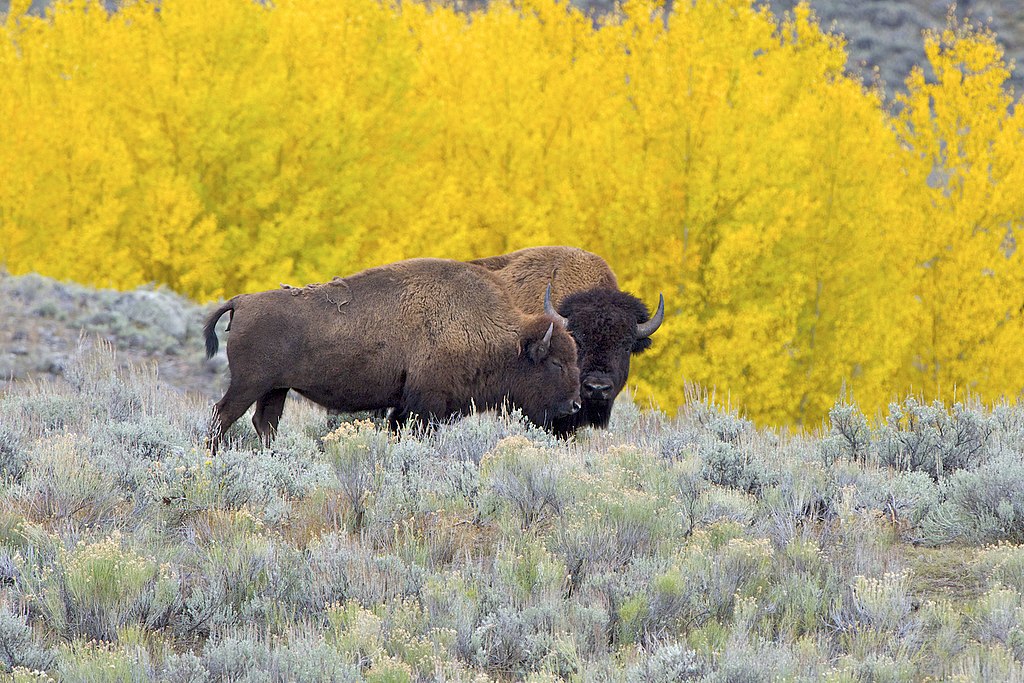
We think of this as being the range for Buffalo, a bovine relative of cattle.  But this rangeland, while perfectly suited, is just where vast herds of these feral creatures had been pushed by the 1840s when all of my ancestral lines headed into the Rockies.

But at one time the range of Plains Buffalo stretched to Durham, North Carolina where I concluded my career, and up to Anchorage where I had spent a decade in the 1980s prior to being drawn here.

Before he headed west to blaze a road over the Cumberland Gap into what is now Kentucky on behalf of the Transylvania Company, Daniel Boone worked for a month while being outfitted in what is now northern Durham County for its secretary William Johnston at his Little River store.

When Boone headed over the Blue Ridge Mountains, it was along trails previously blazed by Buffalo.  Other Americans also followed further north in the Appalachians into the Ohio River Valley and then all the way to the Pacific along routes my pioneer ancestors followed.

My great-great grandfather, one of three ancestors on the vanguard wagon train heading west in 1847, was one of ten men assigned to hunt Buffalo along the way being careful not to take more than needed.

At the time, Kansas, Nebraska, Wyoming and Montana didn’t exist even as territories, and their destination was still part of Mexico.  During the second month of that 1,100 mile trailblazing effort, they began to see seas of Buffalo in what is now west-central Nebraska.

Near what would become Gothenburg, one member wrote that “the prairie on both sides of the river is literally black with Buffalo.”  Another wrote that it was as if “the face of the earth was alive and moving like the waves of the sea.”

There were days when they passed herds of Buffalo stretching for 20 or more miles.

Twenty years later, naturalists, based on range carrying capacity, estimated there were 60 million buffalo on the Western Range, a number experts now believe was closer to 30 to 40 million.

But in the 1860s after the Civil War, Wall Street colluded with the railroads, cattlemen and the U.S. Army to exterminate the Buffalo from the Western Range, replacing them with hundreds of thousands of head of cattle and scores of Native American people with cowboys.

All that tells me that my ancestors thought differently; that several were interpreters with Shoshone, Bannock, Paiute and Hopi and their policy to feed them rather than fight them.  But by shifting more and more to cattle, they were obviously enablers.

Telling is that in 1864, Idaho’s territorial legislature became the first to pass laws protecting Buffalo, but it was already too late there.

By around 1880, 30-40 million Buffalo had been replaced on Western Rangeland by 600,000 cattle, and by 1879, Idaho ranchers alone had driven 100,000 head to railheads there for shipment.

But those same railroads brought settlers and the open range succumbed to barb-wire fencing by the 1880s.  Ranchers had also saved 100 Buffalo from extinction.

Today there are about half a million head on non-public lands including those served as a beef alternative in restaurants such as Ted’s Montana Grill here in Durham, one of 44 across 16 states.

Bison meat is naturally lean, tender, and protein and nutrient rich.  About 60,000 a year now make it to restaurants and stores, double since 2002.

Another 30,000 find sanctuary on public preserves including Yellowstone Park adjacent to our ancestral ranch.

This includes a herd of 350-500 on the National Bison Range set aside by President Theodore Roosevelt in 1908, and then populated with private funds.  It’s northwest of Missoula, Montana at the base of the Bitterroots where they form the line with Idaho.

There are still about 15,000 Buffalo that conservationists estimate roam wild.  There are 2,564 operations raising Buffalo commercially, bringing the number in the U.S. and Canada now to 340,000.

Nationwide, ranches like the one in Idaho where I was born and spent my early years now hold 87.99 million head of cattle, the fewest since I was a rising three year old in 1951.

Seventy-percent of the land area of the Intermountain West (Montana, Idaho, Wyoming, Colorado, New Mexico, Arizona, Nevada and Utah) is still rangeland used for grazing livestock even though today it is for only for six months instead of the years it did when I was growing up.

It was only 12 years ago that there were only 50 grassfed cattle operations in the U.S, now there are thousands.  Still, nearly all of our beef comes from cattle “finished,” a euphemism for fattened in feed lots.

While the feed-lot technique was pioneered in Chicago in 1876.

Before then fattening was done for only a week or two at the railhead to prepare them for the ardors of shipping.  But then came refrigerated railcars and gradually the fattening was done not to compensate for weight loss during shipping but to make them fatter faster.

This took off very slowly though until veterinary antibiotics converged with federal policies during the Nixon administration to fuel corn and grain production in the early 1970s.

There is a feedlot in Idaho, just southeast of Boise that fattens 150,000 head of cattle at a time, a third more than was driven to railheads by my ancestors and others in an entire year in that state in 1879.

That company has another closer to Boise that holds 250,000 head but they don’t hold a candle those two in Amarillo, Texas that fatten 800,000 or one between Denver and Fort Collins that handles more than that alone.

The number of head in my native Idaho as of last year was up slightly to 2.3 million, while the number of head in my adopted home of North Carolina increased to 820,000.

This due in part to a trend back toward local family stock growers supplying local residents as well as locally-owned restaurants in foodie counties such as Durham with grass-fed beef.

But as, author, food journalist and son of the founder of Baskin-Robins, John Robbins details in his book entitled No Happy Cows: Dispatches from the Frontlines of the Food Revolution, there are no easy solutions.

Tuesday, September 09, 2014

When For A Shining Moment Tourism Became Patriotic

Less than two months after the Civil War effectively came to an end in Durham, North Carolina, 150 years ago next April, a newspaper editor headed out west publishing later in 1865, that region’s first travel guidebook.

Long before that war began, every line of my ancestors back five generations, (except three who died along the way) some northerners, some southerners, along with two sets of newly arrived immigrants, (Scots and Brits) had settled in the western shadow of the Rockies, all but four a decade prior to that internal conflict.

Samuel Bowles was traveling by stagecoach with the Speaker of the House of Representatives and future Vice President, Schuyler Colfax, on a journey requested by President Abraham Lincoln the day he was assassinated.

Along the way they would pass some of the last two dozen wagon trains of Mormons still heading west.  The subsequent guidebook was entitled, Across the Continent: A Summer’s Journey to the Rocky Mountains, The Mormons, and the Pacific States.

The Civil War was over but the route Bowles and Colfax traveled was anything but peaceful.

A general uprising by thousands of Plains Indians, Sioux, Cheyenne and Arapaho had been brewing for several years due to abuses by immigrants seeking fortune rather than a homeland, but warriors sometimes failed to make a distinction.

Nor did Cavalry units protecting the Overland Route, which burst into open warfare after the tragic massacre of peaceful Native Americans a few months earlier at Sand Creek, mostly women and children.

All along the stage route ranches, wagons, stagecoaches, telegraph wires and feed had been burned across Kansas and along the front of the Rocky Mountains midway through Colorado and Wyoming.

Narratives about the transformative exodus of 80,000 Mormons between 1847 and 1868 in pursuit of religious freedom are obviously heavy on sacrifice, perseverance, suffering, faith and grit.

But ironically, a new study by researchers at Brigham Young University looking into insurance rates provides some new perspective.

The mortality rate for Mormon pioneers, while a point higher than the U.S. population in 1850 was only slightly higher for male pioneers and slightly lower for female pioneers overall.

Showing that it may have been safer out on the trail away from cities, the mortality rate for babies on Mormon wagon trains was 9% compared to the U.S. population overall at 15%.  Of course, only white mortality was measured at the time.

Soon after Bowles published his travelogue, visitors began arriving to see Mormons, much as they do the Amish today, perhaps ironic to my Bowman ancestors who arrived in America as the latter and migrated west as the former.

The first true “tourist’s guide” to the West was published as a resource five months after the first transcontinental railroad was opened in 1869, less than a decade after my ancestors settled the first permanent settlement in Idaho and forty years before they would prove up on their last homestead.

Until then, tourism in America had been regional in nature.  In the early 1800s coastal planters seeking the climate and scenery of North Carolina’s mountains were primarily motivated by fear of disease.

Organized tourism took root first in New England by the 1840s just as my ancestors headed across the Great Plains.  It was viewed as healthful scenic relief from industrial cities and factories.

By the time a modest hotel clerk in Salt Lake City, a transplanted Virginian, first coined the term See America First, as the name for a three-day conference focused on tourism promotion, the first handful of community-destination marketing organizations had already been formed beginning a decade earlier with Detroit in 1896.

Attending were 200 business leaders, governors, heads of commercial associations, agents for railroad and trails/good roads groups, including representatives from Spokane, Portland, Seattle, Tacoma, Victoria, Duluth, Denver, Vancouver, Colorado Springs and several towns in the Midwest.

The meeting venue, now on the National Historic Register (the historic Oregon Short Track Building on Pierpont behind Ruth’s Chris Steakhouse and the Hilton, kitty corner from the Salt Lake Convention Center), at least deserves a plaque.

While the movement fizzled, the slogan was soon picked up by the Great Northern Railway to promote Glacier National Park and then to promote all national parks and monuments as national assets.

We are reminded by Dr. Marguerite S. Shaffer in her book by the same title, that this was the conference where speakers formalized the notion that had been emerging since the Civil War, that the West was emblematic of the “true” America, the ideal of America as “nature’s nation” and tourism as a “ritual of citizenship.”

Watch for her new book, a co-edited collection of essays entitled Entangled Environments: New Perspectives on Rendering Nature in American Culture, due out this year.

Scenic preservation and “nature” tourism took hold before, during and after WWI.  From 1897-1915, most tourism was in the form of conventions and expositions because the idea of leisure travel would not emerge as mainstream until the late 1920s and early 1930s.

Good road coalitions argued for a system of highway routes true to the historic pioneer routes such as those my ancestors blazed to honor them as emblematic of what it means to be American.

Unfortunately, some cities didn’t get the memo when the proportion related to conventions and meetings began to rapidly decline by the 1930s, even battling until the early 1970s to prevent “visitor” from being added to the name of community marketing agencies.

Some still obsess with conventions today when meetings of any type now represent only 7% of business and 4% of leisure visitor stays and 10% of travel overall about the same as attending performing arts, not insignificant but hardly worth the high risk of over building for.

Increasingly after WWII, cookie-cutter development, franchise architecture, formula businesses and facilities, desecration marketing such as billboards, facility envy and mainstream culture have combined to demean tourism appeal, destroy sense of place and enable blight across the country.

But as I was growing up in the 1950s, kids collected stickers about the destinations they visited and often displayed them on the rear corner window.

Many reflected the colorized photographs made famous beginning in 1901 by Fred Kiser who was during his lifetime, the premier scenic landscape photographer in his day.   He called them “artographs.”

Along with others commissioned from artists such as the postcards at this link by railroads, then road associations, and for a time by airlines, they were used to promote tourism destinations.

Little did I know in the 1970s as I backed my way into a life-long career in community-destination marketing in Spokane where businesses put on an exposition to celebrate nature that much of tourism across the nation had or was rapidly becoming anything but patriotic.

Monday, September 08, 2014

Through Another's Eyes

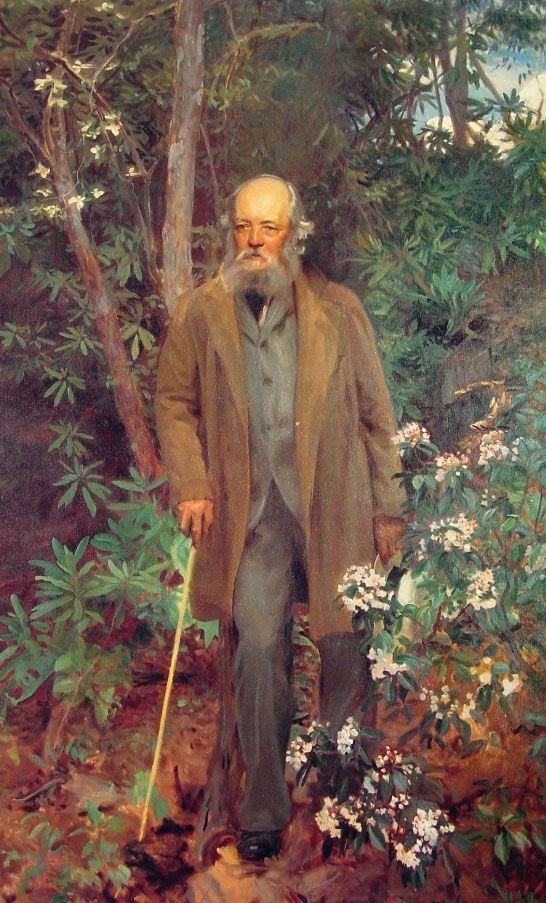
The eyes in this haunting portrait is one of the things I remember most about a visit to the Biltmore Estate in Asheville shortly after having been drawn to Durham, North Carolina for the concluding half of my career in community marketing.

Half again taller than I am, it was hanging, at least back then, in the salon, a sort of bridge across the front of America’s largest mansion between the music room and breakfast room.  It depicts Fredrick Law Olmstead, America’s first and foremost landscape architect.

Tragically, shaping the estate around Biltmore would be his last landscape project, while Central Park in New York City was his first.  We know now that Olmsted was suffering from Alzheimer’s, and I believe it is apparent in his eyes when compared to earlier portraits.

His son, whose career in the same field wouldn’t end until the late 1950s, just as I was in my tenth year, stood in for his father while the portrait was finished.  The firm that Olmsted founded was still going strong well into my career and didn’t shut down until the last of my four-decades as a guardian for sense of place.

But Biltmore wasn’t his first assignment in North Carolina.  In 1852, a few months after Olmsted turned 30, he was hired by the co-founder of the newly established New York Times to travel incognito throughout the South reporting back first hand accounts of slavery in states such as North Carolina, his first of two journeys.

He left a “gradualist,” meaning he felt the South should be permitted to bring slavery to an end on its own terms with insistence from his publisher that he be objective.  He returned a fervent “abolitionist” and five years later backed his way into landscaping with a contract to create Central Park.

Olmsted also turned his dispatches on slavery into a book in 1861 entitled, The Cotton Kingdom, including a fascinating snapshot of North Carolina at the time.  Anyone interested in Olmsted’s biography can do no better than journalist Justin Martin’s extraordinary book entitled Genius of Place.

Another incredible snapshot in time of North Carolina is an encyclopedic volume assembled and written between 1935 and 1939 as part of a FDR relief project to keep 7,000 writers, illustrators and historians employed during the Great Depression (see the documentary, Soul of a People).

Coupled with a 6,000-mile statewide visual assessment from its roadways published in 1930, the guide provides an incredible resource of the state and individual cities such as Durham.

Spanning a time during the creation of Duke University in Durham, it includes history, flora, fauna, physiography, climate, demographics, trends, ethnicity, religion, aboriginal origins, events, prices, economy, transportation and much more.

I first stumbled on the 600+ page guides, which were created for each of the 48 states at the time as well as those still territories such as Alaska when researching for my first destination marketing post in the early 1970s in Spokane.

While at the invitation of a lifelong resident of Spokane I was sorting through her great grandfather’s collection of historic visitor literature, I came across a copy of the WPA American Guide Series on Washington State as well as an even more historic visitors guide I have framed.

It is what gave me the template from which we would substantively differentiate guidebooks there and in two other communities during my career from the superficial, wafer-thin guides common even back then.

The guidebooks in this series are particularly insightful because many communities were responding to the fact that automobile tourism went mainstream in the 1930s and the generation that had come of age after the Civil War was investing in sense of place.

The 6% fragment of the original Biltmore Estate left in 1930, a mere 8,000 acres, was opened to the public, and an extension of the Blue Ridge Parkway through North Carolina was underway, a concept Olmsted had pioneered.

Durham had just opened the Carolina Theater, one of four performance halls here by 1939.  A Unity Monument had been erected here at the site where the Civil War ended.   Washington Duke’s granddaughter had bought his historic homestead and the university was restoring it.

Wallace Wade Stadium was hosting its first games with football powerhouses. Cameron Indoor Stadium, Duke Chapel and Duke hospital opened giving Durham access to the state’s reputation for medical tourism.

Historic Durham Athletic Park had been newly upfitted for the Bulls, and with a population of just over 52,000, Durham had eight hotels, including two for African-Americans, two of the state’s leading golf courses and five major events on the state’s calendar.

At the time, nearby Raleigh had climbed above 35,000 and Chapel Hill was reaching for 3,000 (smile.)  Greensboro was about the size of Durham, Winston-Salem reaching toward 80,000 and Charlotte near 90,000.

These historical documents also provide clues as to the authentic roots of sense of place and appeal, the emergence of blight and poverty, as well as a premonition of the the cookie-cutter architecture and mainstream facilities common after WWII.

The WPA guides also provide data useful to fill in gaps in research and trend lines such as competitive analysis including various types of visitor related facilities and events.

The information also helps put accolades in perspective.  The guide notes that at the end of the Civil War, a blacksmith here, Lewis Pratt, was the only African-American to own a business in Durham.

Even by 1887, blacks owned two lots in the city and 1,366 acres of farmland in the county.

But by 1935, African-Americans here held $4 million in holdings and business assets of $7 million, including major corporations on Black Wall Street, an entrepreneurial enclave, a teaching university and a library.

Olmsted’s legacy is that he taught North Carolina that the economic value of its signature forests was far greater than mere timbering, something policy makers entrusted with public roadsides seem to have forgotten.

The turnaround Biltmore symbolized occurred just as public officials and timbering interests had stripped North Carolina of its appeal, appalling those who came expecting trees to ride former logging trains through desecrated mountain sides for views.

Olmsted had met George Vanderbilt when he was a boy growing up on Staten Island where at one time Olmstead farmed.  Once at the estate, he encouraged Vanderbilt to assemble 125,000 acres, establish a nursery and sustainable agriculture, plant millions of trees and establish a forestry school.

There has always been a tension in North Carolina between those focused on exploitation, such as a few legislators who recently enabled large-scale roadside deforestation and the vast majority of Tar Heels, who value scenic preservation.

It can be said that Olmsted’s work here first revealed to us the greater economic and psychological value of the latter.

Whatever we do today to further North Carolina tourism, which has grown far too commercial, blighted, brittle and faddish, must strive once again to live up to this legacy.