Showing posts with label Progressive. Show all posts

Thursday, January 23, 2014

A Community’s Deeply Rooted Progressiveness

Progressive roots in Durham, North Carolina go back at least to the 1880s, a few years after the business wing of the Republican Party overwhelmed its social justice wing putting an end to a decade of “Reconstruction” following the Civil War.

Agrarian populists filled the void, standing up to a Democratic Party dominated by white supremacists.  Even Durham’s conservatives at the time manifested a progressive streak back then when they stood up against white supremacists as well.

But today’s progressivism in Durham can be traced to a local insurance executive in the late 1940’s when the city’s population was cresting 60,000, with just 80,000 countywide.

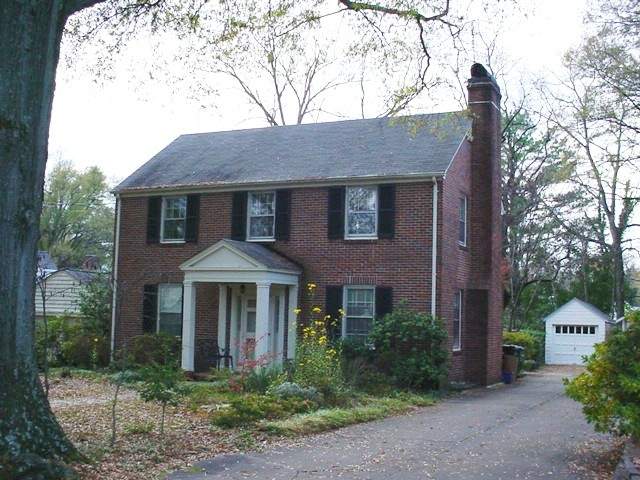
John Leslie Atkins Jr. was a Durham native and Duke graduate, who sharing that name with both his father and his pre-school son at the time, preferred to go by Leslie.  When I lived in Trinity Park for a time, I would often walk past his 1939 family home on Dollar Avenue  which was built when nearby Northgate Mall was a cow pasture.
A disease similar to polio in one of his legs resulted in the use of a brace to be able to walk.

In the late 1940s following World War II, Atkins, then in his mid-30s, began holding extraordinary meetings for the time.

Just a few floors below the office of George Watts Hill in a building now undergoing adaptive reuse as one of a handful of 21C Museum Hotels in the nation, Atkins was forging a coalition of labor unions with members of the black community and other progressive whites.

Labor unions had taken hold in Durham’s booming factories as well as among workers on the trolley line here as Atkins was growing up.  But in 1938 during his time at Duke, he witnessed the closing of a cotton mill, leaving the neighborhood of Smoky Hollow (now called Edgemont) in decline.

In addition, Atkins’ progressive sensibilities were probably also greatly influenced by Dr. Howard Jensen, one of the first sociologists at Duke and a Durham community activist on behalf of the poor and disadvantaged such as those in Edgemont, then an all white neighborhood.

In 1949 this unique coalition helped secure the election of a forward thinking mayor, Daniel K. Edwards, a lawyer, former U.S. Army colonel and also a Durham native who had been serving in the state legislature.

Atkins had passed away a decade before I arrived in Durham in 1989 but I was able to talk in passing to former Mayor Edwards back then as he passed by daily near the temporary offices we had in the Brightleaf District.

The year after Edwards was elected mayor, Dr. Jensen helped found the community fund, a precursor to a United Way chapter and famously gave a speech entitled “Durham’s Unmet Needs,” which evolved into a series of op-eds and essays.

Atkins’ fledgling coalition didn’t stop with the election of Edwards.  In the early 1950s, they successfully elected two women to the City Council, including the progressive Mary Duke Biddle Trent Semans.

Mary, who became a good friend after my arrival and who passed away only recently was the great-grand daughter of Washington Duke who helped bring what became Duke University to Durham in the 1800s.

In 1953, the Atkins coalition spearheaded the election of retail executive Emanuel “Mutt” Evans, one of the first Jewish people elected mayor in the south.

Evans by then had crossed over norms by adding bathrooms for blacks in his stores and famously removed stools at the lunch counter in his stores to circumvent a prohibition against whites and blacks sitting together.

During his six terms as mayor, Evans, who passed away a few years after I came to Durham, led Durham collectively through tumult around desegregation.

In 1953, the Atkins coalition also spearheaded the election of Durham’s first black city council member, Rencher Nicholas Harris, a real estate appraiser.

Durham’s progressiveness in the early 1950s transcended politics.  This is a period when Durham natives working in the same building as Atkins began working with Durham native and North Carolina Governor William Umstead to make Research Triangle Park here a reality, transforming the state’s economy from textiles and tobacco.

This is also a period when two Durham movement entrepreneurs began to coalesce around a proactive plan to achieve equal civil rights.  This was an unusual nexus at the time across so many areas but especially for a community in the South with not yet a population of 80,000.

Atkins’ coalition was ripped apart by reaction to the Supreme Court’s dramatic ruling in 1955 based on the 1954 case Brown vs. Board of Education declaring separate facilities on the basis of race unconstitutional.

But Leslie Atkins kept working to bring people back together into the 1970s when he served on the City Council.  Before his death in 1977, he had passed Durham’s progressive torch to an extraordinary new generation, nearly all of whom, such as former mayor and long-time state senator Wib Gulley have become friends during my tenure here.

Gulley continued Durham’s long heritage for progressive politics through coalition building, surviving an attempted recall in the late 1980s for endorsing gay rights.  He deepened Atkins’ commitment to affordable housing in Durham.

Atkins’ influence is still felt today in elected officials including a newly arrived IBM engineer back then named Bill Bell with whom he crossed paths and whose span in local elected office of nearly 40 years includes his now-seven terms as Mayor of Durham.

In addition to what I have gleaned by living here now 25 years, I owe some of this information to historians and friends such as Jim Wise and Jean Bradley Anderson and the recollections of his father shared with me by John I. Atkins III, an acclaimed architect in Durham.

As I set out in 1989 in my former life charged with reclaiming and fostering Durham’s story and identity, I was inspired by a story of passion involving the younger Atkins, who is only a few years older than I am.

He must have identified with the challenge I faced because as a college student body president, he fought to preserve the storied name and identity of North Carolina State University when state officials sought to change it to the University of North Carolina at Raleigh.

This essay is intended to reinforce my belief that a community’s personality is almost temporal and manifestations today can be found rooted in the past.  These are among the things that make a community distinct.

Wednesday, June 26, 2013

Tracing the Roots of A Sensibility

I found a scribbled note of condolence recently written by my literature teacher during first semester of my high school sophomore year.

I had learned of the assassination of President John F. Kennedy (JFK) on November 22, 1963 from friends as I was walking up the hall from my biology class to the literature class where we were reading To Kill A Mockingbird and discussing its relationship to past and current events.

In my native Pacific Northwest it was still morning.

A month earlier, the Judiciary Committee of the U.S. House of Representatives had just passed the JFK’s Civil Rights Act (CRA) out of committee after a series of hearings, giving us plenty of context for class discussion around the prize-winning book that Alabama-native Harper Lee had published a few months before Kennedy’s election three years earlier.

It was in this literature class with its focus on “Mockingbird” that I first felt the powerful resonance from Dr. Martin Luther King Jr.’s “I have a Dream Speech,” delivered three months earlier, and a poignant contrast to the hate expressed during coverage of the debate of the CRA.

I can’t recall when the semester began if was aware that civil rights leader Medgar Evers had been gunned down in Jackson, Mississippi within hours of when President Kennedy had announced his intent to submit CRA legislation to Congress, or that federal marshals had integrated the University of Alabama only hours earlier.

Even without today’s hyperactive attention deficit fueled by 24/7 news at the time, these events seemed distant and siloed as we were coming of age in the Northwest when interspersed with rights of passage such as drivers training.

But we were all in shock following news of the assassination as we settled into our desks to pick up continued discussion of “Mockingbird” and the CRA, which even more personal from that day forward.

Then, very subtly, the grief expressed by a few whose parents opposed both Kennedy and the Act gave way to sickening relief-tinged inferences that the country had somehow been saved, similar to a few my conservative-Republican father made at dinner that night before being shushed by my equally conservative but more sensitive mom.

My Dad always had difficulty with grieving.

This is when my political ideology began a move toward the center, away my family’s and away from party affiliation.  Six weeks later and just 13 days after the U.S. release of “I Want To Hold Your Hand” by The Beatles,  the House passed the CRA.

People forget that while 96 representatives voted against it, only 34 were Republicans.  Racism and intolerance were far more open and blatant back then but they were also more bipartisan than they seem today.

By March of 1964, as the Senate moved the bill to the floor for debate, the rank of Eagle Scout was pinned to my uniform.  I remember being revolted by the racist rhetoric in the national news and how hollow it seemed to make the Scout Oath sound.

I didn’t feel comfortable with President Johnson, probably because I was still mourning JFK’s murder.  As the Senate voted to close off nearly three months of filibuster and then pass the CRA, I was high in the Rockies on a ten-day, 60-mile hike with friends using pack-horses to march through the Bob Marshall Wilderness in northwestern Montana.

As we heard the news on our return, conservative Republican Senator Barry Goldwater was wrapping up that party’s nomination for President.  I had been leaning toward Goldwater because he was a westerner but then I heard the rhetoric he used to appeal to southern states and learned he had been one of six Republicans along with 21 Democrats to vote against the CRA in the Senate.

Controversy raged for several years over the CRA, much as it has the Affordable Healthcare Act, because it applied to private businesses as well as public agencies.  Goldwater’s opposition was ostensibly not about race but about states’ rights, an argument that had also been used to justify more than 250 years of slavery, subsequently perpetuated by peonage and then Jim Crow laws.

His candidacy marked the beginning of the purge of liberal and moderate Republicans from that party to the degree that near the end of his life in 1998, Goldwater appeared very moderate, even liberal, by comparison.

His campaign loss launched Ronald Reagan’s political career.  The CRA and that party’s transformation also launched an exodus of entire neighborhoods from southern California up into Idaho, marking the beginning of the end of my native state’s progressive, moderate and bipartisan heritage.

My own ideology stayed center through graduation from high school and into college at BYU, which was much more moderate itself in those years.  I was initially hawkish on the war in Vietnam and leaned more progressive on issues such Civil Rights.

Through the late 1960s my support for the war waned and significant levels of student concern about civil rights and the war (even small protests) took hold even at BYU in the late 1960s and early 1970s.

The CRA continued to be an issue through the 1968 Presidential election.  We know now from memoirs and other documents that the Republicans led by soon-to-be elected President Richard Nixon had learned to code images and appeals to those who were racially intolerant by racializing references and images as crime.

We know from his chief counsel’s 1970 book, Witness To Power, that the campaign “went after the racists” as supporters while Democratic candidate and CRA-spearhead Hubert Humphrey’s campaign was marginalized by “Yippie-led” protests at the Democratic Party convention in response and outrage to the tragic events of 1968.

It can be argued that this movement still haunts progressives more than 40 years later but America still underwent a major shift toward greater racial acceptance during the 1970s due to the CRA and subsequent voting rights act.

Maybe it is always less painful to view events through literature.  The writers of last year’s hit HBO TV-series The Newsroom gave an excellent and concise summary of the impact of the “Yippes” on Democratic Party politics in 1968.

More relevant to today, the clip contrasts this with the way ultra-conservatives and racists have coopted the Tea Party and its influence on Republicans today, only as the dialogue clarifies, Democrats wouldn’t have nominated or elected “Yippies.”

This literary analysis is an excellent lens through which to understand the zaniness of the Republican-led legislature in my adopted North Carolina today, where each day brings a new outrage, marginalizing legitimate issues.

Maybe literature has always had a tremendous influence on events.  Remember, President Lincoln’s quip in 1862 upon being introduced to Harriet Beecher Snow, the author of Uncle Tom’s CabinHe stated, “So you are the little woman who wrote the book that started this great war!"

Similarly, in my opinion, the influence of the Academy Award-winning 1962 adaptation of To Kill A Mockingbird on the passage of the CRA cannot be overstated.

My preferences for insight today are biographies and historical analysis. Two books have provided me a clearer lens through which to view how racism in this country has moved between bigotry by individuals and groups to structural racism still so evident today although much harder to detect.

Making it even harder, ironically I was at this point in writing this post when it was announced that in a 5 to 4 vote, the Supreme Court had struck down portions of the Voting Rights Act, which had stood since 1965 until they can be updated by our dysfunctional Congress, which is gridlocked by representatives of the offending states who make up half of the Republicans in congress.

The Man Who Saved the Union by H. W. Brands was published last year, at the time another great book published in 2010, The New Jim Crow, by Michelle Alexander was updated.

They also provide a lens through which to see the realignment of today’s political parties through different eras.

The Democrats of that day were forced to compromise with Republicans on the issue of slavery to get the Constitution adopted.  By the time of the Civil War, southern Democrats defended slavery and Republicans opposed it.

After the Civil War, Republican-President Ulysses S. Grant  had to repeatedly send federal troops into the South to thwart attempts to intimidate blacks and find alternatives to slavery as a means to undermine civil rights, including amendments to the U.S. Constitution.

However, when he was succeeded by Republican-President Rutherford B. Hayes, the Republicans gave in to its business/financial wing of the party and withdrew troops from the South, abandoning it along with their support of civil rights to the so-called “redeemers” of the Democratic Party who were rabidly intent on finding alternative ways to enslave.

This enabled various surrogates for slavery that only began to give way after WWII, first to watered-down civil rights legislation passed after being proposed by Republican-President Dwight. D. Eisenhower and then the landmark legislation in 1964 and 1965, which unfortunately many in the Republican Party are trying to undermine today.

It is the World War II generation, shamed by our own country’s hypocrisy while defeating the Nazis, that came home passed those bills, not hippies or yippies and definitely not John Birchers.

Alexander’s book gives an excellent overview of attempts to undermine racial tolerance and equality from the advent of slavery through colonial times, and up to the CRA and after but its thesis supports the view that a form of structural racism was substituted by Republicans in the early 1980s through policies and racialized images of crime in a reiteration of another war on drugs.

More in a subsequent blog on my personal observation of Alexander’s thesis at work when I relocated to North Carolina in 1989 and how her book has helped me to audit my own stereotypes.

Friday, May 17, 2013

My First Hand Guide To The Old West

Many people my age learned about the old west from Death Valley Days, a television show that ran from the time I was the age of four until I was in college.  It was hosted briefly by Ronald Reagan the future President’s last gig as an actor before he became a politician… or is that redundant?

But I had a personal guide to the old west during that span, one with first hand experience.  The youngest of my great grandparents, Ralph Messersmith, was born in 1879 just two years after Civil War hero Ulysses S. Grant was succeeded as President.  He lived until 1973 while I was in law school.

Most of my family were staunch, very conservative Republicans, but it is from Ralph, a proud F.D.R.- Democrat, that I gained an appreciation for more progressive policies, especially toward American Indians and other ethnicities.

He was a genuine progressive era progressive and very close friends with George Dern, a progressive governor of Utah and Secretary of War under Roosevelt.  Ralph pulled my sensibilities to the center, where they remain today.

He was born and lived all of his life in and around a valley where the Pony Express had skirted the sound end of the Oquirrh Mountains to head west along the edge of the Great Salt Lake Desert, a series of salt flats including Bonneville made famous since the 1930s for land speed records.

Many times Ralph drove me along the old trail, pointing out where the Express riders would change horses at the old Faust Ranch before it became a stagecoach route.

He would always describe how my great-great grandfather Thomas had passed the ranch as he rode east along the trail in 1862 as a Union Cavalry trooper in the 3rd California Volunteers, having recently saved the life of commanding General Patrick O’Connor during a skirmish with a band of Shoshoni.

Their mission was to protect the overland stage route used to ship gold east to fund the war effort to preserve the Union.  Thomas had enlisted following a not-so-successful mining venture with his soon-to-be famous friend Samuel Clemmons, pen name Mark Twain.

As his son would do, Tom went both by Messersmith and Smith, and both variations appear in Twain’s letters home.

They (and I) descend in part from German Palatines, who fleeing the frequent invasions from the French emigrated to America in the 1700s.  They settled in Pennsylvania, migrated to southwest Virginia and then to Missouri where my great-great grandfather was born and raised prior to accepting Twain’s invitation to join him out west.

Ralph brought to life his father’s memories of riding as a cavalry trooper through the adobe buildings of deserted Camp Floyd.  Until the year before it had encamped nearly a quarter of the entire U.S. Army at the time including the Second Dragoons, Fourth Artillery and Fifth, Seventh and Tenth Infantry units.

Ostensible they were deployed to put down a so-called Utah rebellion but historians now speculate that the Secretary of War at the time and namesake for the camp had sent as many federal troops as he could west because as a Virginian he anticipated the Civil War.

At Camp Floyd, the military units had been led by soon-to-be Confederate General Albert Sidney Johnston.  At the outbreak of the Civil War, these troops headed east with a third of the officers and a quarter of the troops joining the Confederacy.

By the next year when my great-great grandfather’s Union cavalry arrived, General Johnston had already fallen as a casualty at the Battle of Shiloh, a pivotal Civil War engagement along the Mississippi-Tennessee line with Union generals Grant and Sherman.

My great-great grandfather would have also ridden past Fairfield and Cedar Fort where he would eventually settle, marry, raise a family, ranch and herd sheep.  Ralph gave me a New York Times clipping describing that Fairfield, a village across the creek from the Camp Floyd, was also known as “Frogtown” because at the time it was “wholly inhabited by gamblers and “grog-sellers.”

For two generations of students, 1926-1944, Ralph had driven the first school bus from Fairfield to Cedar Fort, stopping along the five mile route to teach the kids how to properly and safely handle a rifle for target shooting and hunting.

He also shared with me his genuine affection for Skull Valley Indians, a band of Goshute, part of the Western Shoshonis indigenous to the Great Basin.  This band would bring their horses to Cedar Fort when Ralph was the age of my grandsons now and hunt in the nearby canyons.

A soon-to-be chief tragically died on one of these visits and the burial made a lifelong impression on Ralph who would always care for their graves on “Decoration Day,”  along with that of his parents.

On one trip to show me the narrow and stream-filled Skull Valley bookended by the Cedar and Stansbury mountain ranges, he stopped to point out what as he was growing up had once been the Iosepa (pronounced Youseepa) Agriculture and Stock Company.

By my visit it had become a somewhat eerie ghost town. The areas streams had also drawn herders such as my great-great grandfather.

The ranch was run by Polynesians he called Kanakas.  They had met with discrimination when as Mormon converts they had emigrated to Utah in the 1880s so the church established the ranch and nearby town for them in August of 1889.

But the harsh climate took its toll on a people native to places such as Hawaii.  It became a deserted ghost town by 1917 when most Kanakas had returned to the islands of the Pacific because the Mormons had erected a temple there.

Ralph admired their tenacity and gentleness and music.  He often used their story to reinforce upon me that discrimination such as the Kanakas and Goshute experienced was morally wrong and un-American.

It wasn’t until 1978 that the Mormon Church returned to the ethnic tolerance and acceptance of its roots.  A few weeks ago a new introduction to its scriptures notes that “records offer no clear insights into the origins” of that span when it wasn’t.

Even churches are subject to internal politics and factions. It is nice to see one that can overcome them.  However, that period may be the reason my great-grandfather was never active in the church.

Four years before he was born, his parents and other Mormons in Cedar Fort listed all of their property on a notification to the church that they were going to live the United Order, a religious collective. 

However, while many communities experimented with this approach at the time, Cedar Fort was cautioned to wait with the words – “Wait till the head moves, before the tail starts to wiggle.”  Within a few year the movement faded.

Ultra-conservative now, the Mormon Church has a long tradition of social and cultural innovation.

By the time I was in college the Skull Valley Indian families Ralph would visit a few miles from the Kanka’s ranch had dwindled from 20 families to just 2 but he continued to regale me with stories about the chiefs he had known such as Old Moon, William, Dick Mooni and Johnny Bear.

Each year when I was young, Ralph would go out before Christmas and buy several pair of beaded gloves as gifts for friends and family, one of several treasures I have lost during various moves.  He was also sure to stop and pay respects to 53 Kanakas graves on the old ranch.

Other than the kids buried in Cedar Fort during his youth, he never learned where the Skull Valley band buried their dead.

Sometime after my first year of college and one of Ralph’s final visits, more than 6,000 head of sheep mysteriously died in the area where my great-grandfather had herded his.

It turned out that the day prior, an F-4 Phantom strike fighter like the one my uncle was then flying over North Vietnam had dropped chemical weapons as an open-air test over the Dugway Proving Ground, a practice banned in 1969.

In his twenties, Ralph went up into the Oquirrah Mountains mining districts.  In Mercur he bought and managed a herd of horses for the Golden Gate Mining Company.  He also rode shipments as a sharpshooter and ran a livery stable in town.

Ralph was also elected to the City Council there and worked to run electricity to what is now a popular ghost town.  My maternal grandmother Erma Deane was born there.  It is probably also where he became close friends with soon-to-be Governor Dern.

Prior to that Ralph had served earlier in a similar capacity three miles south at Sunshine Mine where his lifelong friend Will Evans also ran the M & M Saloon.  Ralph definitely found more success in mining the old west for silver and gold than his father had with Mark Twain in Nevada.

He went on to own real estate and ranching interests.  During the Great Depression he ran the Lehi Rolling Mill, later famous as a backdrop in the 1984 movie version of Footloose with Kevin Bacon starring as a character with my first name but without the “y.”  A long way from his current roll in “The Following.”

During my great-grandfather’s time at the mill, my mother remembers her mom making underwear for her from used grain sacks with the logo of the various cereals still showing across her bum.

I gleaned even more insight from Ralph during weekend pancake breakfasts with he and and his son-in-law, my maternal grandfather Mark White while I was in college.

They were widowers and I wasn’t yet married.  Having grown up on a ranch near Yellowstone Park in Idaho, this is as close as I had lived to them.

Those times were priceless even if I had heard some of the stories countless times by then.  After breakfast we would sometimes take a ride out along the old Pony Express trail but this time I would drive.

In their 70s and 80s, Ralph and his friend Will, friends since they were seven and ten years of age respectively, would sit in their old sedan parked nose-in to “watch the girls go by” on Main Street in Lehi.

Ralph’s favorite song was The Tennessee Waltz and he often wore a black flat-brimmed, buckaroo style cowboy hat popular with Shoshoni.

During my last year in college, Ralph had to move from his tiny, one-bedroom house into a nursing home across Utah Lake in Pleasant Grove.  Will didn’t need that level of care but he asked to move into the same room to keep Ralph company.

Ralph began to fade during my last few visits, often confusing me with my mom.  My great-grandfather died a month after my daughter was born in 1973, one of his three great-great grandchildren at the time.

Unlike many who never know a great-grandparent, I got to know him for the last 25 of his 93 years on earth.  I’m fortunate to be one of the 24 great-grandchildren he had at his passing and even more fortunate for the lessons he gave me.

RIP great-grandpa – I wish I could visit on “Decoration Day.”

Tuesday, January 15, 2013

Education Entitlement Imperative

In March of 1867, during battles with ultra-conservative-Democratic President Andrew Johnson over how to re-organize the South following the Civil War, the Republican Congress, controlled by liberals and moderates, managed to pass, and the President subsequently signed, new legislation establishing a national department of education to collect statistics.

Conservatives had long opposed compulsory public education.  Fearing even the collection of statics, the department was soon-after demoted from cabinet level to the status of office.  However, in 1870, under the new act and the new administration of President and Civil War hero U.S. Grant, the government began to conduct statistical surveys.  In 1872, Congress authorized the hiring of the first statistician.

This is how we now know that between 1870, around the time many of my great-grandparents were born and 1952, two years after I was born, “every decade was accompanied by an increase in 0.8 years of education.”

Unfortunately, that annual bump in the level of education stopped thirty years ago.  It probably isn’t coincidental that this was also when the middle-class went into decline and about the time conservatives -- by this time mostly Republicans -- took power as well as aim at government and education policy.Seven distinct youth segments - Mckinsey Survey '12

Ironically, it was conservatives who, in 1642, first put compulsory education into law.  The Puritans of the Massachusetts Bay Colony were ultra-conservatives, but they believed education was a moral and social imperative.

However, it would be another 210 years before Massachusetts established compulsory attendance, which reminds me of a hotelier-friend of mine in Durham, NC where I live, who found that asking prospective employees if they had a car was insufficient, so added the question, “and does it run?” 

By 1900, pressed by the Progressive Movement, 34 states including four in the South had legislated compulsory schooling if even for as little as a few weeks a year.  This included my native Idaho, first settled by my great-grandparents in 1860, which embedded education in its pre-statehood constitution in 1887. 

By 1907, North Carolina, my adopted home now for nearly 25 years, followed suit and finally, Mississippi became the last state to do so in 1917.  By 1910, 72 percent of American children were attending school.

Back then, half the nation's children attended one-room schools as my father did during the 1920s and 1930s in the Yellowstone-Teton nook of Idaho.  By 1918, near the end of the Progressive Era, every state required students to at least complete elementary school.

It isn’t clear why conservatives have so often opposed education.  You almost need a scorecard to keep track of when conservatives have been in control of each of the major political parties in the US.

When I need a break from writing essays such as these, I often pick up a small book entitled The Good Of This Place, a collection published by Dick Brodhead, a friend of mine in Durham, who is currently President of Duke University.

Before ascending to become president of Duke, Dick had been the long-time Dean of Yale College.  One of my favorites in the book, which was published just as I retired, is entitled Taking Democracy to School, a 2001 pre-9/11 lecture he made as part of the De Vane series to mark Yale’s 300th anniversary.

Here, Dick tells the story of an 1778-80 public education legislative proposal made by Thomas Jefferson entitled “Bill for the More General Diffusion of Knowledge” during the time he was elected Governor of Virginia while the American Revolution was in full swing.

To me, Jefferson and James Madison were the conservative Republicans of their time, resisting change, especially when it came to proposals by other founding fathers to abolish slavery.

The bill was repeatedly submitted by each of these men and a watered-down version was finally passed by the Virginia Commonwealth in 1796, well after formation of the United States of America and a constitutional compromise that would leave slavery in place until the Civil War triggered passage of the Fourteenth Amendment.

In this speech, Dr. Brodhead points out several “paradoxes of democratic education” contained in Jefferson’s proposal:

  1. “It failed partly because Virginia voters were unwilling to entrust their local schools to a statewide system…largely because they refused to assume the tax burden…”
  2. “Jefferson would make the school the great equalizer, the tool for neutralizing differences of income and family standing [except slaves.]
  3. His whole three-tier apparatus is an elaborate sorting device, a mechanism for separating the persons of superior parts and blessing him with further advancement.”

I can imagine the characteristic twinkle in Dick’s eye as he dryly notes that – “When Jefferson speaks of best geniuses being “raked from rubbish,” the limits of his egalitarianism comes clear.”

Today, education is an entitlement but a sense of “entitlement” is not limited by socio-economic status or level of education or privilege.  In 2011, while summarizing some of his research, Ed O’Brien, phd candidate in psychology at the University of Michigan noted that – “For some, a dull moment can seem like an eternity, whereas for others there is no such thing as a dull moment.

Fortunately, for the most part, I have always been more like the latter but especially now in retirement.  The study found that, unfortunately, for people who feel entitled, time passes oh, so slowly.

According to a 2012 McKinsey Global Institute survey, there are 75 million unemployed youth around the world, one in eight between the ages of 15 and 24.  For them, time is excruciatingly slow. The figure increases to 225 million when counting those who are underemployed.

Yet, paradoxically, only 43% of the employers surveyed in nine countries including the United States could find enough skilled entry-level workers.

Of those of student-age who didn’t attend post-secondary school, 57% are “too cool” (in my opinion, a form of entitlement) and 43% are “too poor.”  Another 18% are “disengaged” and 26% are “struggling.”

The McKinsey report analyzes three “critical intersections” for students, educators and employers: 1) enrolling in post-secondary education, 2) building skills, and 3) finding a job.

“Cost” is the top barrier to enrolling in college, denying nearly a third of high-school graduates access.  Among those who go on, only “46% are convinced they made the right choice as far as selecting institution or field of study.”

For those who do go on, there is a big disconnect at “building skills,” the second intersection, with 60% citing on-the-job training and hands-on learning as the most effective instructional techniques, “but fewer than half of that percentage are enrolled in curricula that prioritize those techniques.”

In my experience, many of the students in the surveys seem to feel “entitled” as do many prospective employers which are as much impediments as any failure by educational institutions to make adjustments.  At the third intersection, a quarter of youth fail to make a smooth transition to work.

The report proposes some improved models and in the United States, a Career Readiness Partner Council coalesced just a few months ago to evolve a new model between employers, policy-makers, educators, students and families.

However, I am more persuaded that a critical part of the answer is to be found by expanding the social and moral imperative for education into pre-school years.

Programs such as Smart Start, which brings together all the people involved in a pre-schooler’s life— “families, teachers, doctors, caregivers, social workers, and many others” as well as the More at Four program, have been proven effective by researchers at Duke University.

A recent Gallup survey of students reveals that student engagement with learning and education is highest during elementary school at 76%, falling to 61% by middle school and 44% in high school.  Fixation on standardized testing is one of the culprits.

I am convinced that even early intervention, well before elementary school is the answer to creating a lifetime enjoyment of learning.

Tuesday, June 05, 2012

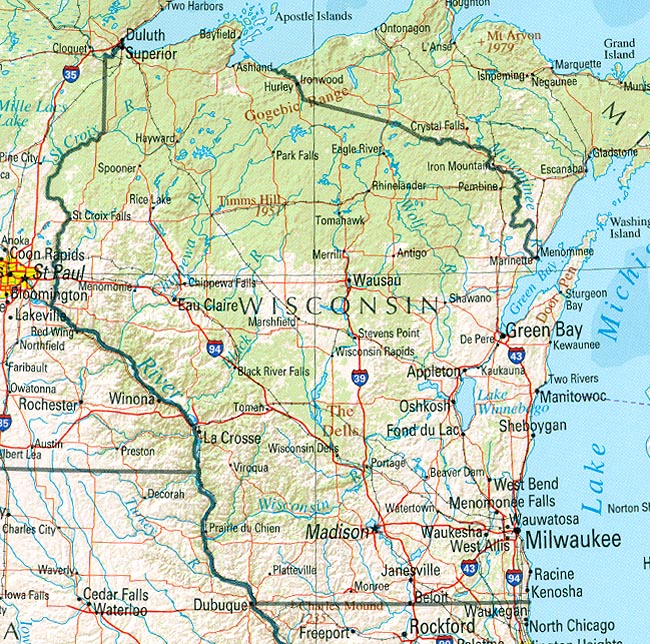
Surprising Wisconsin Detour – A Convergence of Three Passions

I was drawn up through Wisconsin for my first visit to that state during the west-bound leg of a 6000-mile cross-country road trip last year with Mugsy, my English bulldog, as we leisurely made our way to meet up with family at a lake along the border of Washington and the Idaho panhandle.

As we drew closer to the Wisconsin-Illinois border we had a choice of two alternative routes of interest.  Satellite radio news from Wisconsin at the time, as it still is today, was all about recall elections.

I toyed with veering slightly northeast up through Governor Scott Walker’s hometown of Delavan, now with a renewed reputation as circus capital of the world, then on to see the spectacular new Harley-Davidson Museum in Milwaukee and then five minutes further to the site of the 126-year-old historic Bay View Massacre which occurred during another misguided period of union-busting in that state.

But for several reasons related to Durham, North Carolina, where we live and began our journey, I decided instead to cut northwest up through the prairie and savannahs of the western uplands, past the four lakes of Madison (even though we would miss seeing my friend and fellow blogger Bill Geist who was also on the road) and then up through the Dells and across the valley of the 285-mile long Chippewa River.

All three reasons for selecting that route relate to passions of mine including the Civil War, the story of trees and family history .

The Civil War effectively ended at Durham with the largest surrender of the war by Confederate General Johnston to Union General Sherman (at Appomattox, Lee had surrendered only what remained of the Army of Northern Virginia.)

Several Wisconsin units had fought with Sherman through the South from Vicksburg to Chattanooga, down across Georgia, up through South Carolina ending in North Carolina and Durham including the 25th Wisconsin which was drawn from counties along the Chippewa.

The 25th was part of approximately 80,000 Wisconsinites who fought in the war against slavery and to save the union including 12,000 of whom died.

But 36 years before that war ended in Durham, as a young Lieutenant in the U.S. Army, eventual-Confederate president Jefferson Davis led a party up the Chippewa and made what newspapers reported as the first “sound of a white man’s ax heard in the pine forests of Wisconsin.”

Today, only 46% of Wisconsin is covered by forest but back what would become Wisconsin was 86% covered by forests.

As Jefferson Davis paddled his birch bark canoe, the Chippewa River Valley alone held one-sixth of all of the pine timber west of the Appalachians according to the New York Times and 34% of the pinery in what would become the Wisconsin Territory seven years later.

Davis swung that ax along the Chippewa three years before US Government-contracted surveyors began detailing the area on maps to be used by timber companies, settlers and speculators as well as portions granted to the railroads.

It was also about the year two of my ancestors, Lewis and Elizabeth Neeley migrated north to try to help settle Dane County, Wisconsin several years before Madison was founded there only to find themselves in the middle of the Black Hawk War and were driven south again after the 1832 attack on Fort Blue Mounds, leaving two children buried there.

The Neeleys relocated back to Vermillion, IL in 1833, the same year future president Abraham Lincoln volunteered to fight in the Black Hawk War.  Eventually the Sac (Sauk) Chief Black Hawk sought refuge along the river with the Chippewa Indians (Ojibwa) where he was persuaded to surrender and was escorted by Lt. Davis to Fort Crawford.

For a time, the Neeleys relocated near Vermillion, IL during the time when the Treaty of St. Peters between the U.S. and representatives from various Ojibwa bands which granted full access to exploit the Chippewa River Valley.  But the Neeleys had headed west by the time Lincoln arrived to practice law in Vermillion.

By 1850, two years after Wisconsin became a state and just as logging was ramping up along the Chippewa, my great-great-great grandfather Lewis, having lost his wife in Winter Quarters, Nebraska, was heading further west still with my great-great grandfather Armenius, up and over the Continental Divide.

Logging the Chippewa would intensify after the Civil War as the soldiers of the 25st Wisconsin returned home two years before Laura Ingalls Wilder, author of the Little House series was born along that river, the inspiration for her first book Little House in the Big Woods.

The commander of the 25th Wisconsin, Jeremiah McLain Rusk went on to serve in the U.S. Congress then as the governor of Wisconsin when his order to the National Guard led to the tragedy at Bay View.

By the 1890s logging along the Chippewa had peaked after a billion feet of logs had been harvested annually through the 1880s.  Only 5% of the spectacular White Pines and 0.5% of the Hemlock trees remained.

Long before sustainable logging, people with names such as Weyerhaeuser had denuded the Chippewa of 46 billion board feet of timber and by the 1920s the timber companies were trying to sell the barren land to farmers.

But once cut over, the land remained “unrehabilitated for generations.”  Gradually by World War II the area reforested but not the way it had been.

An hour west from Eau Claire WI, where Mugsy and I crossed the Chippewa, and a half hour north off the Interstate as it nears the Wisconsin border with Minnesota is the little town of Clear Lake WI.

It is the hometown of the late U.S. Senator Gaylord Nelson, who served two two-year terms as governor of Wisconsin beginning in 1958 before his 18 years in the Senate.

Nelson grew up at a period when the devastation left by unsustainable lumbering practices around Clear Lake had left it poor, polluted and denuded compared to what it had been when his grandparents had homesteaded there from Norway in the 1870s.

Nelson was a progressive and eventually a Democrat but in the Wisconsin before he returned home from fighting in World War II to practice law he might have easily been a Republican.

Wisconsin progressives were Republicans dating back to the legendary Robert M. La Follette, Jr. a native of Madison and a longtime Senator and candidate for President or maybe to the party’s founding in 1854 with progressive antislavery roots

But progressives were driven out of the Wisconsin Republican Party when La Follette was defeated by the now infamous Joseph McCarthy of 1950s “Red Scare” notoriety when he used extremism and unsubstantiated charges to purge political enemies not dissimilar to the tactics pursued against unions today by Tea Partiers fueling support for Governor Walker.

During the early 1960s Nelson was known as the “conservation governor” and the popularity for those initiatives catapulted him to the U.S. Senate where he helped Wisconsin regain credibility on the national stage by founding Earth Day and spearheading conservation legislation throughout the 1970s as part of his fervent advocacy on behalf of small business.

The 288 mile detour we took last summer through Wisconsin was enlightening as well as memorable and Mugs and I definitely hope to see more of that state on future trips.

Wednesday, May 16, 2012

Innovating Social Welfare

As I was growing up in the Yellowstone-Teton nook of the Book of Mormon belt that arched from southern Alberta, Canada to Mexico and sweeping over Las Vegas to San Bernardino, a claim was often heard among the million adherents at that time that the federal Government had copied the Mormon welfare system.

That has never been substantiated, but both systems did both tap into some common lineage before coming of age during the mid-1930s and the Great Depression.

While they may not have crossed paths, within a little more than a year the entrepreneurs behind each plan had volunteered at Chicago’s Hull House, a turn-of-the century outcome of the Progressive movement and were mentored by its founder Jane Addams.

Amy Brown Lyman, who would go on to lead the Relief Society, a Mormon women’s auxiliary, stopped in Chicago during the summer of 1902 on her way east during her husband’s sabbatical and not only took a class at the University of Chicago in the relatively new subject of sociology but also volunteered at Hull House.

After accepting a teaching position in 1904 in Lake Forest, Illinois, Frances Perkins volunteered for Addams at Hull House before becoming a cabinet officer through all four terms of the Roosevelt administration and championing the Social Security Act of 1935.

Thanks to written and oral histories left by a slightly younger contemporary, my great aunt Vera White Pohlman, the full story of Amy Brown Lyman’s contributions have re-emerged and informed scholarship such as that by Dr. David R. Hall of Cal State Fullerton.

The lifetime contributions of Lyman support a claim often made today by Dr. Mathew B. Bowman (no relation), a professor at Hampden-Sydney College north of Durham where I now live, that Mormonism is as much a “community” as a church and that while it is the most conservative of all faiths today, its members have a “surprisingly deep affinity for Progressive politics.”

When she returned to Utah from that sabbatical, Lyman lobbied passionately for creation of a social welfare department in the Mormon Church which she led for many years after its creation in 1919.

She even won election to the state legislature in 1922 to champion Utah’s participation in a nationwide program to promote infant and maternity care as well as establishing a hospital and a training school for the mentally disabled.

The common struggle shared by Perkins and Lyman was how to scale up social welfare to the size needed to truly address the magnitude of the challenges.  Republicans then as now opposed any role of government, hoping instead that disparate private agencies would somehow suffice.

Lyman was famous for reaching out to both non-profit agencies as well as local and state agencies to leverage efforts by the Mormon Church until behind-the-scenes lobbying among male leaders finally forbid it.  The mastermind behind that move was a former Hoover administration official, J. Rueben Clark.

Perkins succeeded and so did Lyman in a way.  Mormon leaders who disparaged Roosevelt programs as the “dole” when they were launched in 1935, created an “inversed projection” by creating a “dole” of their own in 1936 by gathering, standardizing, centralizing and reinventing a number of programs including Lyman’s while freezing her out of the process.

Unfortunately, the program was hampered by politics, both gender and ideological, including a condition that can lead “individuals or groups to subconsciously rationalize a contradiction in their own self-conception by painting themselves as the victim instead,” something hardly unique to Mormons and often witnessed in news stories today.

But as effective as the 1936 Mormon welfare program was back then and as remarkable as it has evolved into today, it was no match for the scale of hardship during the Great Depression.

Statistical reports by federal officials at the time document that the by-then isolationist Mormon welfare program didn’t come anywhere close to making Mormons along the Rockies self sufficient from the federal programs nor were pioneers such as Lyman unaware of the problems associated with the inevitability of increased government involvement.

Overwhelmingly Mormon back then, Utah had among the highest per capita use of federal welfare programs during the Great Depression, yet, the church program stubbornly insisted it was “taking care of our own.”

Church members weren’t officially reauthorized to leverage efforts with those of other public and non-profit agencies until approximately 1991.

What is increasingly apparent to many experts today is that far too many social welfare programs are not cost/effective.  They have lost the nimble and innovative characteristics with which they were inaugurated and long ago it became too expensive to provide recipients to work volunteer in return.

Too much time is wasted on attacking or defending rather than just cutting ineffective programs, trimming waste, eliminating fraud while also increasing funding for innovation and research for those programs that are effective.

All of this should be informed by the growing scientific evidence about human interactions with incentives including sense of entitlement.

Wednesday, April 11, 2012

The Bellwether Mayor And A Chamber In Sync

It is a positive sign for Durham’s continued economic prosperity that 60% of adult residents believe the community is a good place for gay and lesbian people to live compared to 27% who disagree.  Most telling perhaps, is that a full third feel strongly on this matter according to the annual scientific poll commissioned by the Durham Convention & Visitors Bureau (DCVB.)

Further evidence appeared last week when the Board of the Durham Chamber of Commerce, an advocacy organization for business voted unanimously to oppose Amendment One, a ballot proposition to insert a ban on same-sex marriages in the State Constitution.chamber logo

The Chamber was on safe footing.  By my count among friends who own businesses, the reaction has been overwhelmingly in favor of opposition and a statewide opinion poll taken during the time of the Chamber’s deliberations revealed that 6 out of 10 North Carolinians also oppose the amendment.

Wily proponents of the ban pushed it onto a primary election ballot next month so it will all come down to voter turnout, but I agree with House Speaker Thom Tillis that even if approved, such an amendment will be repealed by the demographic and psychographic shifts already well under way in North Carolina where nearly 4 in 10 residents already support the rights of gay citizens to be married.

Sentiment wasn’t always so clear to read.  When I moved to Durham, one of the state’s most progressive communities, in 1989, Mayor Wib Gulley had barely survived an effort a few months earlier to have him recalled when a petition requiring 13,000 signatures fell short by a thousand.

Issuing an “Anti-Discrimination Week” proclamation while speaking highly of gay citizens had also resulted in Gulley being black-balled from membership in the big Downtown Rotary Club.  Much of the uproar had been fueled by the organization of a former WRAL broadcaster down in Raleigh, then US Senator Jesse Helms.

For several years I avoided rejoining Rotary until it was clear that the organization’s sentiment had become more reflective of Durham values and I eventually served as that club’s president.  Wib Gulley was overwhelmingly re-elected to a second term as mayor and went on to serve several terms as a State Senator.

Coincidentally, he is the current chair of the governing board of the organization that I came here to lead as the spearhead for visitor centric (demand-side) economic and cultural development organization and from which I retired several years ago.  Wib was mayor  back when DCVB was first chartered as a provision to state legislation.

The Durham Chamber works the supply-side of economic development, thanks in part to a grant from Durham County.  While I continue to give it grief for a regressive stand it took and still promotes that undermines Durham’s popular ordinance banning billboards, that stands out as an anomaly and probably would have never happened today.

The Durham Chamber in my experience has always been one of the most progressive organizations of that type. By the time I moved to Durham, it had been responsible for populating Research Triangle Park here in partnership with the Research Triangle Foundation.

After acceding to the Durham ban on outdoor billboards in ‘84, according to public documents, the Chamber openly supported a zoning overlay turning the portion of I 40 that passes through through Durham into a sense of place best practice.

In 1987, in another forward-thinking move, the Chamber supported creation of an independent, official community-destination marketing organization for Durham for which I was recruited as chief executive.  A decade later, it joined with DCVB to jointly create a best practice collaboration for placed-driven communication.

It isn’t always easy for any chamber to reflect its community’s values.  Who can ever forget Marvin Barnes’ impassioned support here for school merger when he was board chair of the Chamber.

I also recall being in the room when the Chamber’s board, then, as often the case, laden with non-residents, came very close to opposing bonds for affordable housing until word arrived just prior to the vote that Bob Ingram, then-head of GlaxoSmithKline supported the bonds.

Some at the Chamber groused when Durham established its vaunted school of the arts magnet school, an elaboration on the nationally-acclaimed NC School of Science and Math that had already been established in Durham in 1980 with Chamber support.

But the Chamber quickly acceded when it was revealed how much better many students at every socio-economic level do, even in subjects such as science and math, with art as a lens, something demonstrated over and over by the legendary Joe Liles when he taught art classes at the NCSSM for 28 years.

And the Chamber’s progressiveness isn’t limited to its positions on issues. Examples are the joint official publication created with DCVB to tell Durham’s story and aid both visitors including those who become  newcomers.

I spotted another Chamber innovation being created in the storefront nook of Beyu, the downtown cafe where I often buy bulk coffee beans, a collaboration with DDI, our downtown advocacy organization called The Smoffice.

Overall I’ve always been impressed by our community’s Chamber, but at no time more than with its opposition last week to Amendment One.

Friday, September 10, 2010

The Most Conservative and Republican Of All Faiths Has Deep Progressive Roots

As a progressive-independent who, though lapsed most of my adult life, was born and raised in that faith, I find it ironic that polls of all faiths in the U.S. reveal that Mormons self-identify as the both the most conservative (59%)) and the most Republican (49%.)

To me that’s ironic, in part, because up until the late 19th century, members of the then-60 year old denomination were overwhelmingly Democrats, in part, because Republicans at the time opposed statehood for parts of the West.gallup

In fact, at one point back then, a Church official, John Henry Smith, was dispatched to visit congregations and explain it was okay to be a Republican and specific families were even assigned to join that party to create balance.

Fast forward a little more than a hundred years later and a Church leader was asked to give news interviews explaining that it is possible to be a good Mormon and a Democrat.

Up through the 1960s, Democratic candidates fared well among Mormons and several figures in national politics today are both Mormon and Democrats, in fact liberal Democrats. While the Church itself is generally politically neutral, beginning in the 1970s, a majority of members of that faith took a hard turn to the far right.

Today only 8% of active Mormons currently self-identify as liberal but that belies the deep progressive roots of that very Christian denomination. For instance, the Church pioneered a welfare system for the poor that served in part as a model for the one developed by the Federal government in the 1930’s.

Another example is that Utah where this Church is headquartered was the second state in the U.S. to grant women the right to vote, following adjacent Wyoming.

In the mid-1850s, the Church openly experimented with voluntary, New Testament inspired, communalistic or egalitarian living designed to increase group self-sufficiency but also to aspire to eliminate poverty and reach income equality.

The hard turn to the right over the past four decades and away from those progressive roots may be taking a toll though. Lapsed or inactive Mormons (29%) are more like me, considerably less conservative and significantly more likely to be moderate and two and a half times more likely to be liberal.

Church policy generally prohibits promoting candidates in congregations or church buildings but it took a strong position this week opposing an on-again, off-again threat by the pastor of a small church in Florida pastor to conduct a burning of the Quran.

It also played a role in the recent and narrow 5 percentage point passage of a California proposition prohibiting Gay marriage.

Mormon is a nickname often used to identify members of this restorationist (branch of Protestantism) faith initially called The Church of Christ and later formally named The Church of Jesus Christ of Latter-day-Saints (LDS.)

With 14 million members worldwide and one of the fastest growing of all Christian denominations, its roots go back to the Second Great Awakening of the 1830’s, a very un-conservative period that fueled many evangelic or conversion-oriented faiths, that while different from fundamentalist, are typically very socially conservative.

Friday, August 13, 2010

Where The Tetons Lean “Left!”

A hero of mine is Emanuel J. “Mutt” Evans. He was Jewish and elected Mayor of my adopted home of Durham North Carolina from 1951 – 1963, guiding the community through desegregation.

My favorite story about Mayor Evans is when a Judge ordered him to segregate seating at his downtown lunch counter, he just took out all of the seats, letting people comingle. He was obviously very “Durham.”Tetons From the Idaho Side

But you’ll never guess which State was first to elect a Jewish Governor? Pivotal word is “elect” (earlier a Jewish person had become Governor of Georgia through resignation.)

Yup, my birth state of Idaho. As it it is today, from well before statehood, Idaho has always seemed very “Republican” politically, maybe in allegiance to President Abraham Lincoln, under whom it first became a territory.

It is ironic then that the State has produced a number of famous Progressive/Liberal politicians on both sides of the aisle, such as Republican William Borah and Democrat Frank Church. And shortly after statehood in 1890, Boise, the capitol elected a Jewish mayor, Moses Alexander (he had already served two terms as a mayor of a town in Missouri.)

In 1915, elected as a Progressive Democrat, Governor Alexander was seated in the first of two terms as Governor of the State of Idaho, a decade or so after my family homesteaded a ranch and farm over in the Teton-Yellowstone corner.

By the way, you can always tell the “Idaho” side of the Tetons because they curve “left,” I’m sure, just to remind the Gem state that some of its greatest elected leaders have leaned in that direction.